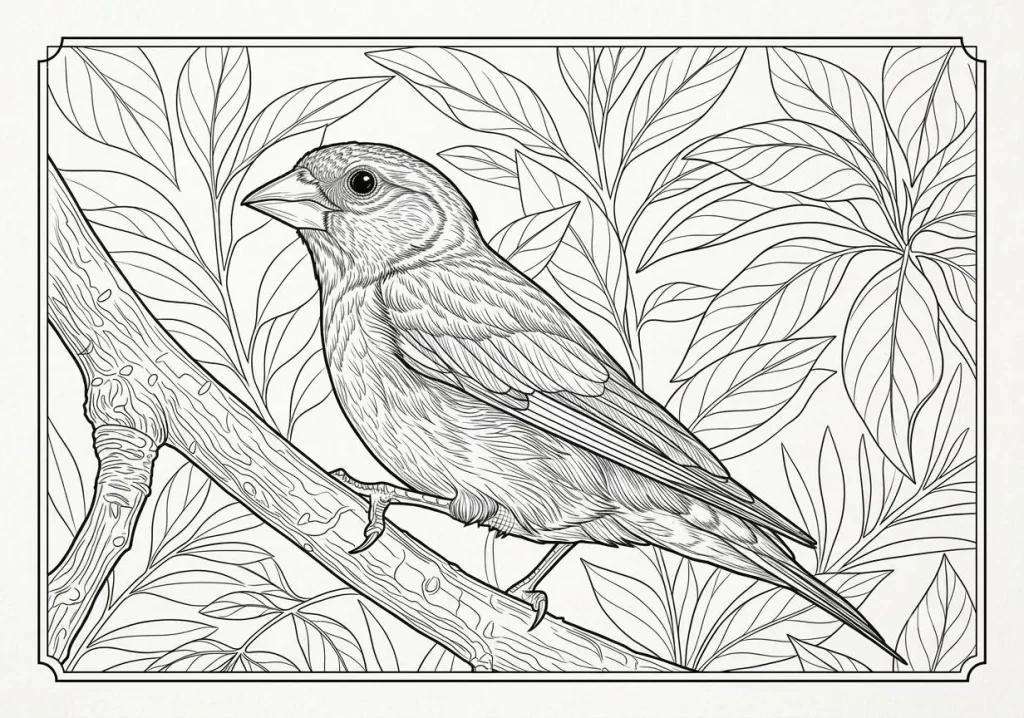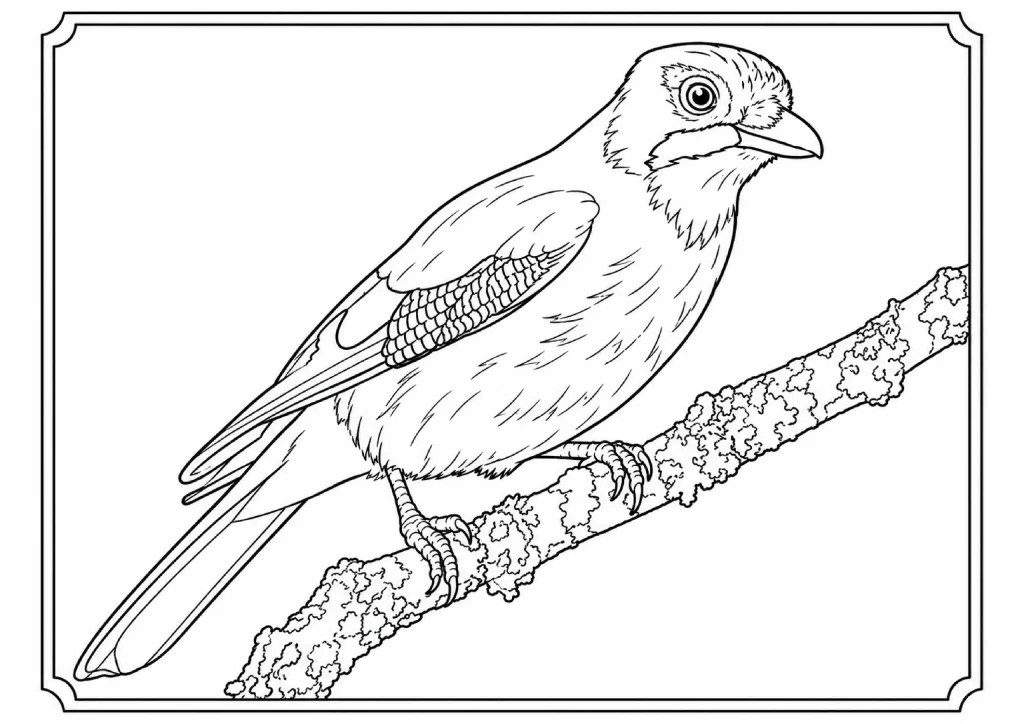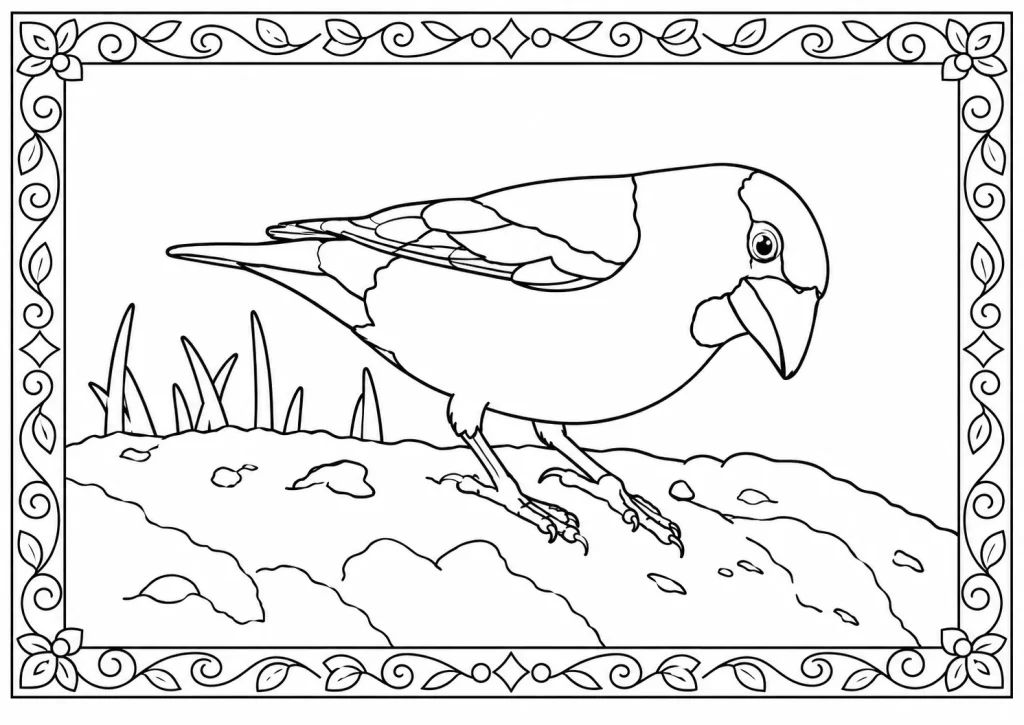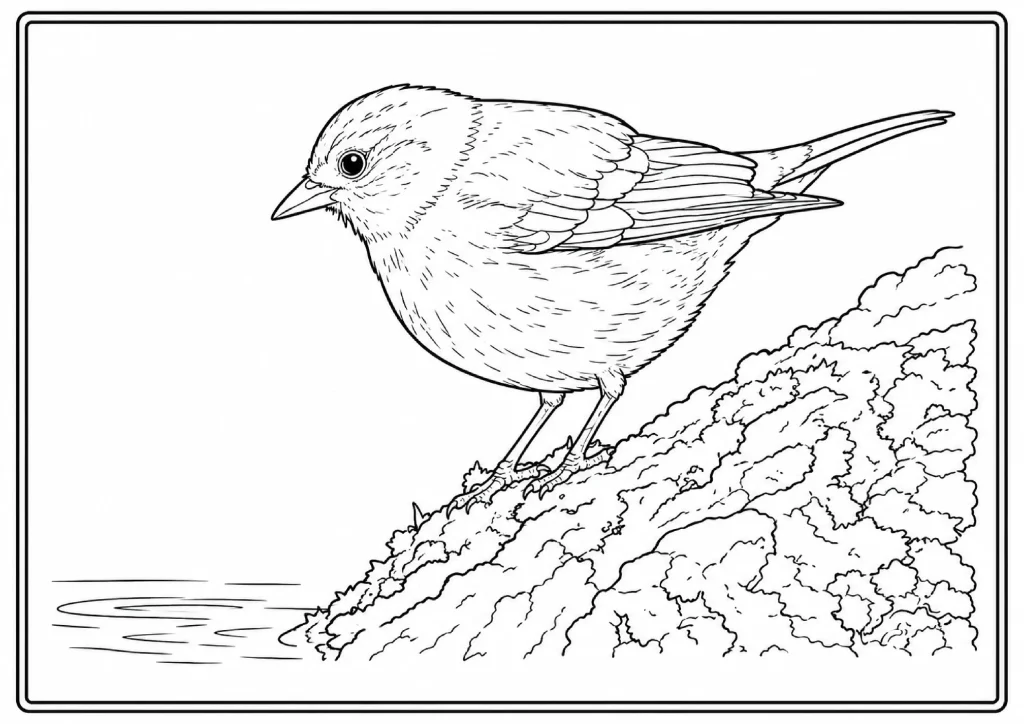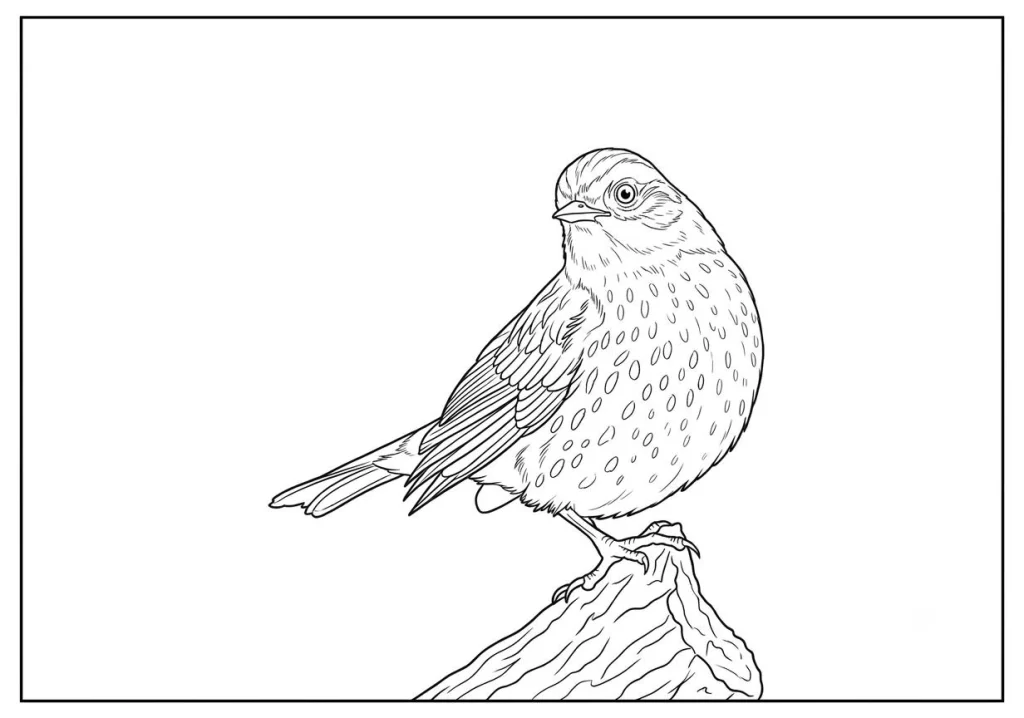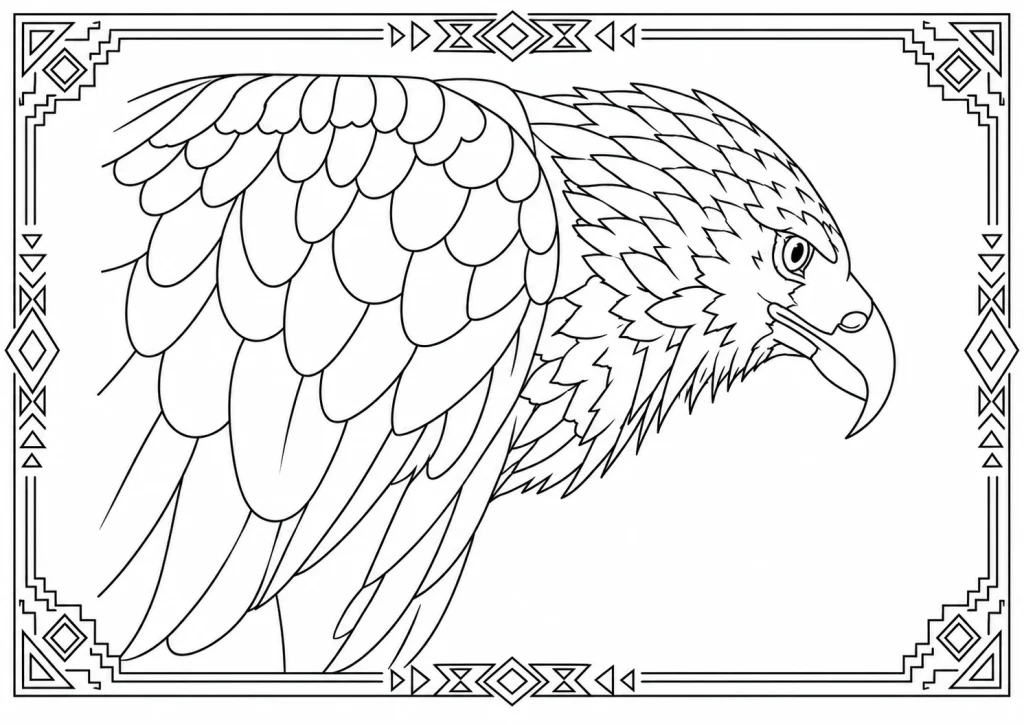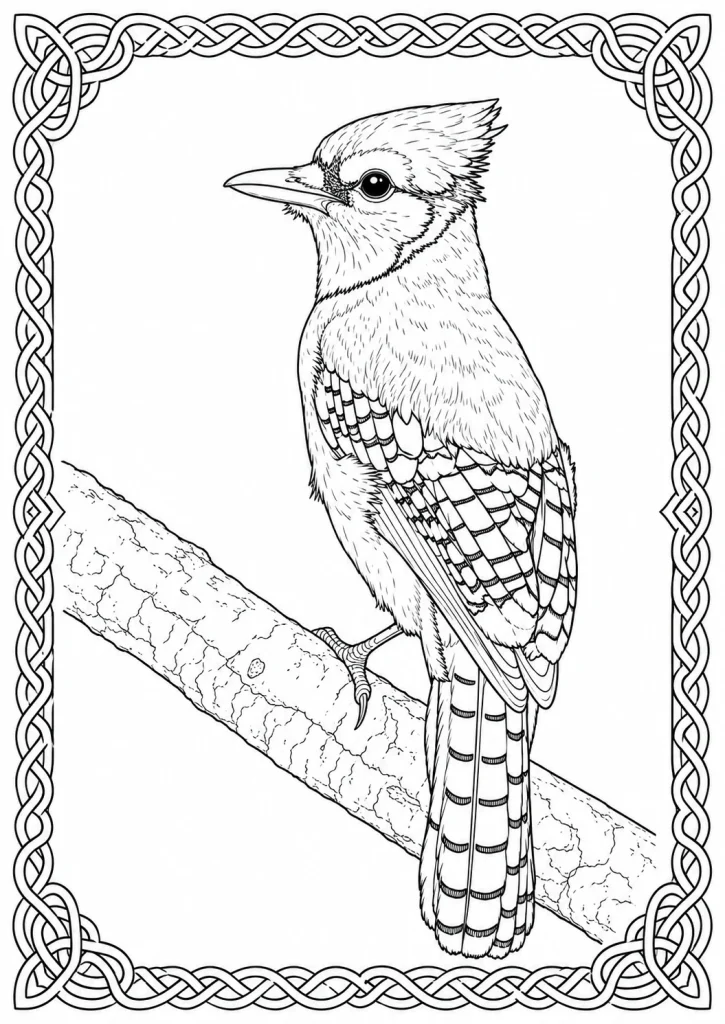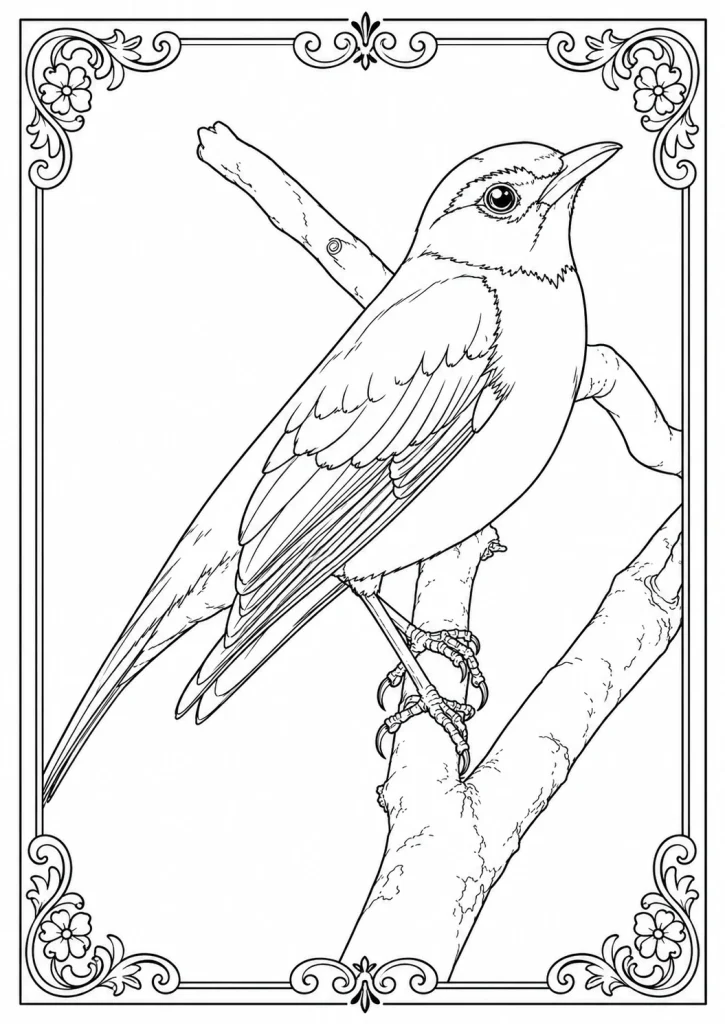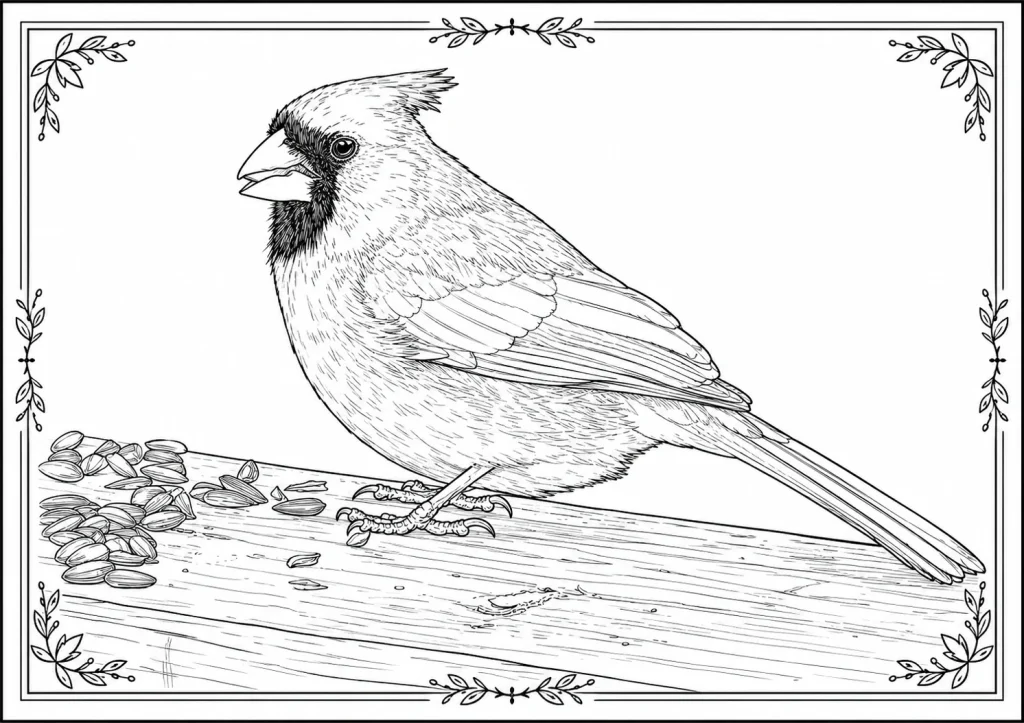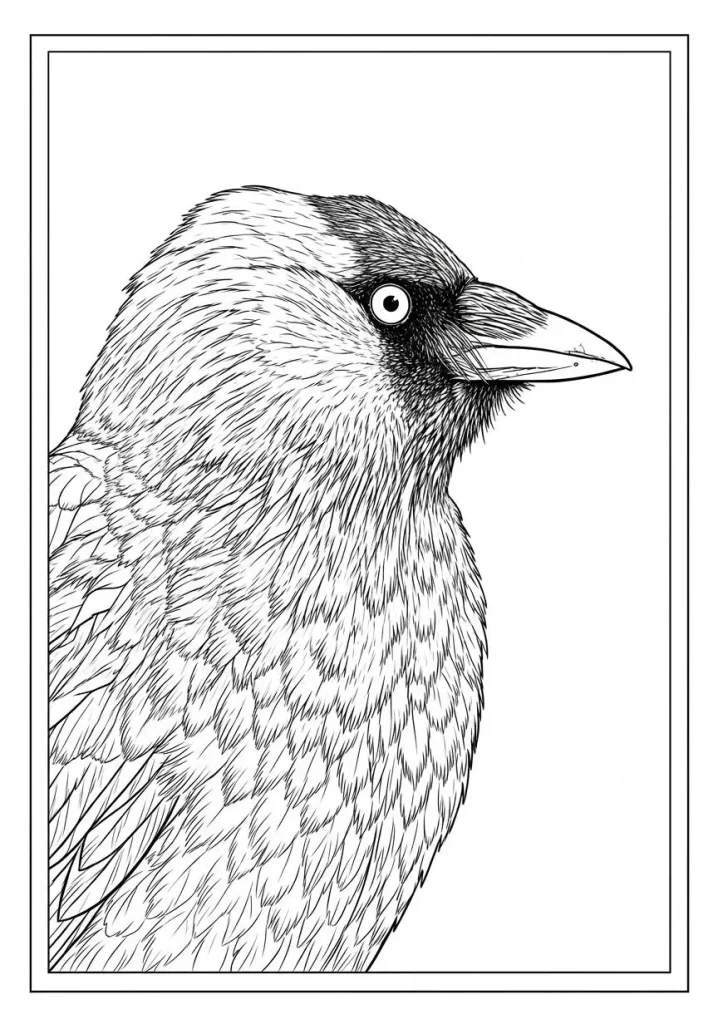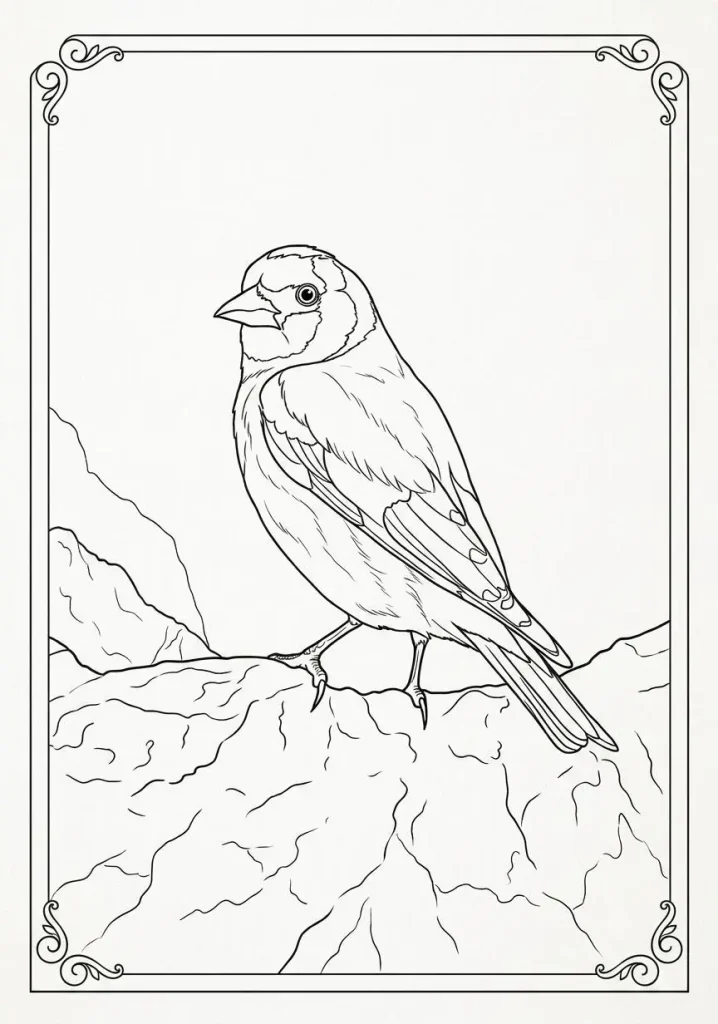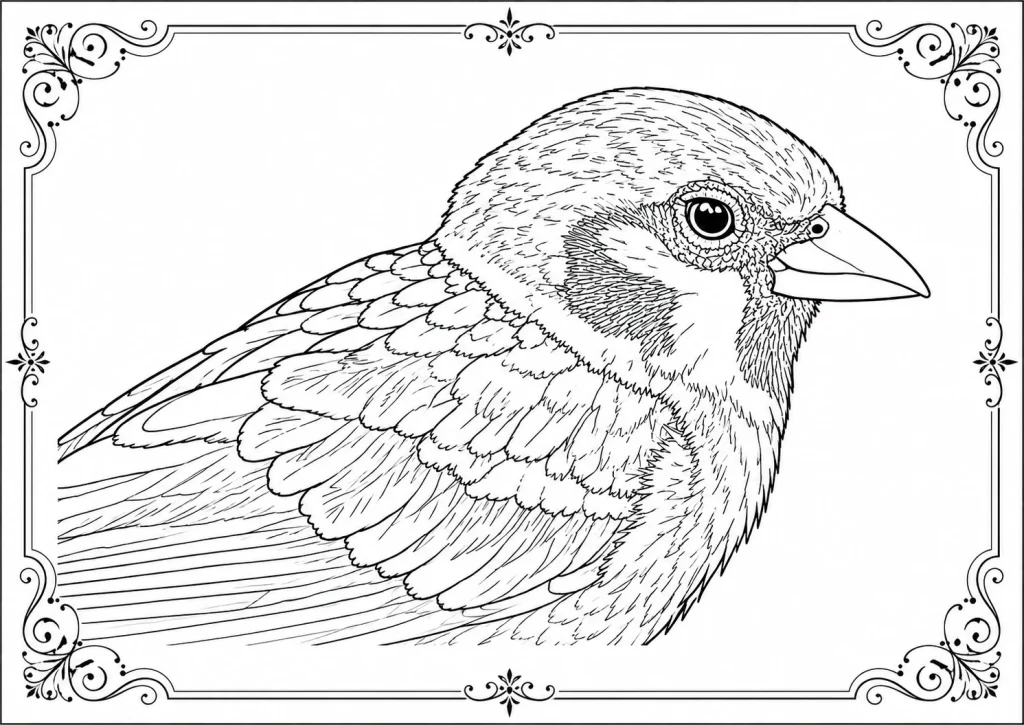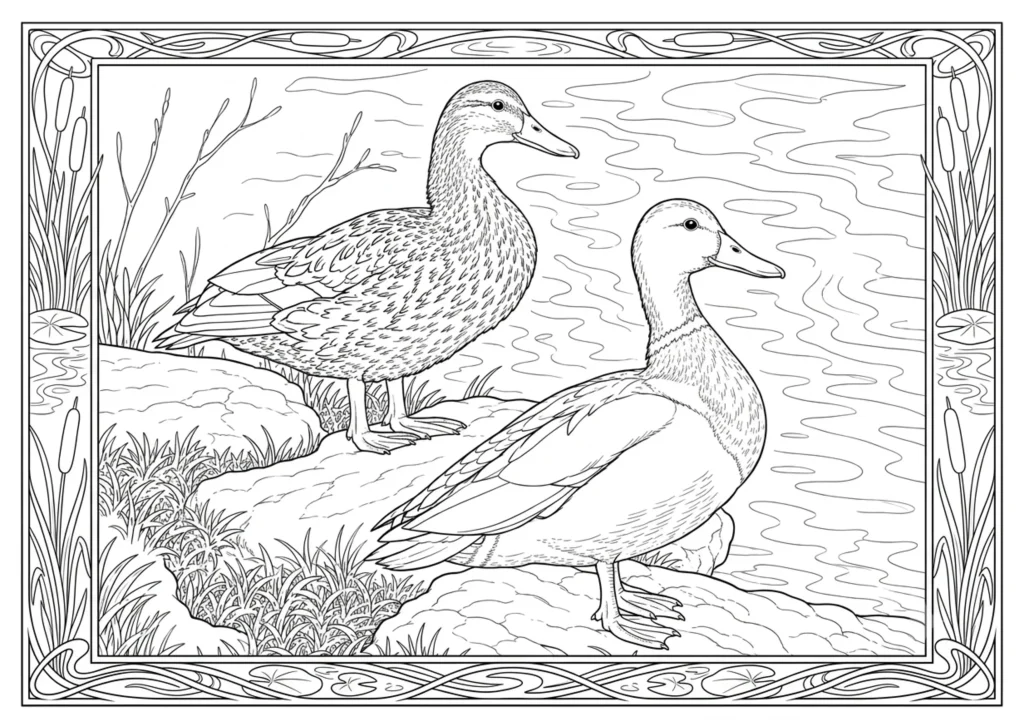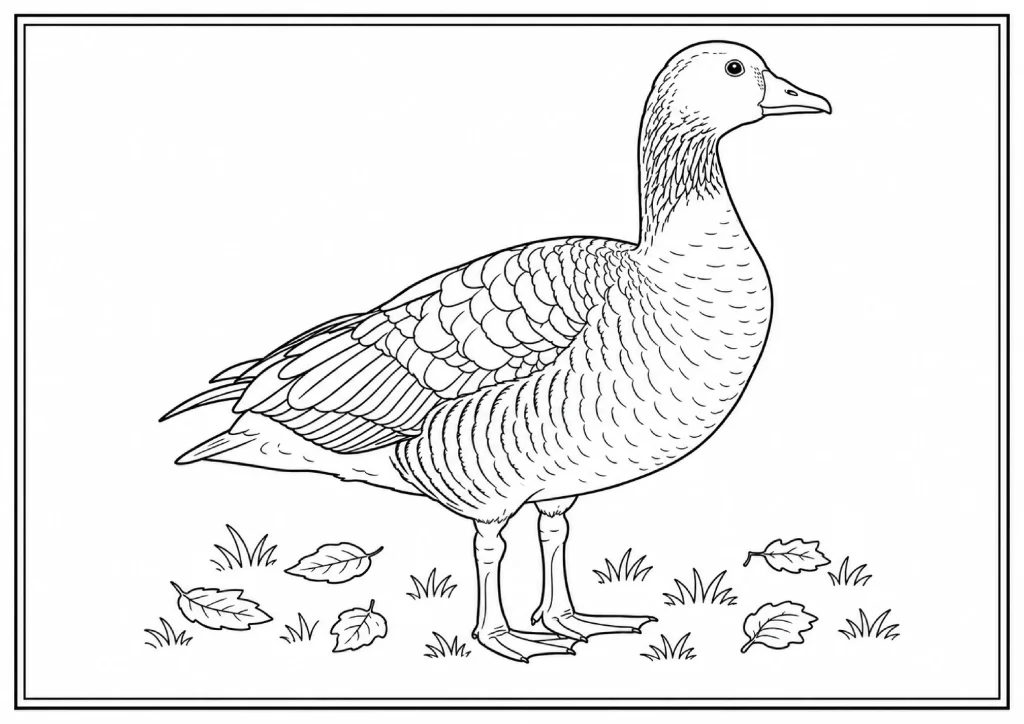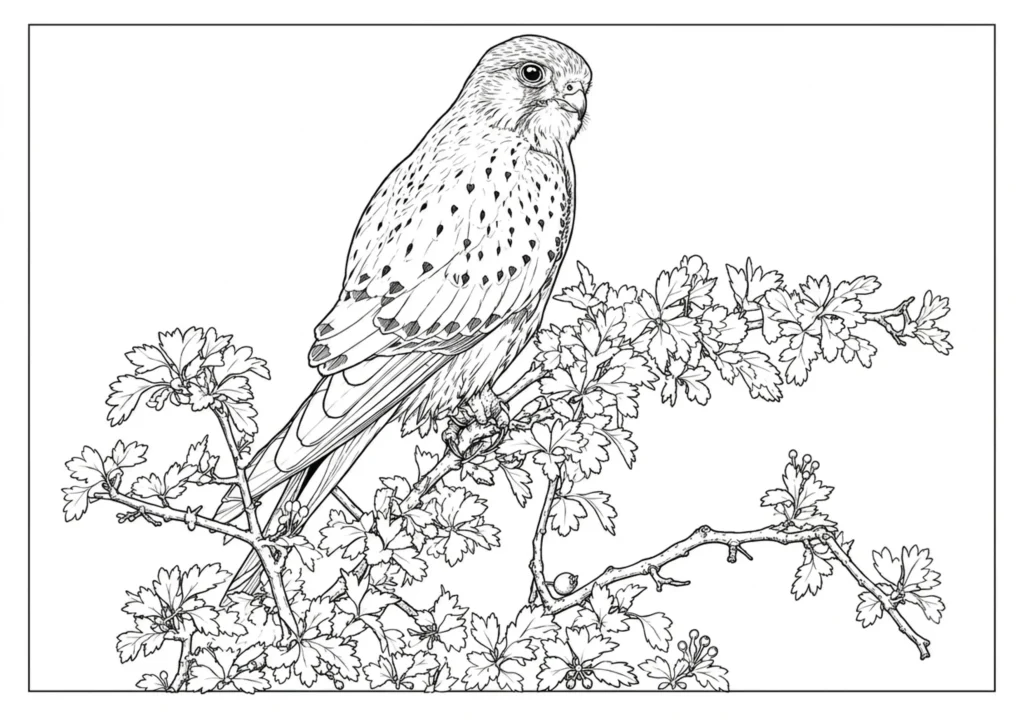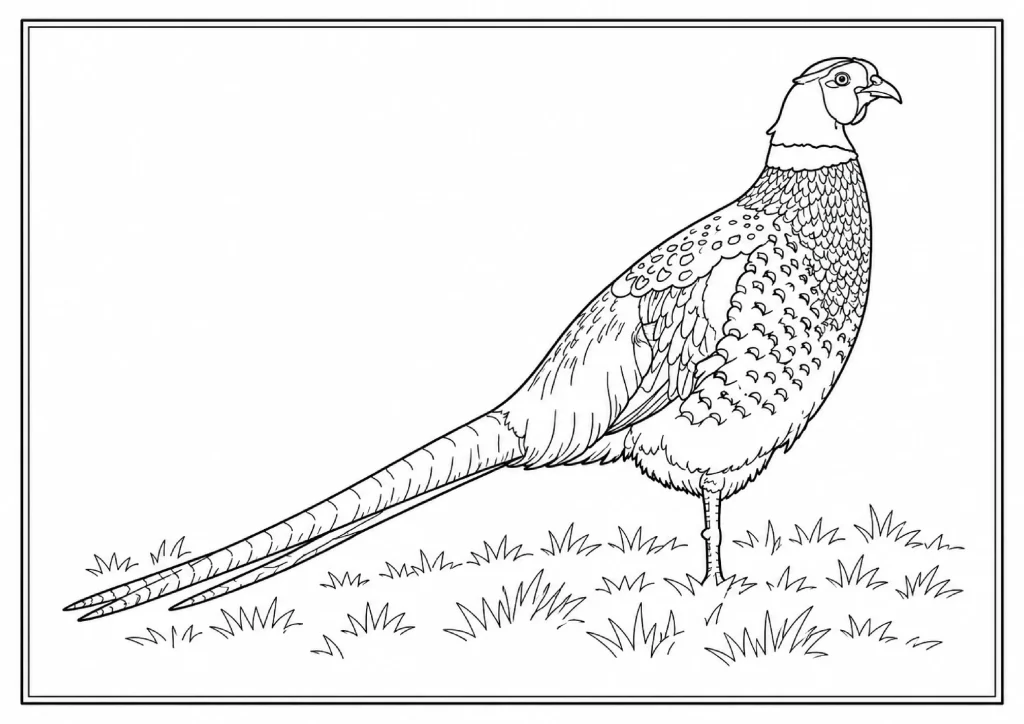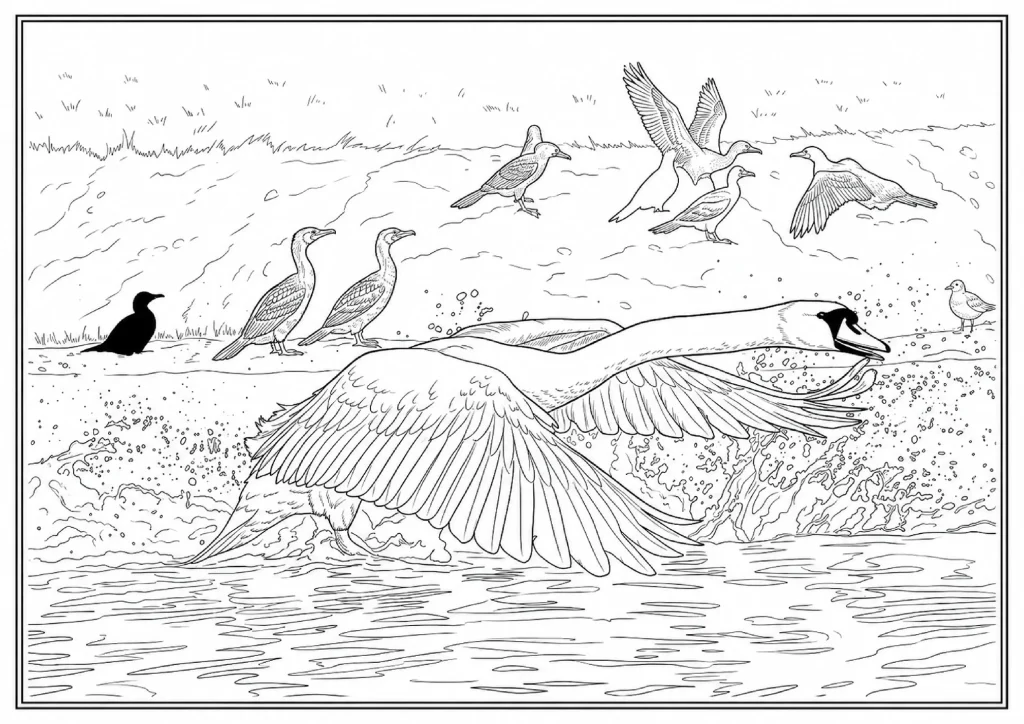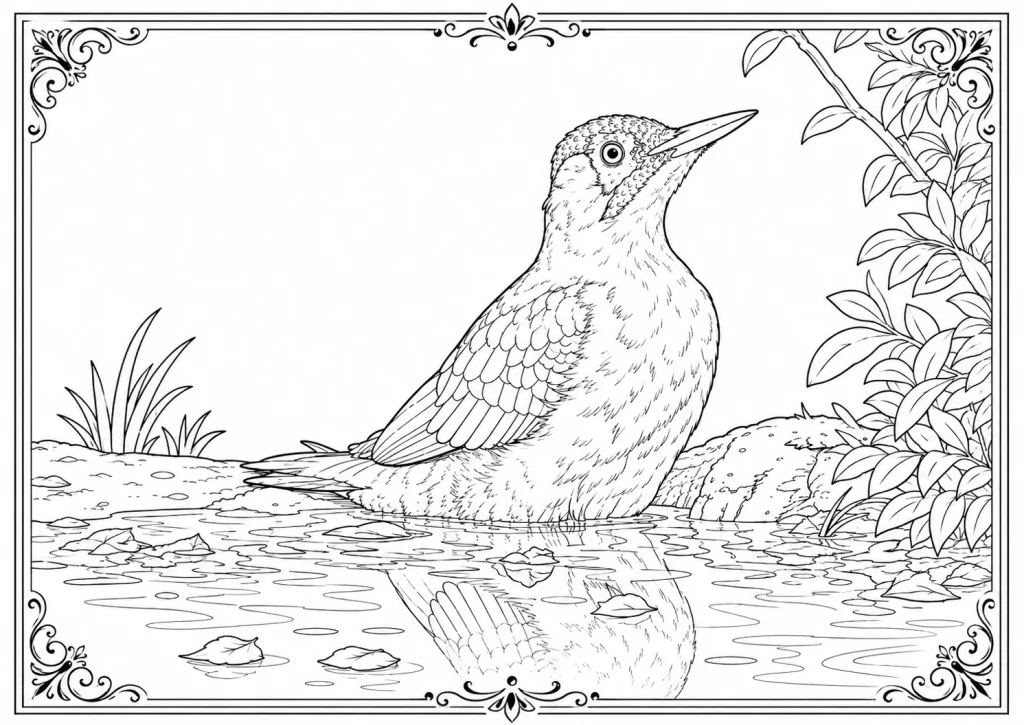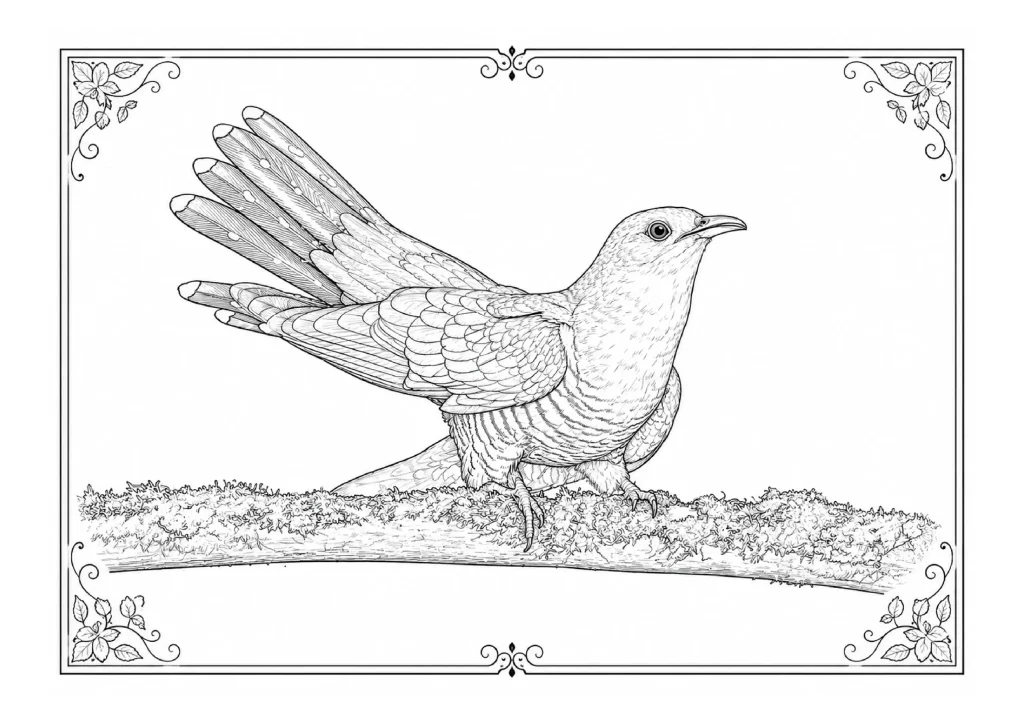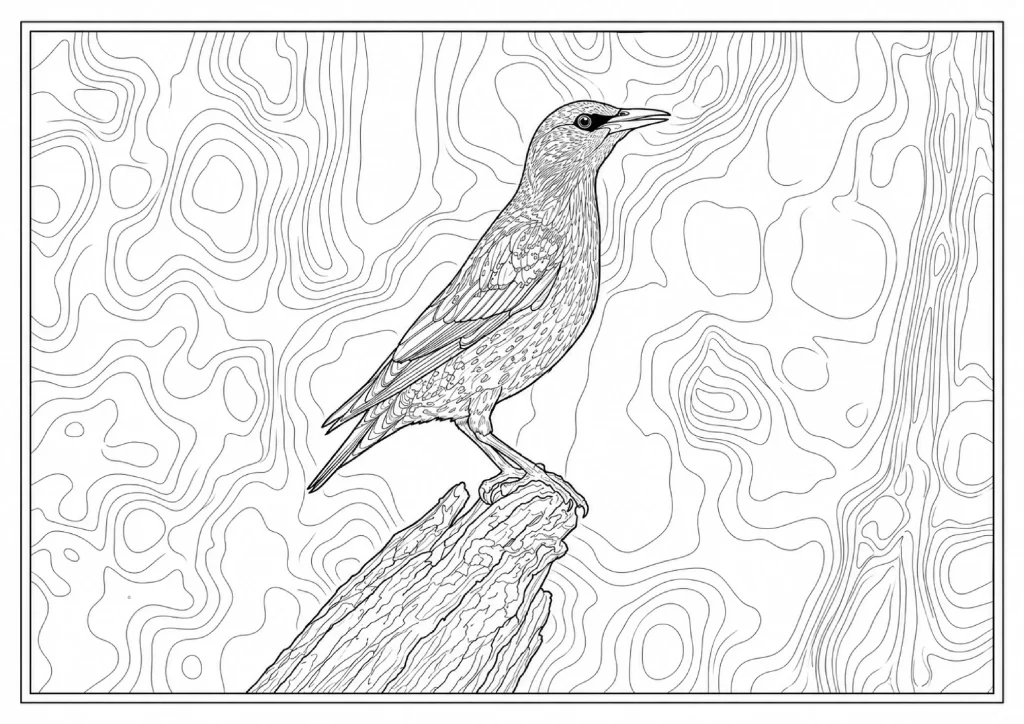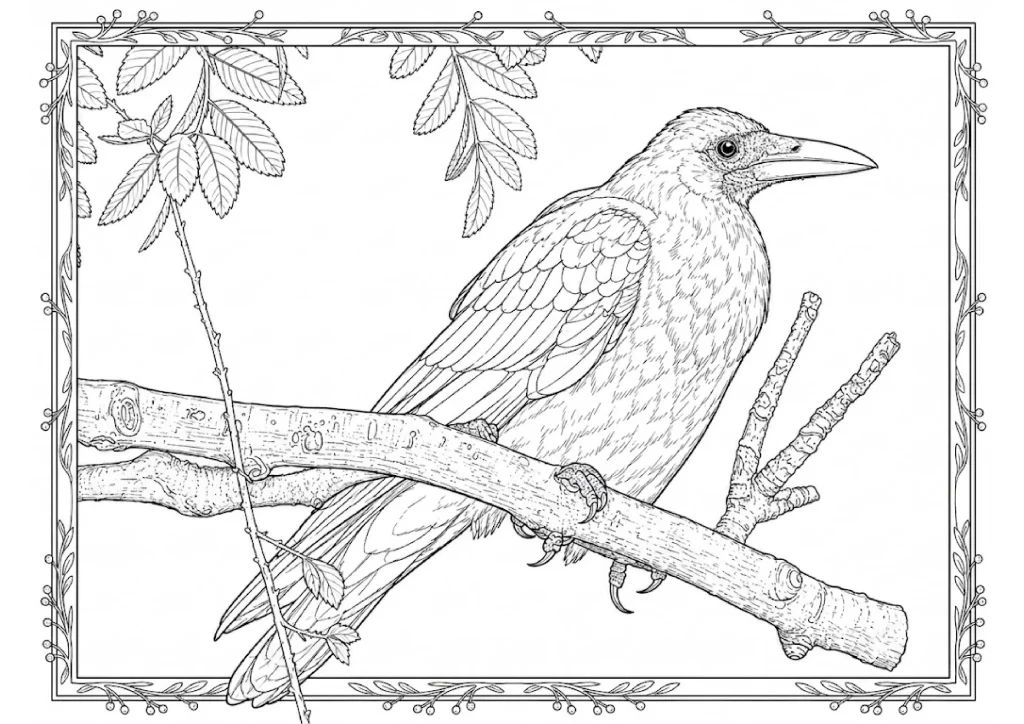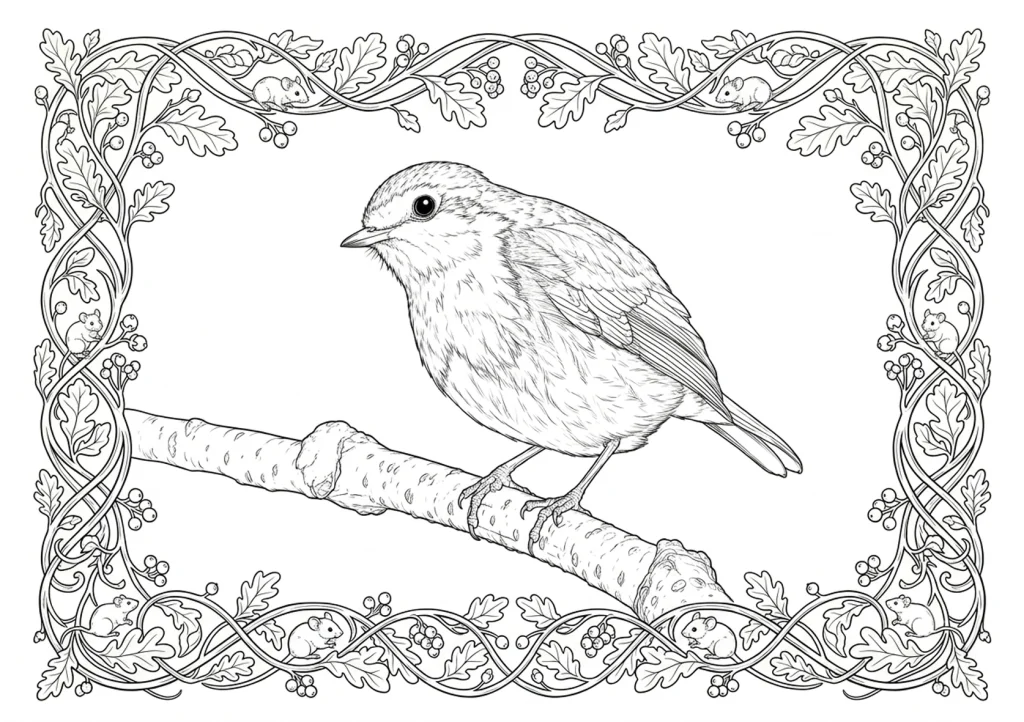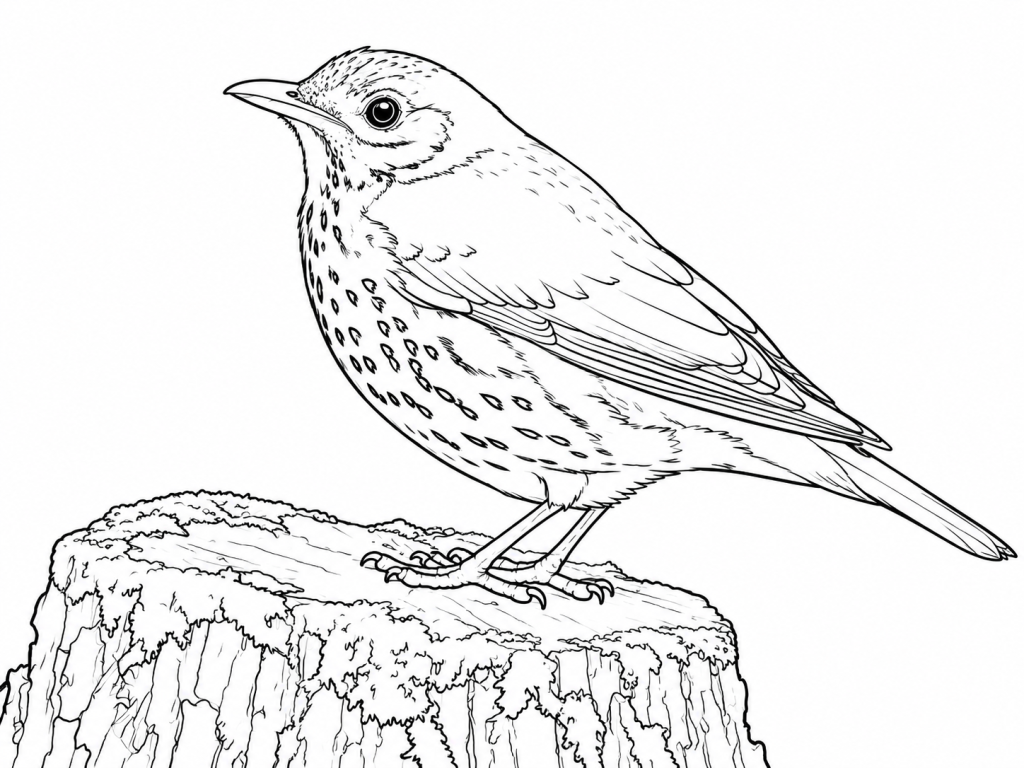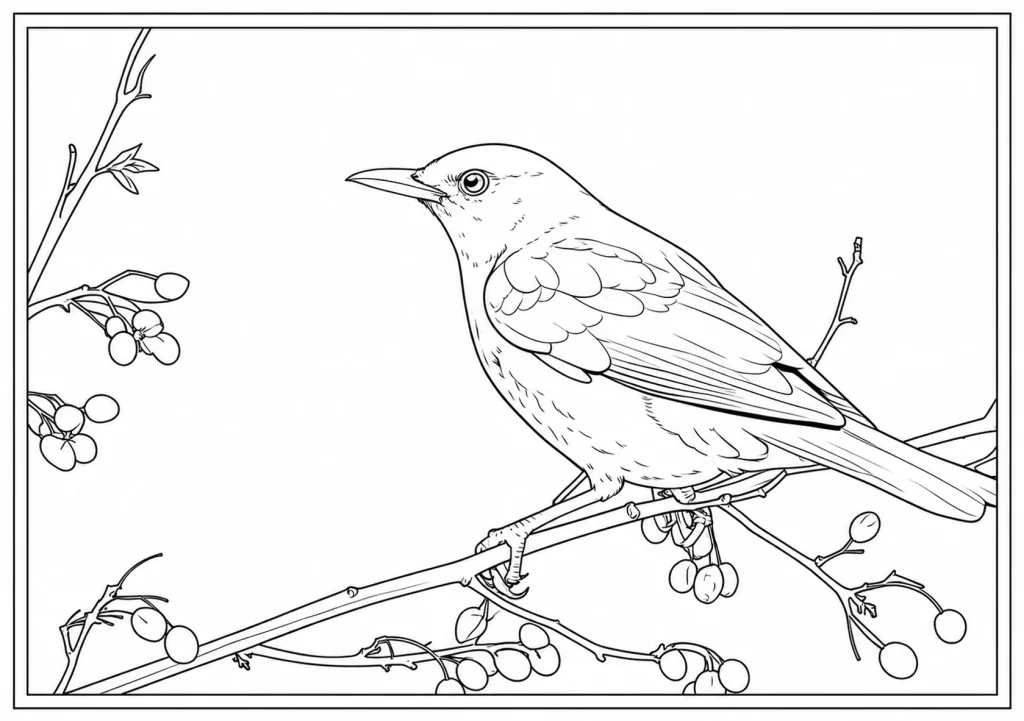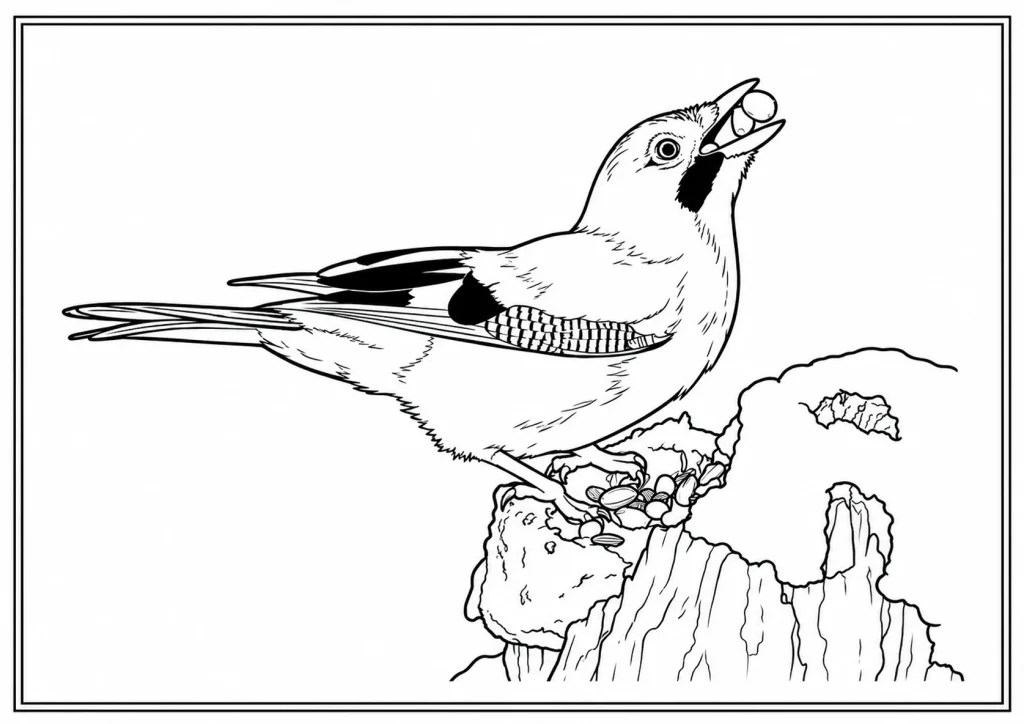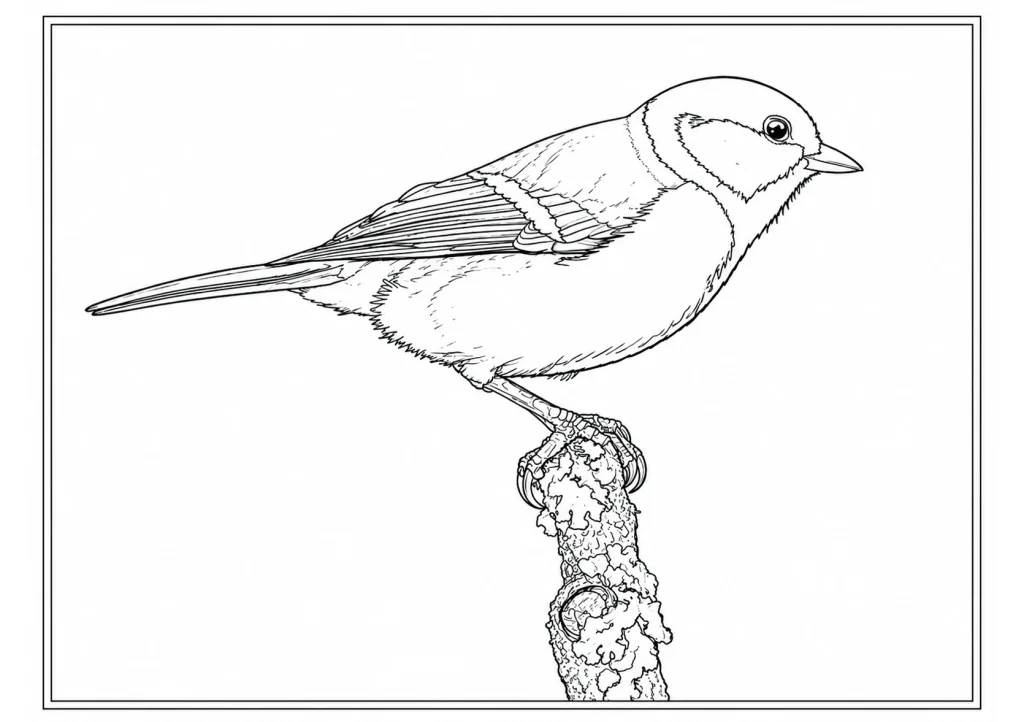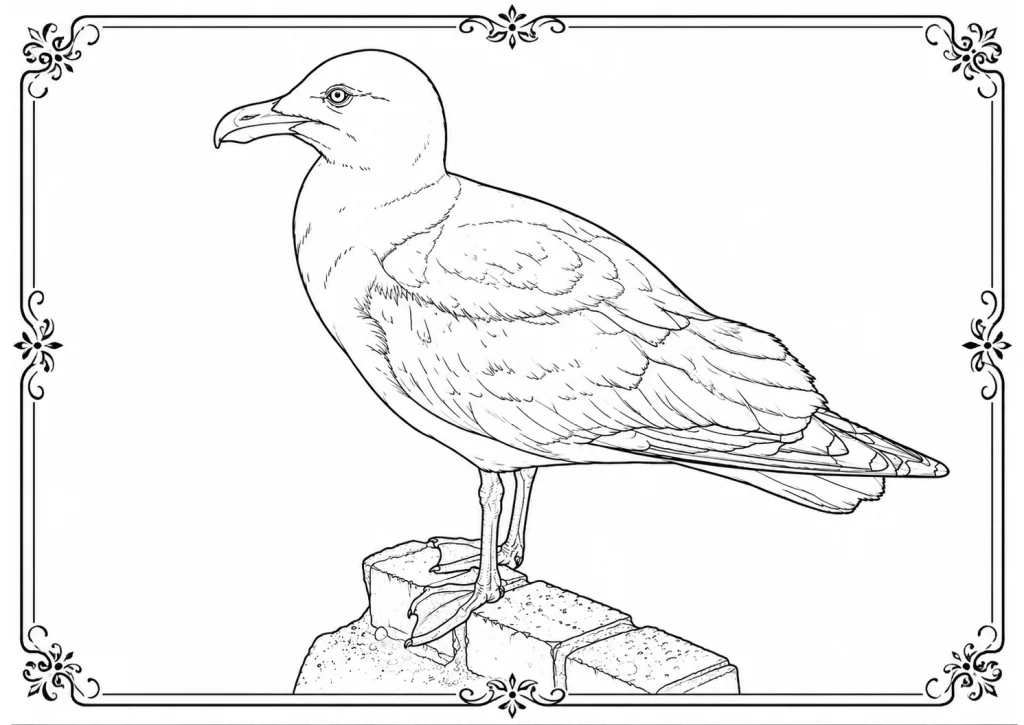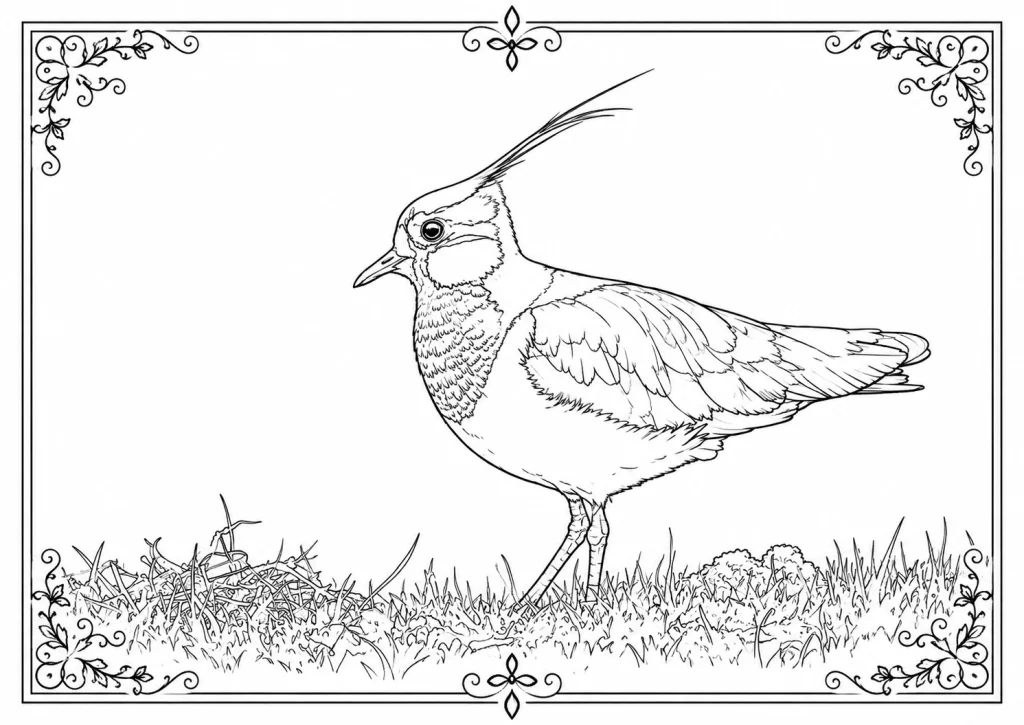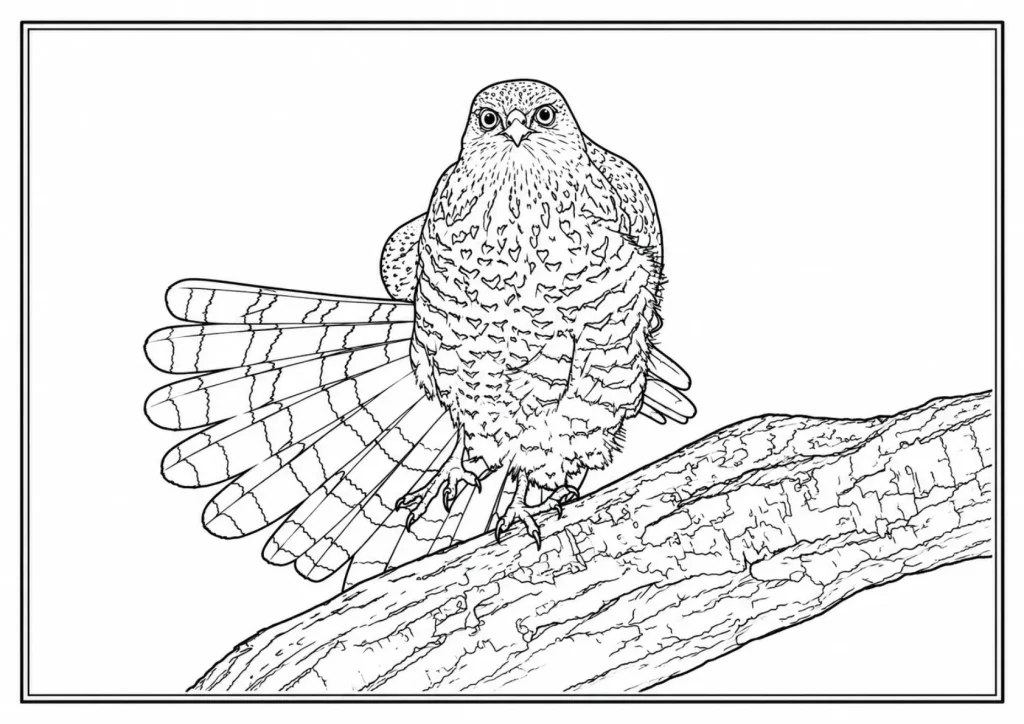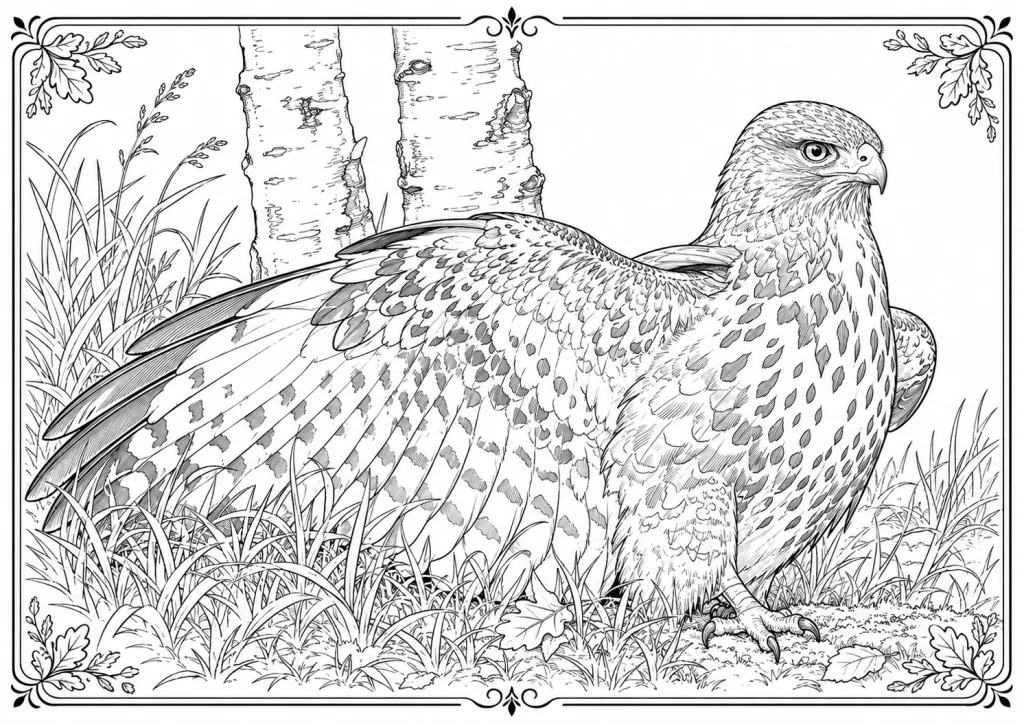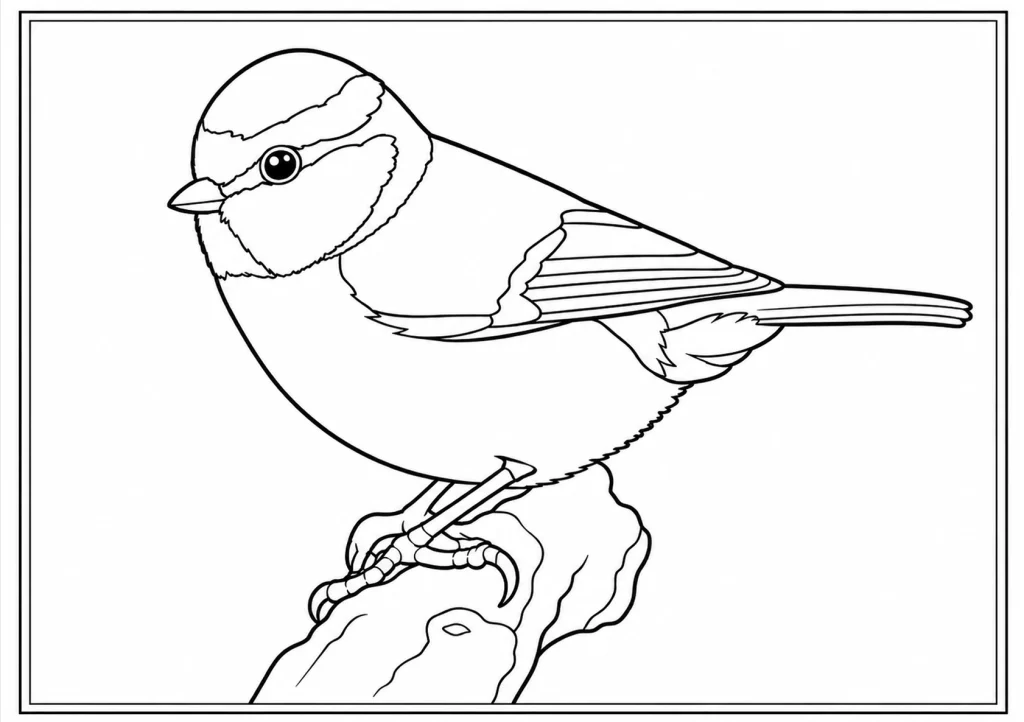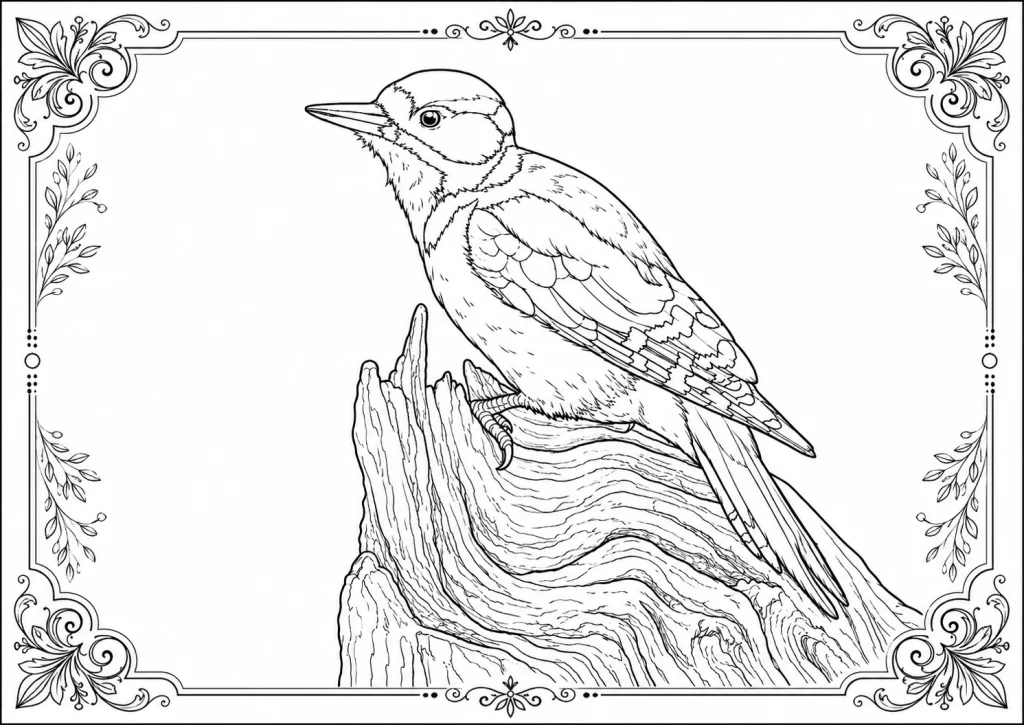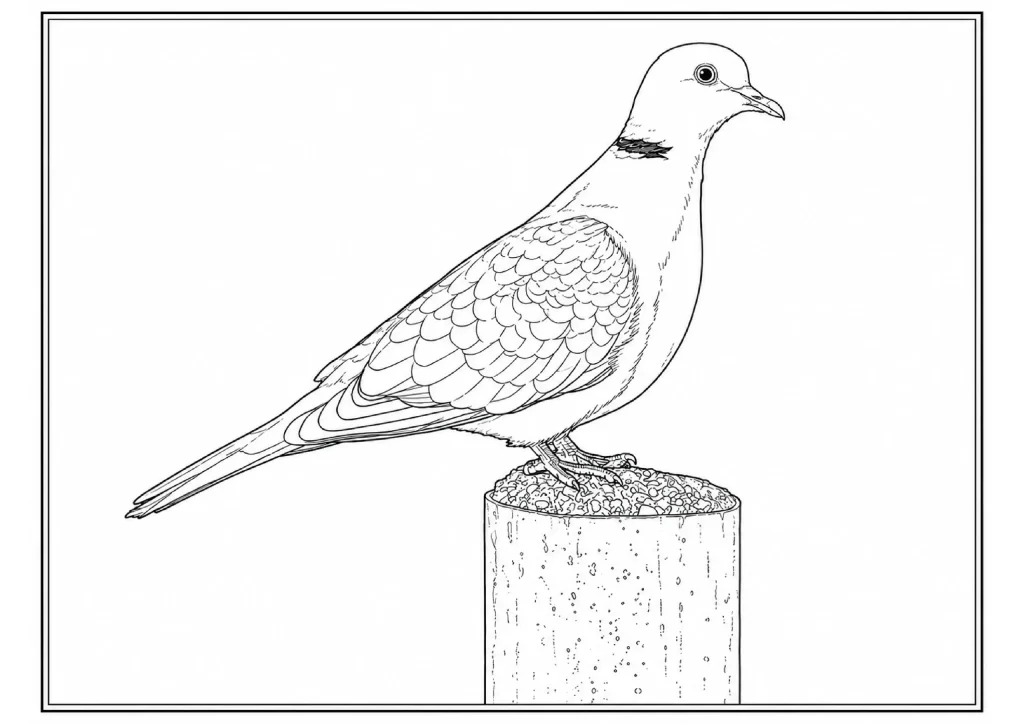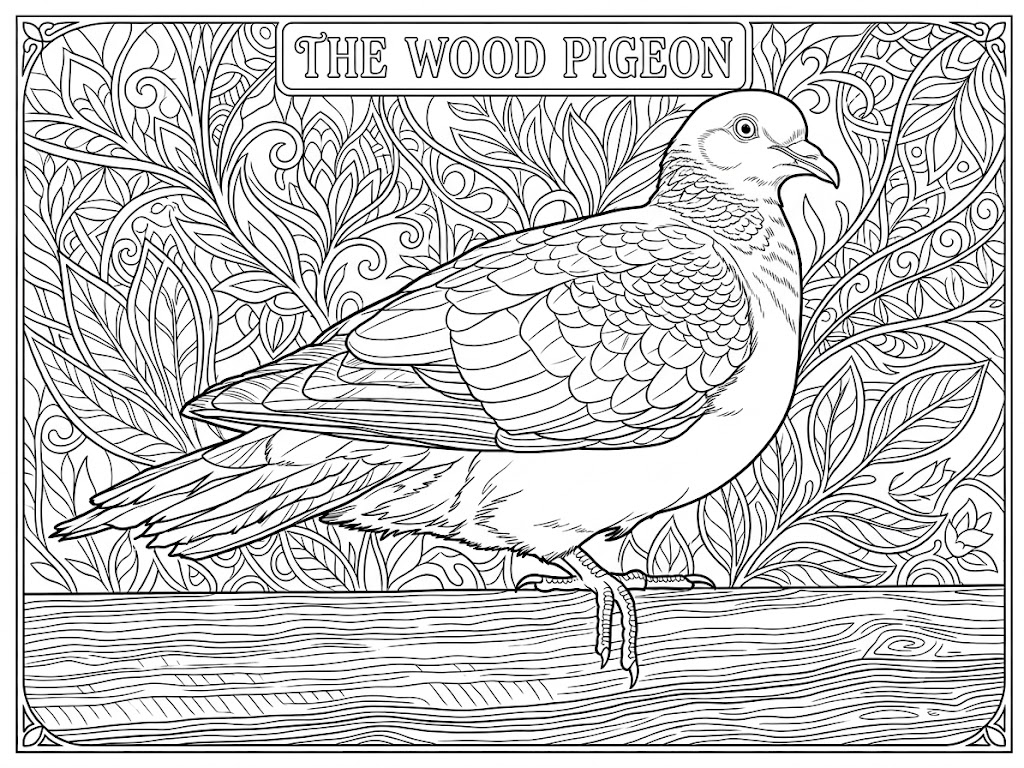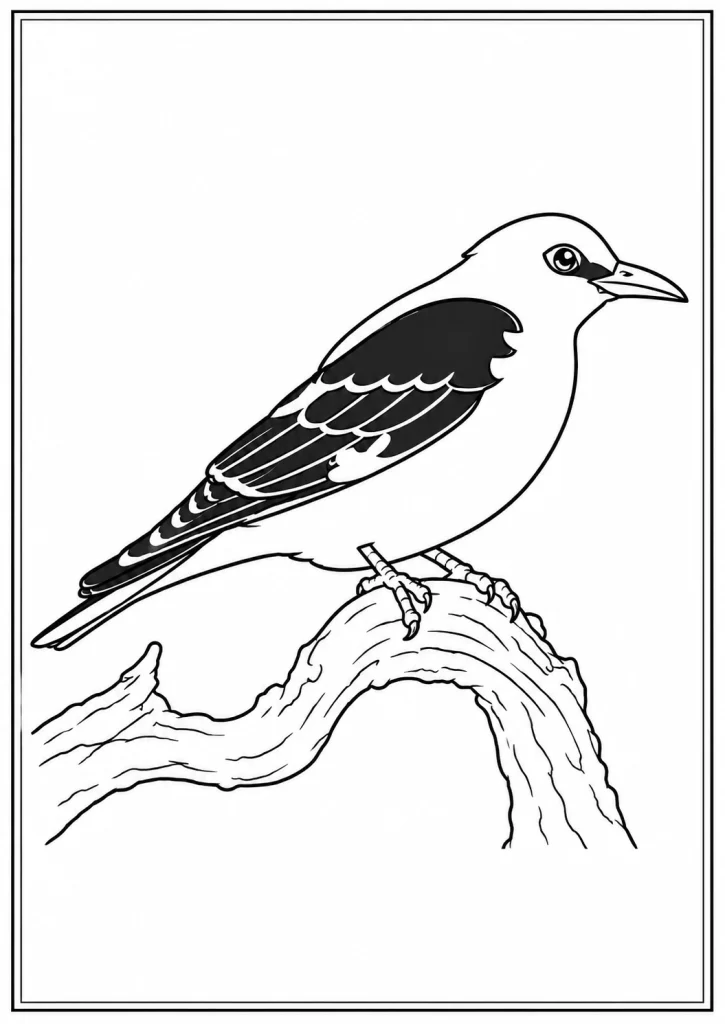
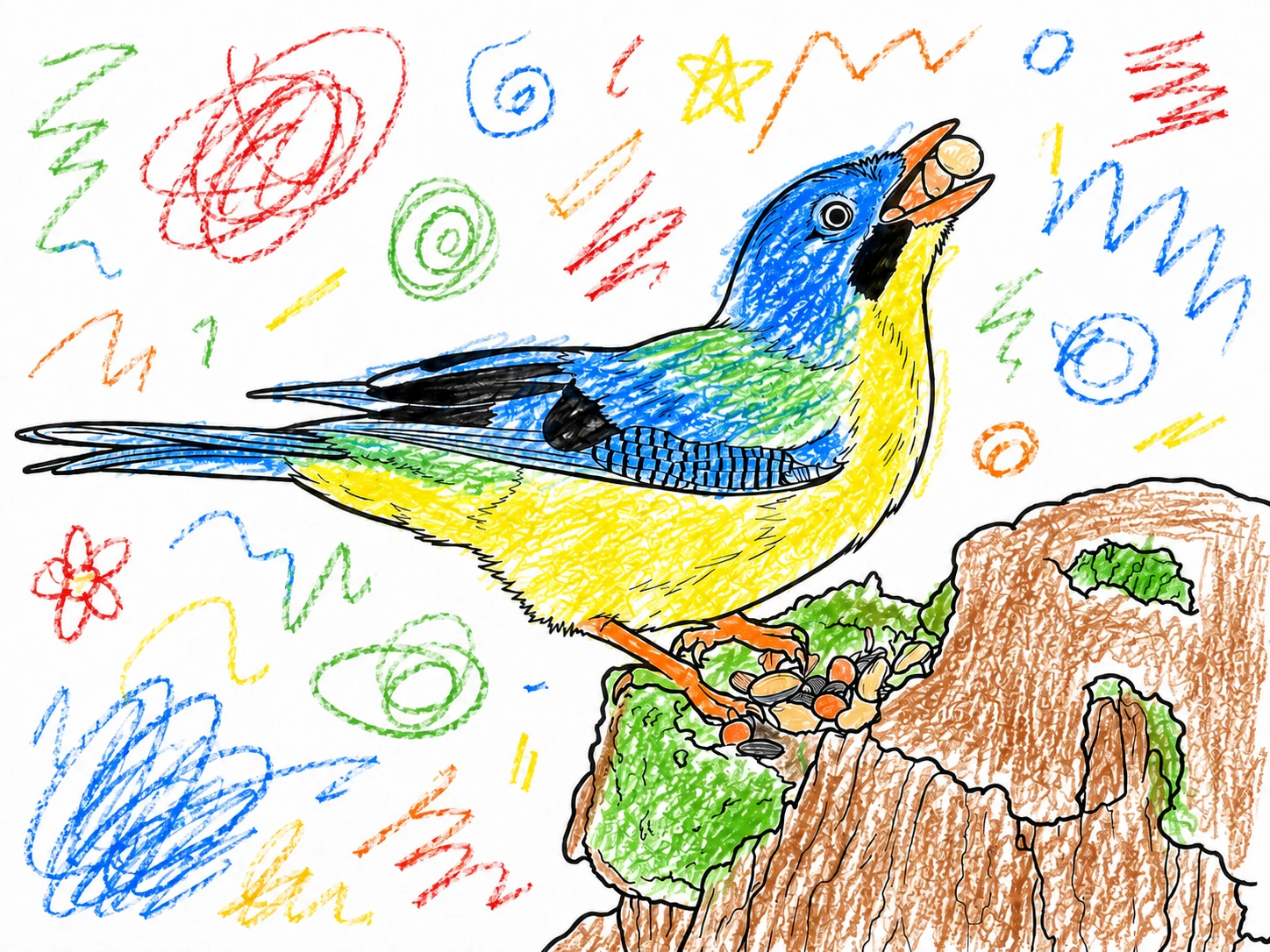
Bird coloring pages are a simple way to combine creativity with learning about nature. Children can color familiar garden birds, woodland species, birds of prey, waterbirds, and many other real birds while discovering the markings that make each species unique.
Instead of using generic cartoon birds, these printable pages are inspired by real species. Their body shapes, beaks, wing patterns, tails, and plumage markings are simplified into clean linework that is easy to print and fun to color.
Learn real birds while you color
Coloring gives children time to look closely at a bird instead of seeing it for only a few seconds. They may notice a red breast, a blue crown, a white wing patch, a spotted chest, or a dark stripe through the eye.
These details are called field marks. Birdwatchers use them to tell one species from another, and coloring can help children remember them naturally.
A Great Tit, for example, has a black head, white cheeks, and a yellow belly. A Eurasian Blue Tit has a blue crown and a more delicate face pattern. A European Robin is easy to recognize by its orange-red face and breast.
Printable bird activities for home and classroom
The coloring pages can be used at home, in the classroom, or as part of a nature activity. Choose a bird, print the page, and use colored pencils, crayons, markers, or paint.
Children can follow the natural color guide to recreate the real bird or use completely imaginary colors. Both approaches are useful: one teaches observation, while the other encourages creativity.
Teachers and parents can also use the pages as a starting point for simple questions:
- What color is the bird’s breast?
- Does it have a long or short bill?
- Are there stripes on the wings?
- Where does this bird live?
- What does it eat?
Start with birds children can see nearby
Common garden and park birds are a good place to begin because children may be able to spot the same species outside.
Popular birds to color include:
- European Robin
- Great Tit
- Eurasian Blue Tit
- Common Blackbird
- Song Thrush
- Common Wood Pigeon
- Eurasian Collared Dove
- Common Starling
After learning familiar birds, children can move on to woodland birds, waterbirds, coastal birds, and birds of prey.
More than just coloring
Each bird page can introduce the scientific name, natural colors, habitat, diet, and identification features of the species.
This turns a coloring activity into a small nature lesson without making it feel like homework. Children can learn that woodpeckers have strong bills, sparrowhawks have long tails for fast turns, and jays have bright blue wing patches.
The goal is simple: color the bird, notice its details, and remember what makes it different.
Take the finished page outside
Once a page is finished, use it as a simple homemade field guide. Place it near a window, take it into the garden, or bring it on a walk.
Try to find the real bird or look for another species with similar features. Even if the exact bird does not appear, children can practice looking at size, shape, colors, beaks, tails, and wing patterns.
The more they look, the easier bird identification becomes.
Choose a bird and start coloring
Browse the collection of printable bird coloring pages, pick a species, and start with the colors you already have.
The finished picture is only part of the activity. The best part may come later, when a child sees a bird outside and says, “I know that one.”