- Scientific name: Cuculus canorus
- Group: Woodland Birds
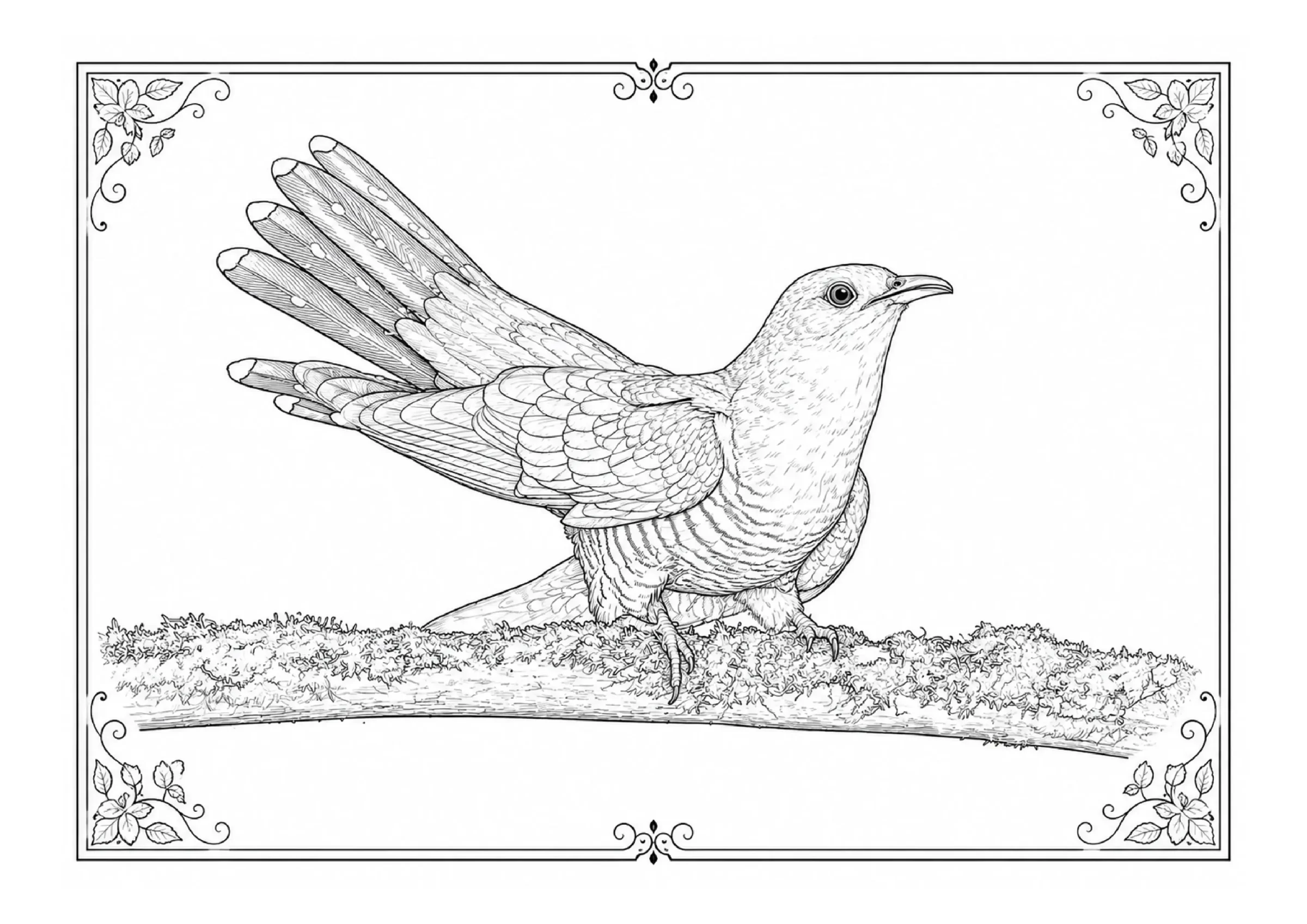
This printable Common Cuckoo coloring page is based on the bird’s long body, pointed wings, rounded tail, and distinctive barred plumage.
The Common Cuckoo can look surprisingly hawk-like, especially in flight. Its slim shape, gray upperparts, pale barred underparts, and long tail make it an interesting bird to color while learning some of the features used to recognize it in the wild.
Use the natural color guide for a realistic version, or experiment with your own colors.
Color guide
- Head and upperparts: blue-gray in a typical adult male
- Throat and upper breast: gray
- Belly and lower breast: white or pale gray with narrow dark horizontal bars
- Wings: dark gray
- Tail: dark gray with white spots and markings
- Bill: dark gray or blackish, often with a paler base
- Eyes: yellow to orange-yellow
- Eye ring: yellow
- Legs and feet: yellow
Adult females can resemble males, but some females occur in a reddish-brown form with darker barring. Young birds are usually browner and more heavily patterned.
How to recognize a Common Cuckoo
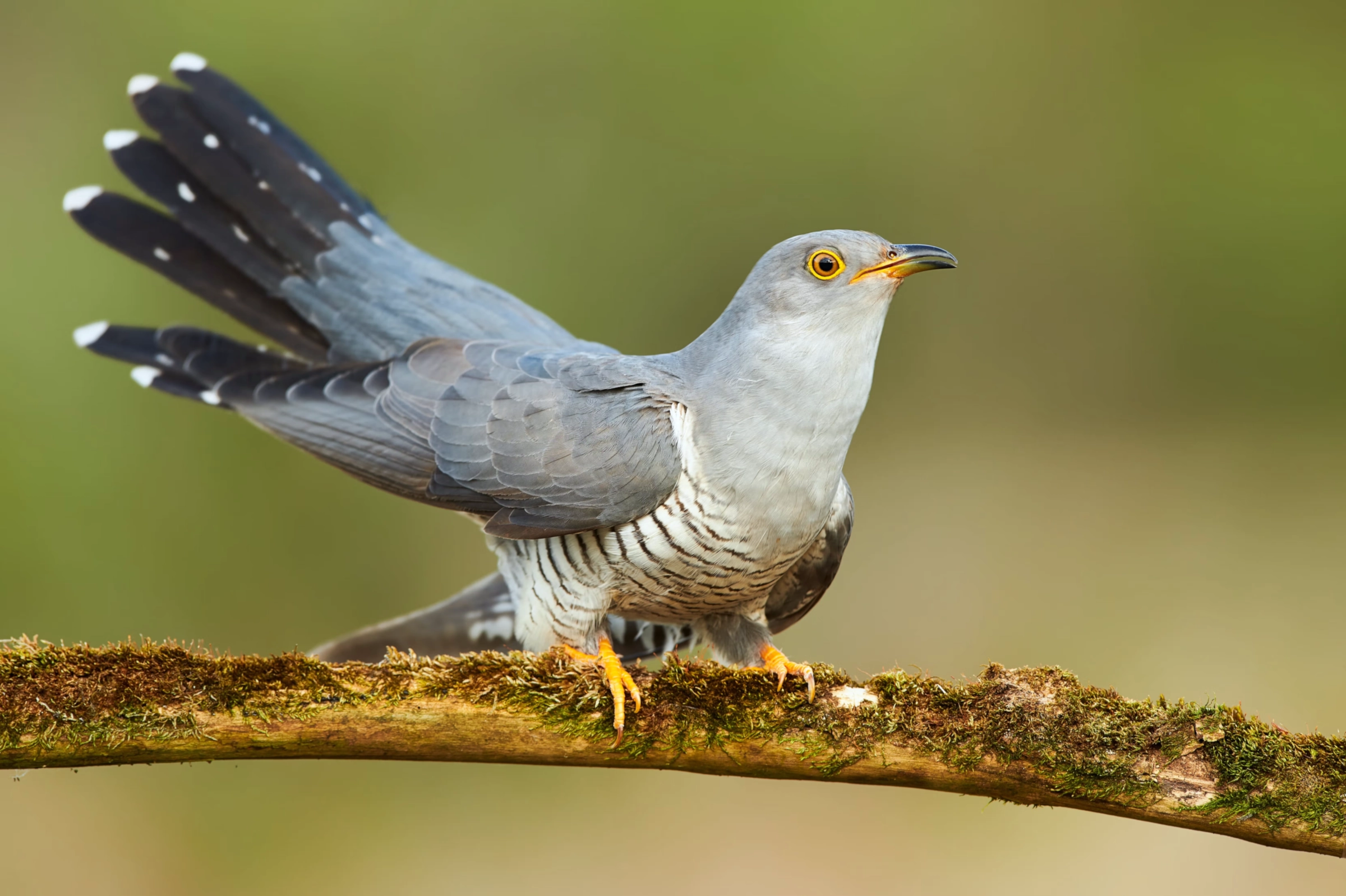
The Common Cuckoo is a medium-sized, slender bird with pointed wings and a long rounded tail.
A typical adult male has a gray head and back, while the pale underside is crossed by narrow dark bars. This pattern, together with its long wings and tail, can make the bird resemble a small bird of prey.
One of the easiest ways to identify a Common Cuckoo is by its famous two-note “cuck-oo” call, which is most often heard during spring and early summer.
When perched, cuckoos often hold their wings slightly drooped and their long tail angled downward.
Where it lives
Common Cuckoos breed across much of Europe and Asia.
They can be found in woodland edges, open forests, farmland, heathland, wetlands, meadows, and other landscapes where suitable host birds are present.
They often perch on exposed branches, fence posts, or wires while watching the surrounding area.
Common Cuckoos are migratory. European birds travel long distances to spend the non-breeding season in sub-Saharan Africa.
What it eats
Common Cuckoos feed mainly on insects.
Caterpillars are particularly important, including hairy caterpillars that many other birds avoid. They also eat beetles, grasshoppers, dragonflies, and other insects.
Their digestive system is adapted to deal with the hairs of some caterpillars, allowing cuckoos to use a food source that is less attractive to many other birds.
Interesting facts
- The Common Cuckoo is famous for brood parasitism. Instead of raising its own chicks, the female lays an egg in the nest of another bird.
- Different female cuckoos often specialize in particular host species, and their eggs may closely resemble the eggs of those birds.
- After hatching, a young cuckoo may push the host bird’s eggs or chicks out of the nest, leaving itself as the main recipient of food.
- The cuckoo chick can eventually become much larger than the foster parents that continue feeding it.
- The familiar “cuck-oo” call is mainly produced by males.
- Common Cuckoos are long-distance migrants, with European populations traveling thousands of kilometers between their breeding grounds and wintering areas in Africa.
- Despite its hawk-like appearance, the Common Cuckoo is not a bird of prey.