
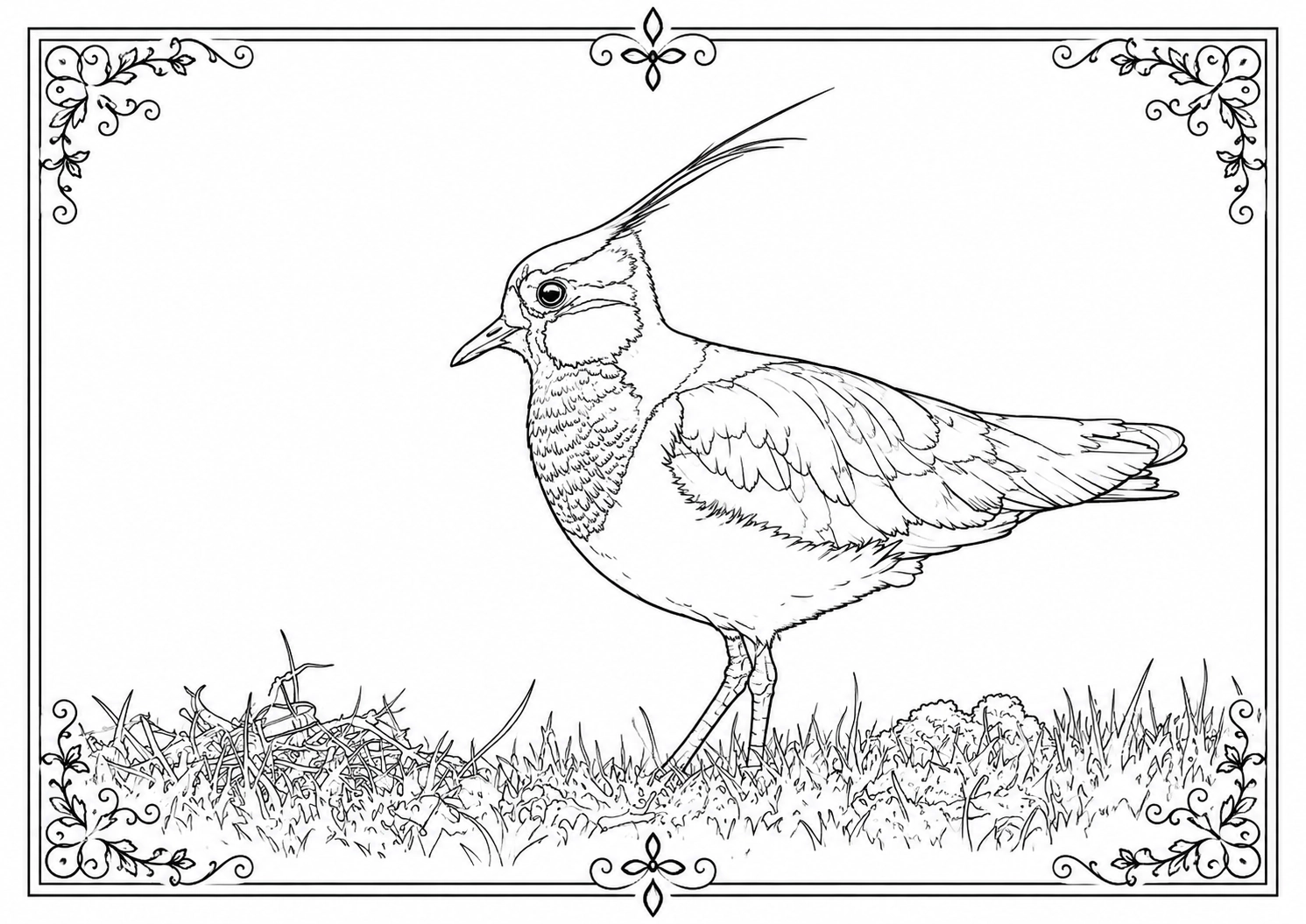
Discover the birds of fields, meadows, hedgerows, pastures, and open countryside with this collection of printable farmland bird coloring pages based on real species.
Each illustration is inspired by the bird’s natural shape, plumage patterns, and recognizable field marks, then simplified into clean linework that is easy to print and enjoyable to color. Follow the natural color guide for a realistic result, or choose your own colors and create something completely different.
Discover birds of the countryside
Farmland supports a wide variety of birds.
Some search for insects and seeds on the ground. Others feed along field edges, perch on fences, or hide in tall grass and hedgerows. Many species depend on a mixture of open land and nearby cover.
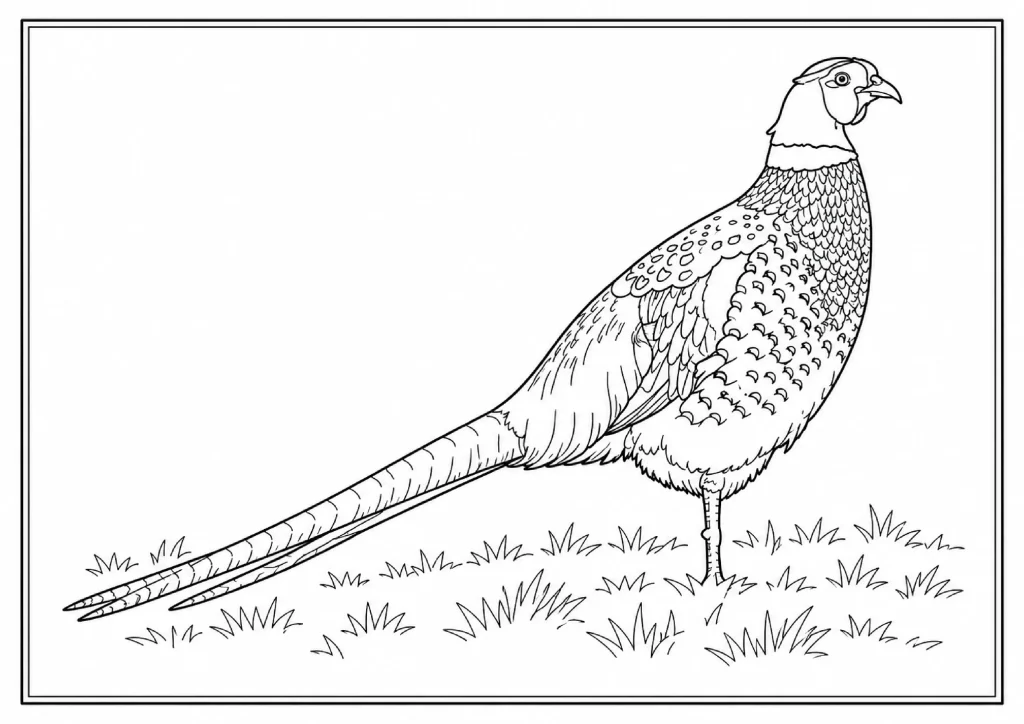
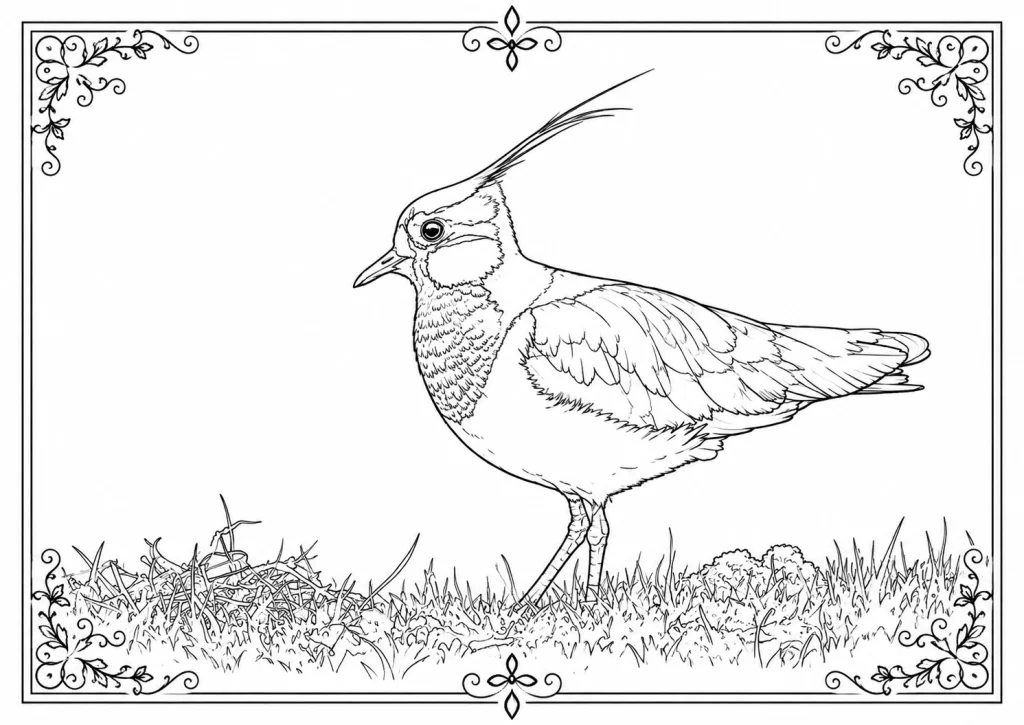
This collection includes familiar farmland birds such as the Common Pheasant and Northern Lapwing, along with other species associated with fields, meadows, and rural landscapes.
Color and learn
Every bird page includes more than a printable illustration.
You can also learn the bird’s scientific name, natural colors, habitat, diet, and the features that help identify it.
Coloring encourages close observation. A long tail, bright facial patch, crest, barred wing, or unusual leg color can become an important clue when you later see the bird outdoors.
Learn to recognize farmland birds
Many farmland birds spend much of their time on the ground, so body shape and posture can be just as useful as color.
A Common Pheasant is easy to recognize by its large body and extremely long tail. Adult males also have a glossy green head, red facial skin, and richly patterned plumage.
A Northern Lapwing has a very different appearance, with broad rounded wings, a long crest, dark breast, pale belly, and iridescent upperparts.
Comparing species while coloring helps make these differences easier to remember.
Look closely at patterns and shapes
Farmland birds are not always brightly colored.
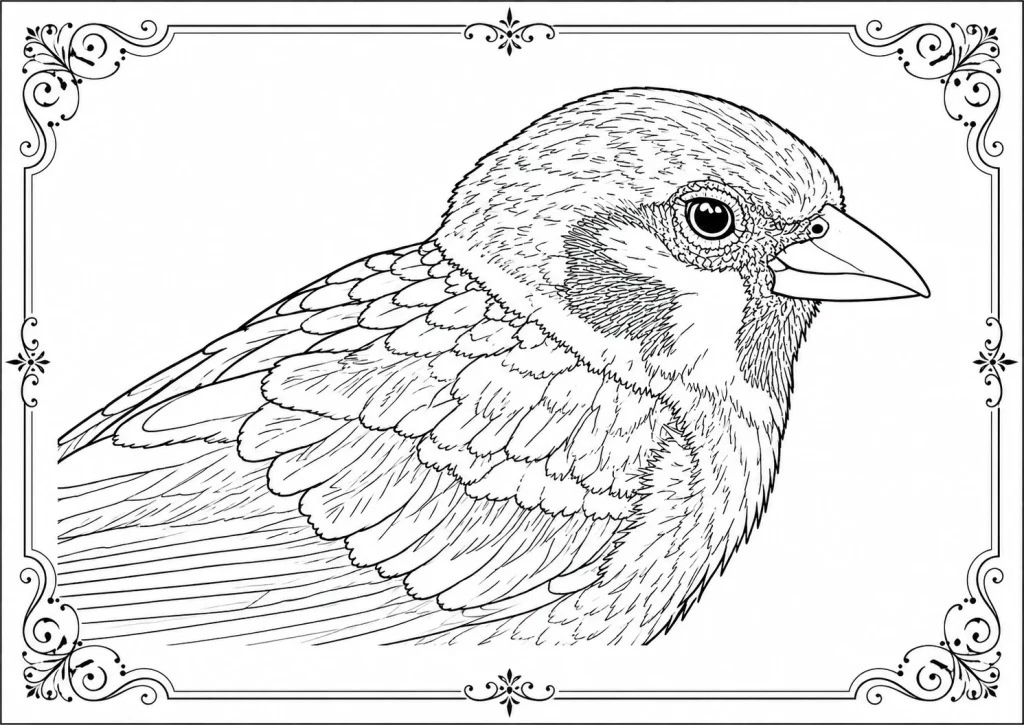
Many species rely on brown, gray, buff, and cream plumage to blend into dry grass, soil, and crops. At first glance they may look plain, but closer observation reveals spots, bars, stripes, pale feather edges, and subtle differences in shade.
Try looking at the bill, legs, tail, head shape, and wing pattern as well as the main body color.
These details can be especially useful when two birds have similar plumage.
Birds and farmland habitats
Farmland is more than just crop fields. Hedgerows provide nesting places and shelter. Grasslands are important feeding areas. Small ponds, field margins, old trees, and patches of scrub can all support different bird species.
Some birds prefer open ground, while others stay close to bushes and woodland edges. Learning where a species lives can make it much easier to identify.
Print at home
Choose a species, download the printable coloring page, and use colored pencils, crayons, markers, or your favorite art materials.
Follow the natural color guide to recreate the real bird, or experiment with your own palette.
When the page is finished, take it on a countryside walk and look for the same shapes, colors, and markings in the birds around you.
From coloring page to countryside birdwatching
A finished coloring page can become a simple field guide.
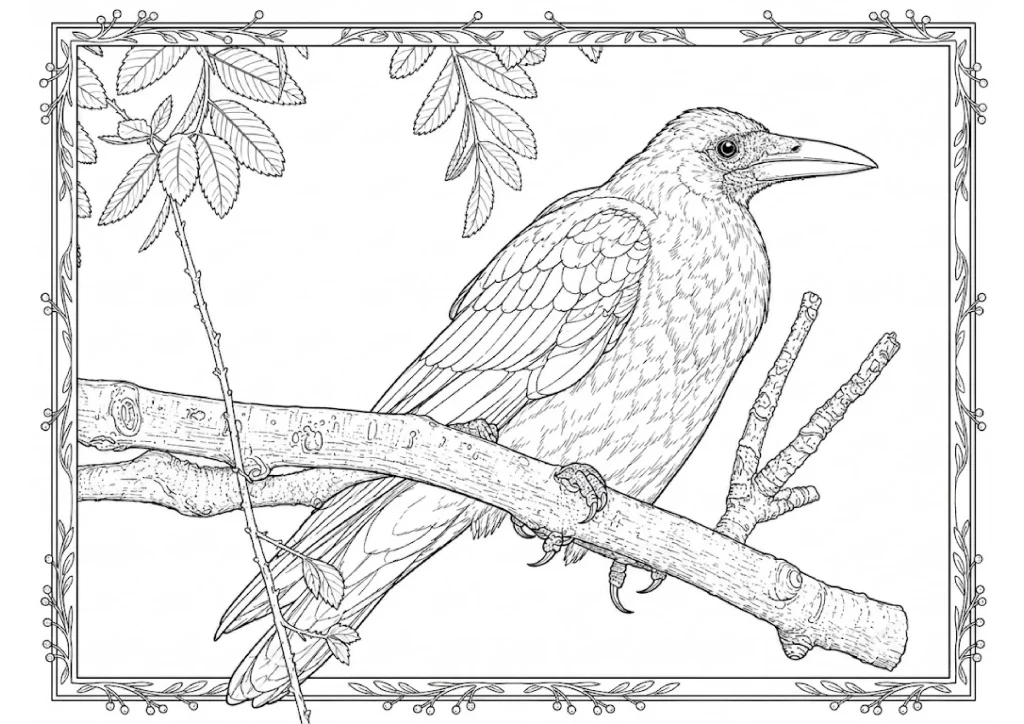
Look across a meadow, along a hedgerow, or over a recently ploughed field. Watch for birds walking on the ground, flying above the fields, or calling from fence posts and trees.
Even if you do not find the exact species you colored, try comparing what you see.
- Is the bird larger or smaller?
- Does it have a long tail?
- Is there a crest?
- Are the wings broad or pointed?
- Does it walk, run, or hop?
The more details you notice, the easier bird identification becomes.