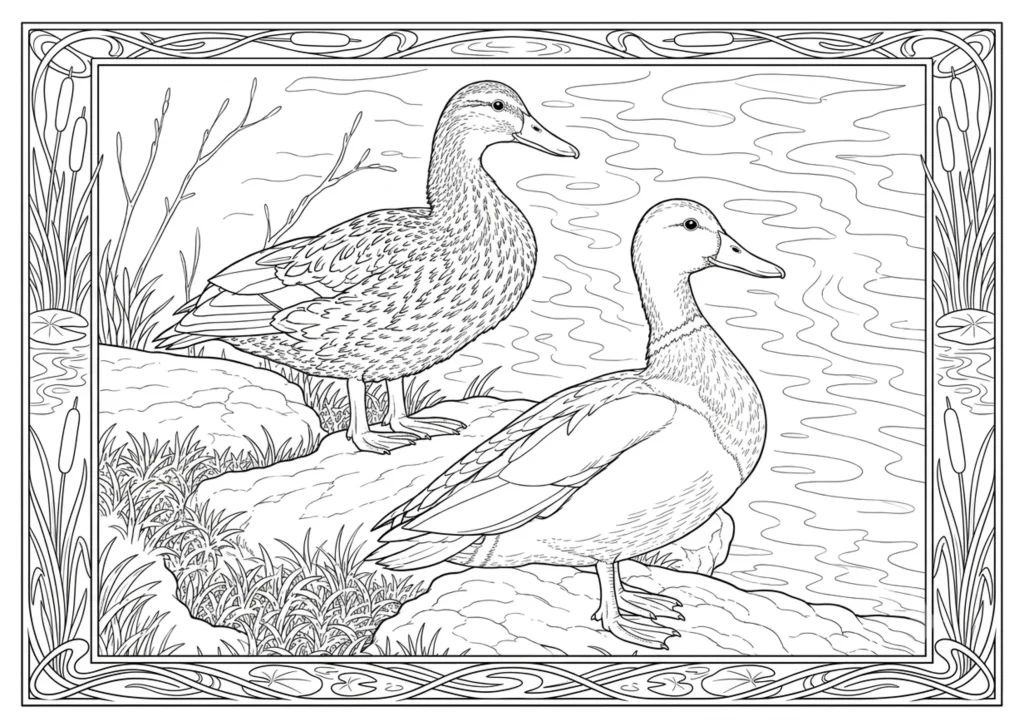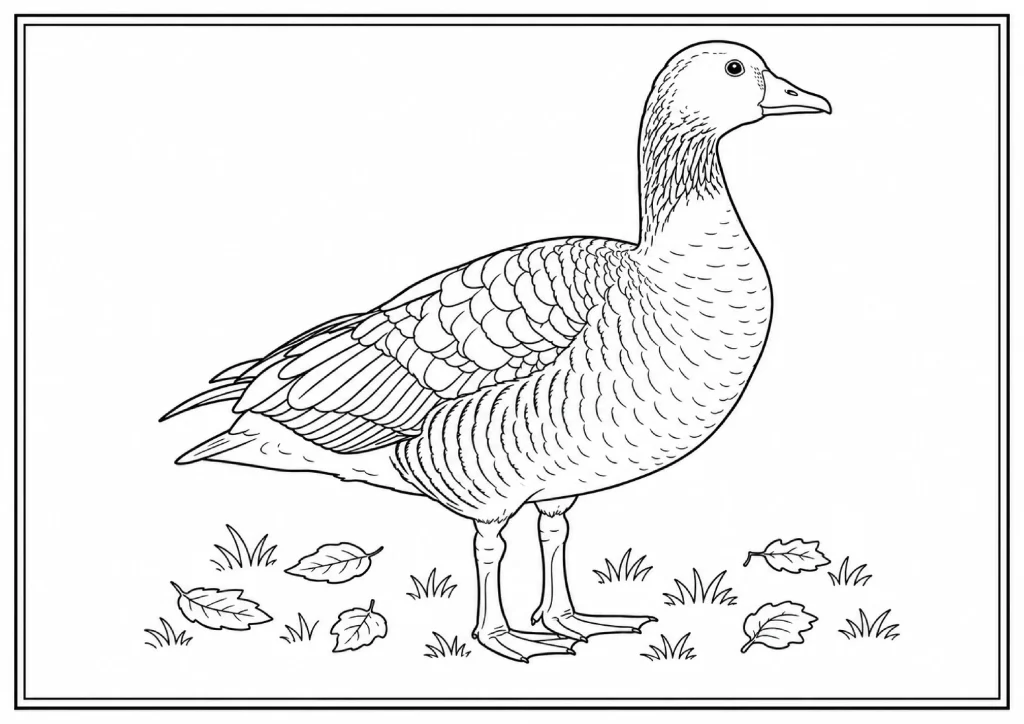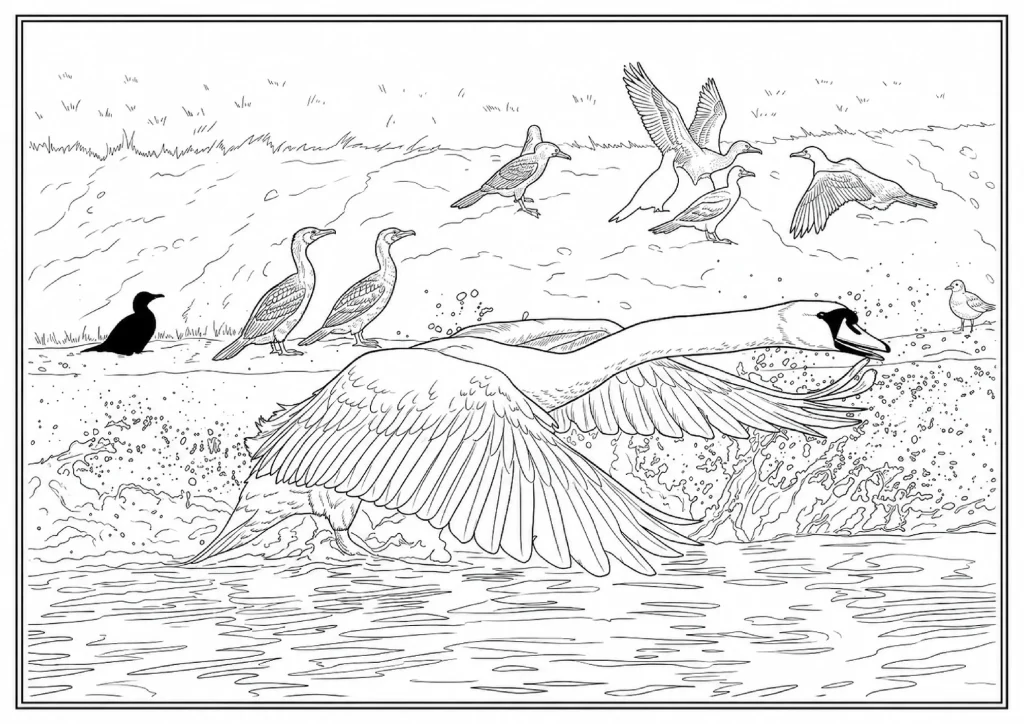
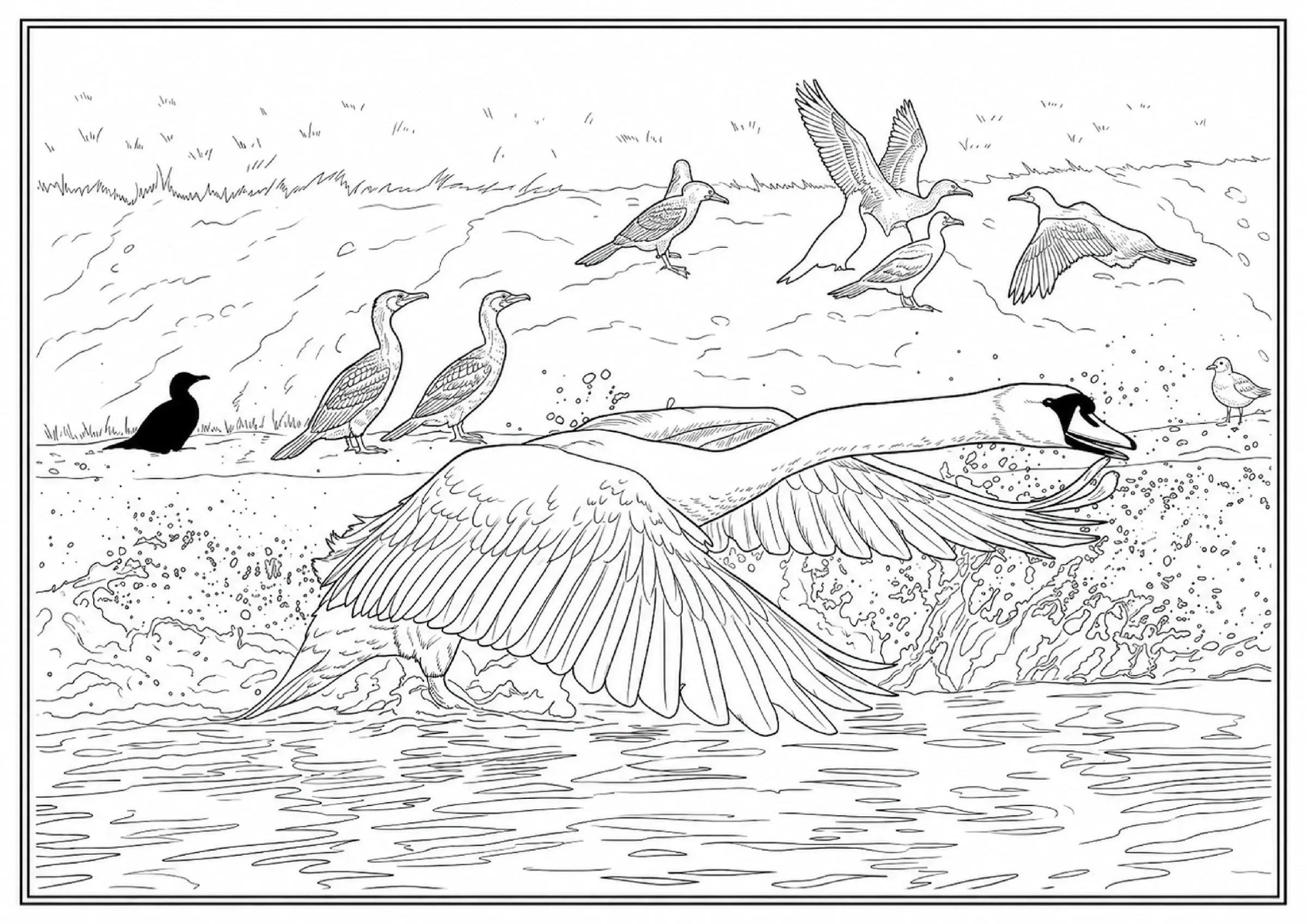
Discover birds that live on lakes, rivers, ponds, reservoirs, and other freshwater habitats with this collection of printable waterbird coloring pages based on real species.
Each page is inspired by the bird’s natural shape, plumage patterns, and recognizable field marks, then simplified into clean linework that is easy to print and enjoyable to color. Follow the natural color guide for a realistic result, or choose your own colors and create something completely different.
Discover birds of the water
Waterbirds include many familiar species that spend much of their lives swimming, feeding, resting, or nesting near water.
This collection features birds such as swans, ducks, geese, grebes, coots, and other species commonly found around lakes and rivers.
Some are easy to recognize by their size and shape. Others can be identified by smaller details such as bill color, head markings, wing patterns, or the way they sit on the water.
Color and learn
Every bird page includes more than a printable illustration. You can also learn the bird’s scientific name, natural colors, habitat, diet, and the features that help identify it.
Coloring encourages close observation. A white body, dark head, bright bill, striped neck, or colored wing patch can become an important clue when you later see the bird outdoors.
Learn to recognize waterbirds
Waterbirds are especially good for beginner birdwatchers because they are often easier to observe than small woodland birds.
A Mute Swan can be recognized by its large white body, long curved neck, and orange bill with a black base. Ducks may differ in head shape, bill color, wing markings, or the pattern of the breast and sides.
By comparing several coloring pages, children and adults can begin to notice these differences naturally.
Look at more than color
Color is only one part of bird identification. Try to notice the shape of the bill, the length of the neck, the position of the tail, and the way the bird moves through the water.
Some waterbirds dive completely below the surface. Others feed by tipping forward. Large species such as swans may use their long necks to reach underwater plants without diving.
These behaviors can be just as useful as plumage when identifying a bird.
Print at home
Choose a species, download the printable coloring page, and use colored pencils, crayons, markers, or your favorite art materials.
When the picture is finished, take it with you to a pond, lake, river, or park. You may be able to compare your coloring page with the real bird swimming just a few meters away.