- Scientific name: Anser anser
- Group: Waterbirds
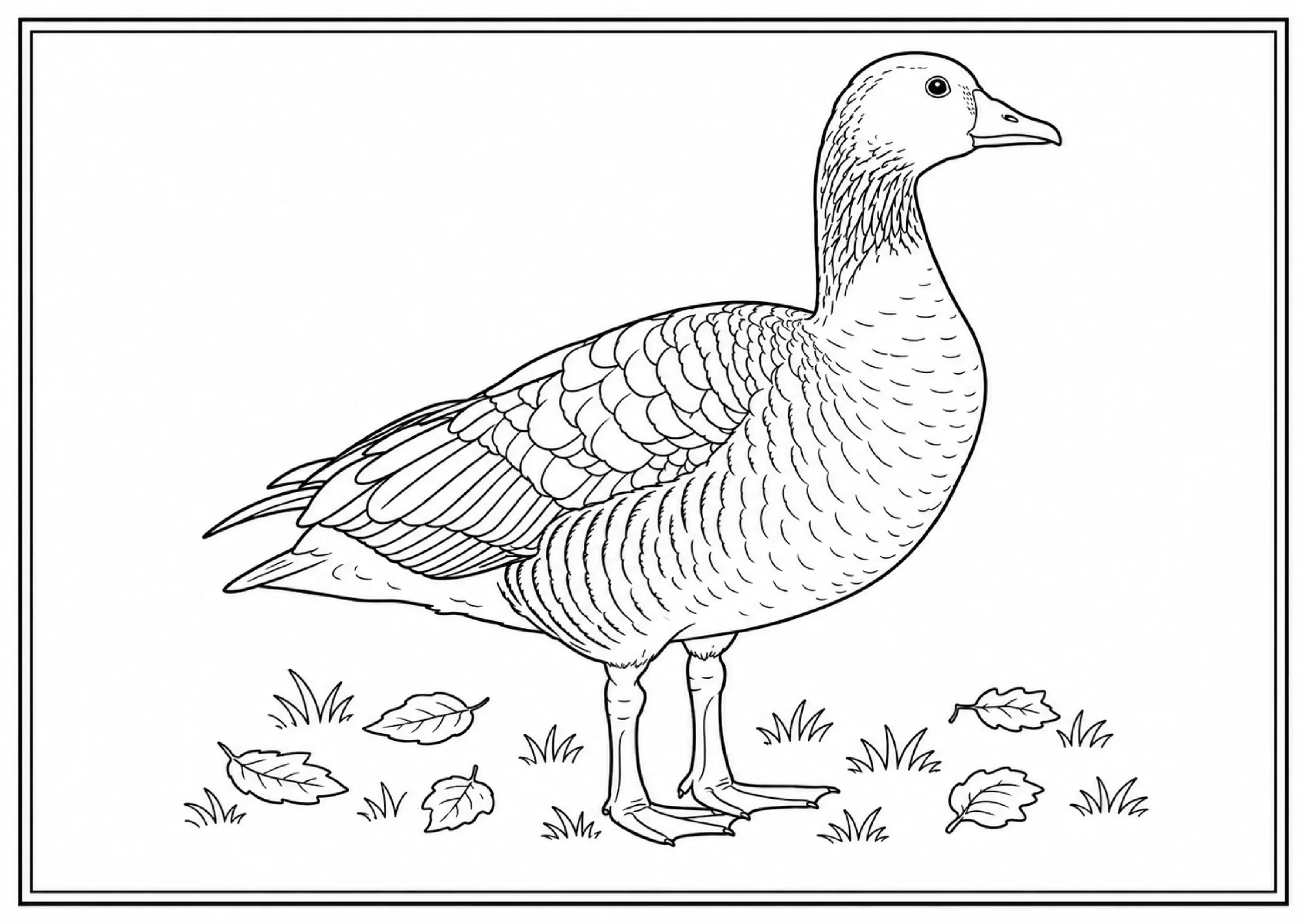
This printable Greylag Goose coloring page is based on the bird’s large body, long neck, sturdy bill, and broad wings.
Greylag Geese are mostly gray-brown, but their plumage contains many subtle patterns. Pale-edged feathers create a scaled appearance across the back and wings, while the pinkish-orange bill and legs provide brighter areas of color.
Use the natural color guide for a realistic result, or experiment with your own colors.
Color guide
- Head and neck: gray-brown
- Back: gray-brown with pale feather edges
- Wings: gray and brown with darker flight feathers
- Breast: pale gray-brown
- Belly: pale gray or whitish, sometimes with irregular dark markings
- Undertail: white
- Tail: gray-brown with white edges
- Bill: pinkish orange to orange
- Eyes: dark brown
- Legs and feet: pink to flesh-colored
Young birds generally resemble adults but tend to have softer, less strongly patterned plumage.
How to recognize a Greylag Goose
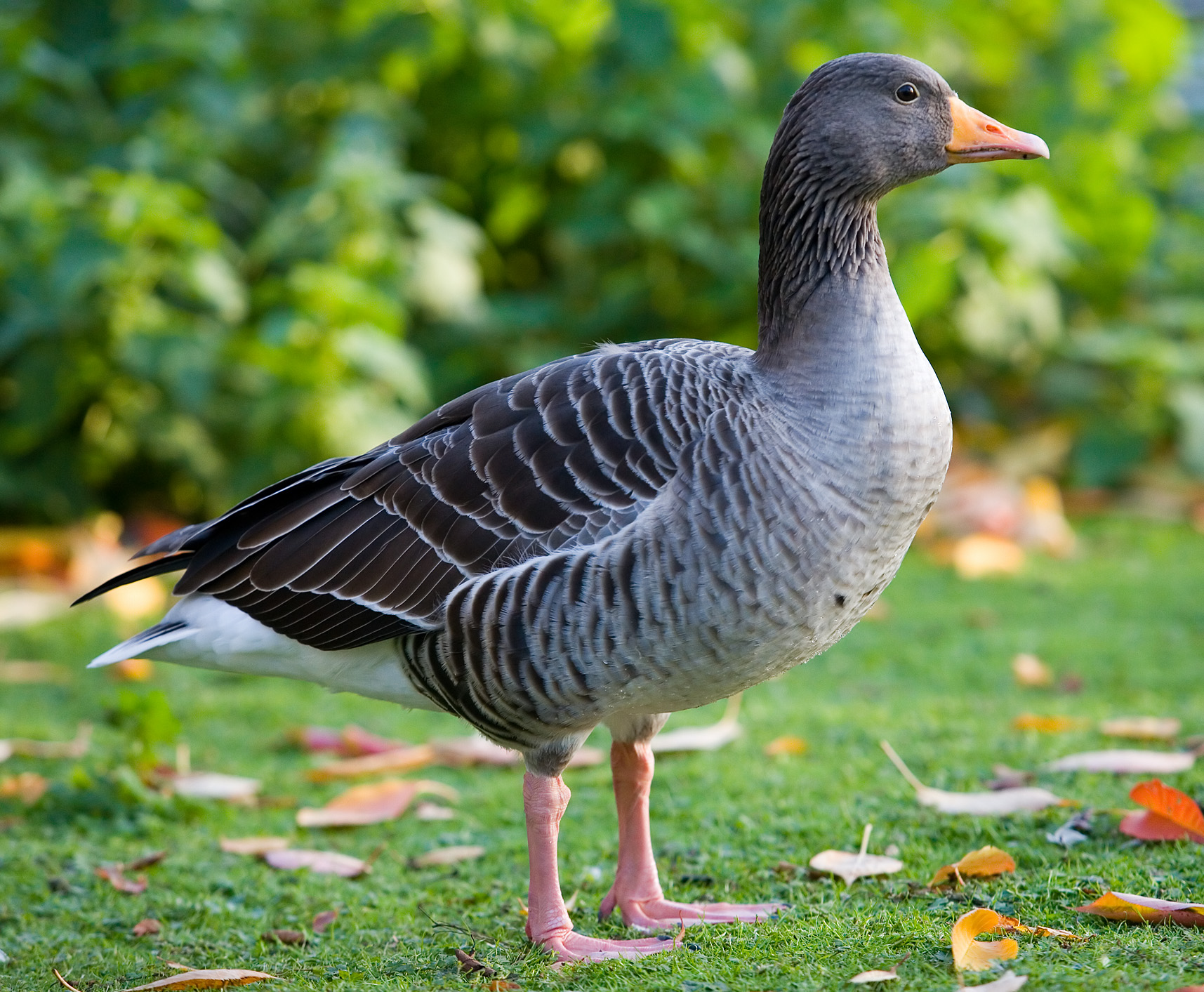
The Greylag Goose is a large, heavy-bodied goose with a thick neck, broad wings, and a strong bill.
Its plumage is mostly gray-brown, with paler feather edges that give the upperparts a patterned appearance. The pinkish-orange bill and pink legs are useful identification features.
In flight, Greylag Geese show broad wings and often travel in groups arranged in lines or V-shaped formations.
Their calls are loud, nasal honks and are frequently heard when flocks are flying overhead.
Where it lives
Greylag Geese are found across much of Europe and parts of Asia.
They live around lakes, marshes, reservoirs, slow-moving rivers, wet grasslands, and other open areas close to water. They often feed in meadows and agricultural fields before returning to water to rest.
Some populations migrate considerable distances, while others remain in the same region throughout the year.
Greylag Geese also occur in parks and other areas where they have become accustomed to people.
What it eats
Greylag Geese feed mainly on plants.
Their diet includes grasses, leaves, shoots, roots, seeds, grain, and aquatic vegetation. They frequently graze on short grass in much the same way as grazing mammals.
On farmland they may feed on cereal crops, stubble, and spilled grain.
Young goslings also eat small amounts of insects and other invertebrates while growing.
Interesting facts
- The Greylag Goose is one of the ancestors of many breeds of domestic goose.
- Its scientific name, Anser anser, uses the Latin word for goose twice.
- Greylag Geese are highly social and often form large flocks outside the breeding season.
- Pairs usually maintain strong bonds, and both parents protect and accompany their goslings.
- The young are able to walk, swim, and feed themselves shortly after hatching.
- Greylag Geese often fly in V-shaped formations, which can help birds take advantage of air currents produced by those flying ahead.
- The species played an important role in the work of ethologist Konrad Lorenz, whose studies of imprinting included Greylag Geese.