- Scientific name: Cygnus olor
- Group: Waterbirds
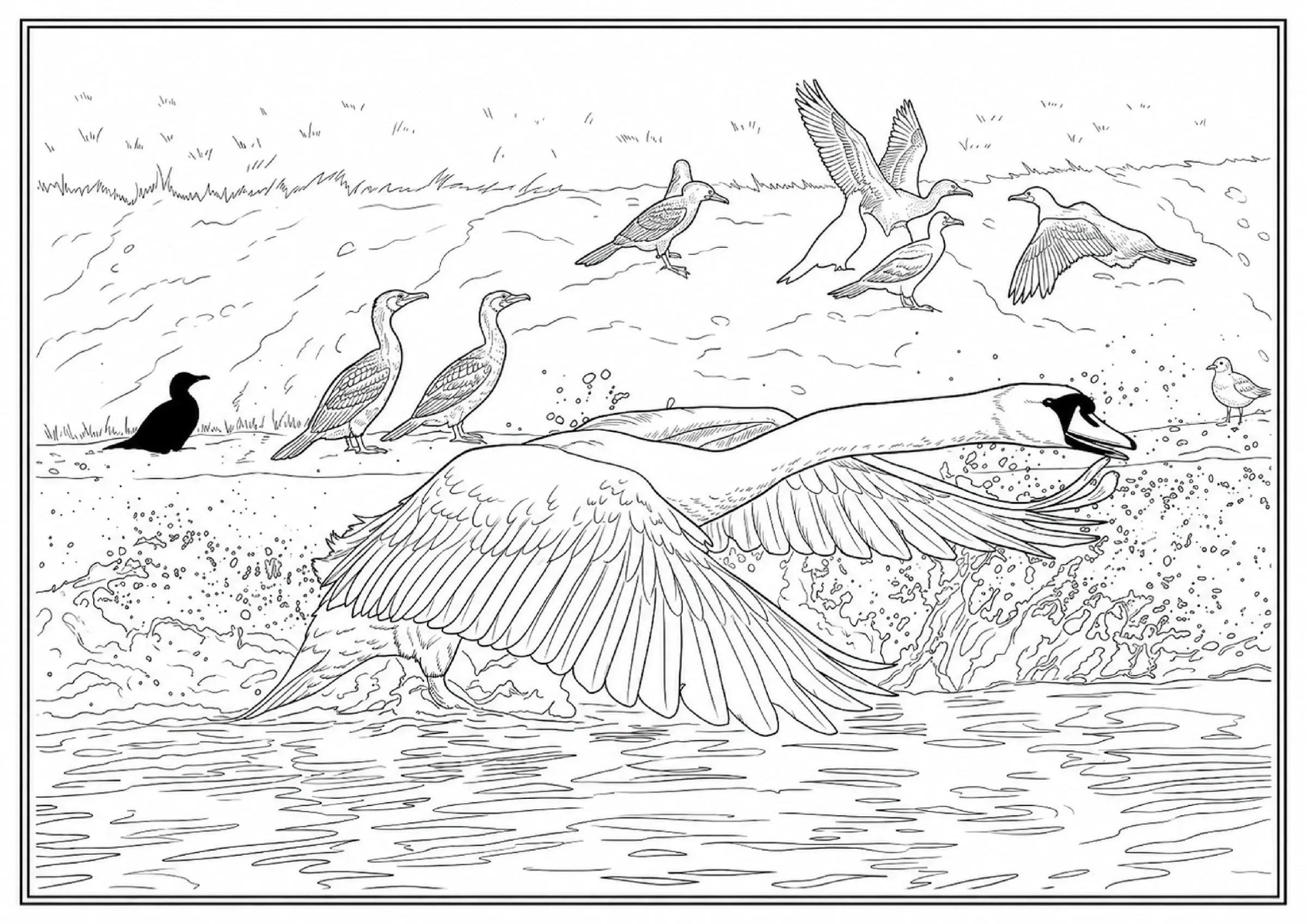
This printable Mute Swan coloring page is based on the bird’s long curved neck, large rounded body, broad wings, and elegant swimming posture.
The Mute Swan is one of the most recognizable waterbirds in Europe. Adults are almost entirely white, but their orange bill, black facial markings, and dark feet provide useful details for realistic coloring.
Use the natural color guide to recreate the real bird, or experiment with your own colors for a more imaginative version.
Good detail
|
|
Average detail |
Color guide
- Body and wings: white
- Neck and head: white
- Bill: bright orange to orange-red
- Knob at the base of the bill: black
- Area around the eyes and base of the bill: black
- Eyes: dark brown or black
- Legs and feet: dark gray to black
Young birds, called cygnets, are usually gray-brown or pale gray, although some can be much lighter. Their bills are duller and lack the bright orange color of adults.
How to recognize a Mute Swan
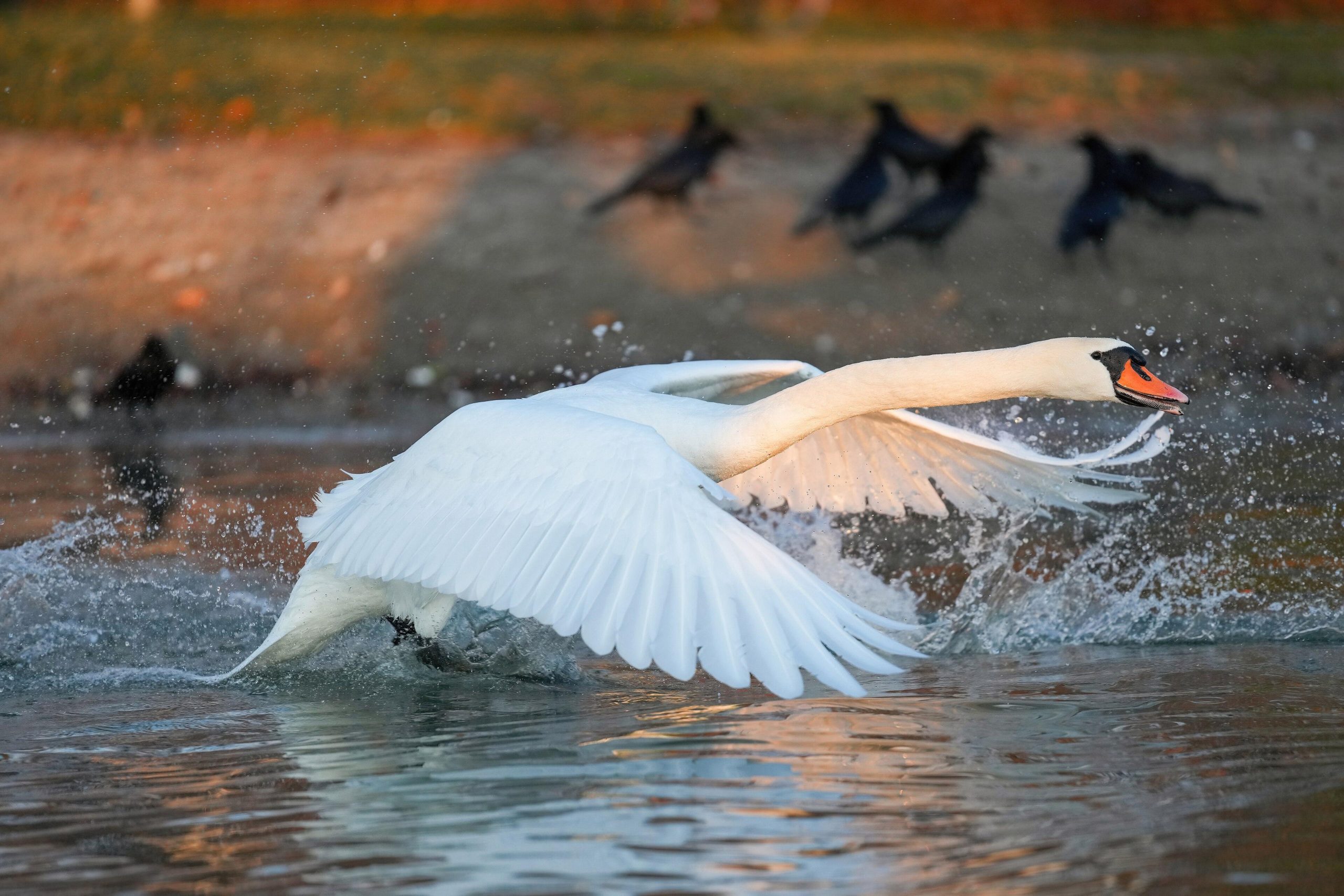
The Mute Swan is a very large waterbird with a long neck, heavy body, and broad wings.
Adults are almost completely white and have a distinctive orange bill with a black base and a prominent black knob above it. This knob is usually larger in males.
When swimming, Mute Swans often hold their necks in a graceful S-shape. Territorial birds may raise their wings into an arched position over the back, creating a particularly impressive silhouette.
Despite the name “Mute Swan,” the species is not completely silent. It produces hisses, grunts, snorts, and other quiet sounds.
Where it lives
Mute Swans live on lakes, ponds, slow-moving rivers, canals, reservoirs, wetlands, and sheltered coastal waters.
They are widespread across much of Europe and are also found in parts of western and central Asia. The species has been introduced to several other regions.
They often live close to people and are familiar birds in city parks, ornamental lakes, and rivers running through towns.
Mute Swans usually build large nests close to the water, using reeds, grasses, and other vegetation.
What it eats
Mute Swans feed mainly on aquatic vegetation.
They use their long necks to reach plants growing beneath the surface and may tip their bodies forward so that only the tail and rear part of the body remain above the water.
Their diet can include submerged plants, algae, roots, stems, leaves, and seeds.
They may also eat small aquatic animals such as insects, mollusks, and other invertebrates, especially while feeding among vegetation.
Interesting facts
- Mute Swans are among the heaviest flying birds.
- Their wings produce a noticeable rhythmic sound during flight, which can sometimes be heard before the birds pass overhead.
- The black knob above the bill is generally more pronounced in adult males than in females.
- Young Mute Swans are called cygnets and usually remain with their parents for several months.
- Adults can become highly territorial during the breeding season and may aggressively defend the area around their nest and young.
- A pair may stay together for many years, although the popular claim that all swans invariably mate for life is an oversimplification.
- The Mute Swan has become an important cultural symbol in many European countries and frequently appears in art, literature, parks, and heraldry.