- Scientific name: Anas platyrhynchos
- Group: Waterbirds
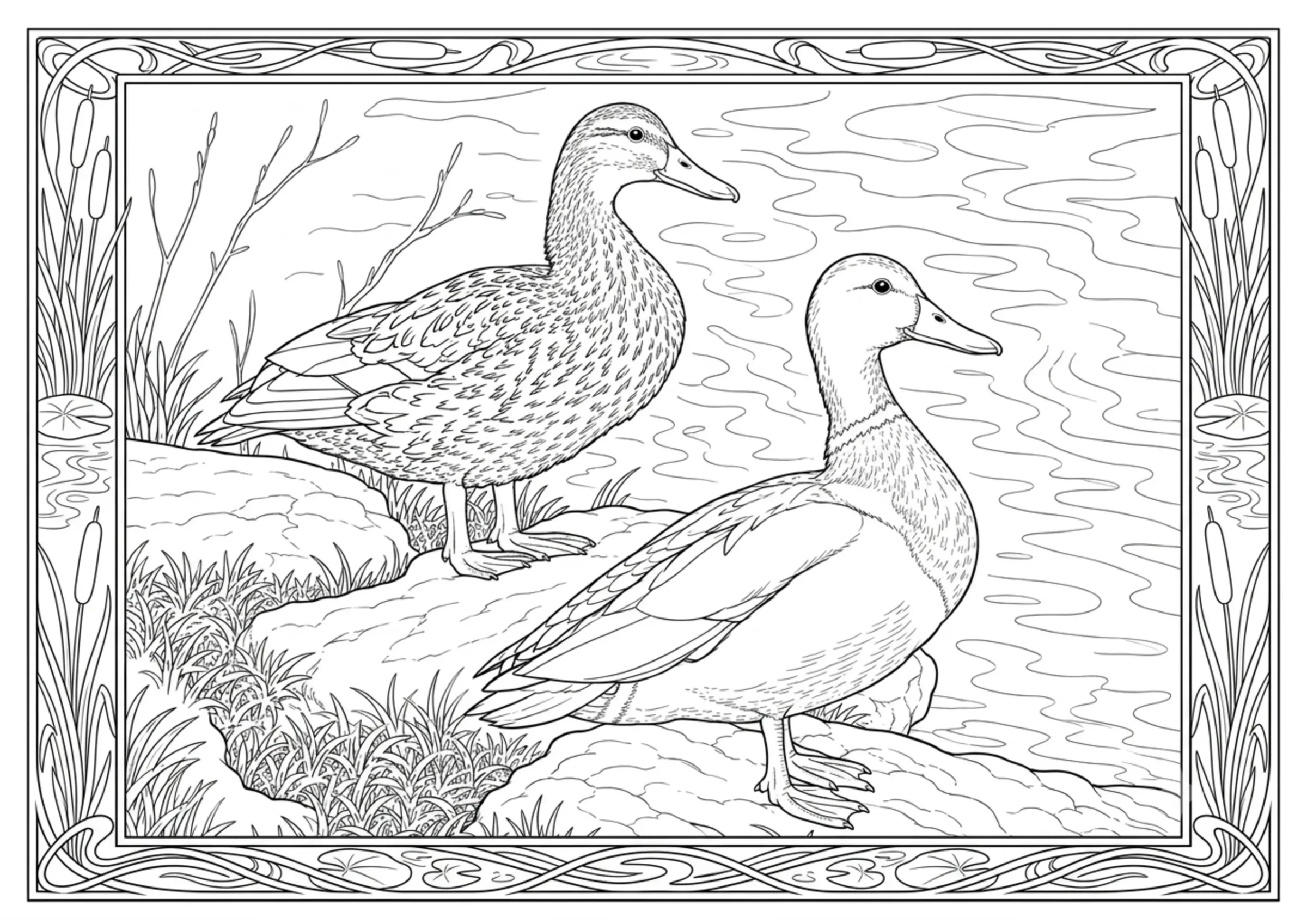
This printable Mallard coloring page is based on the bird’s rounded body, broad bill, short tail, and familiar duck shape.
Mallards are especially interesting to color because males and females look very different. Adult males have a glossy green head, yellow bill, chestnut breast, and gray body, while females are mottled brown for camouflage.
Use the natural color guide for a realistic result, or create your own version with imaginative colors.
Color guide
Adult male:
- Head and neck: glossy dark green
- Neck ring: white
- Breast: rich chestnut brown
- Body: pale gray
- Back: gray-brown
- Tail: dark with white outer areas
- Bill: yellow to yellow-green
- Eyes: dark brown
- Legs and feet: orange
Adult female:
- Head and body: mottled brown and tan
- Breast: brown with darker markings
- Wings: brown with a blue-violet speculum bordered by white
- Bill: orange-brown, often with darker markings
- Eyes: dark brown
- Legs and feet: orange
Both sexes have the distinctive blue-violet wing patch, called a speculum, which is often especially visible in flight.
How to recognize a Mallard
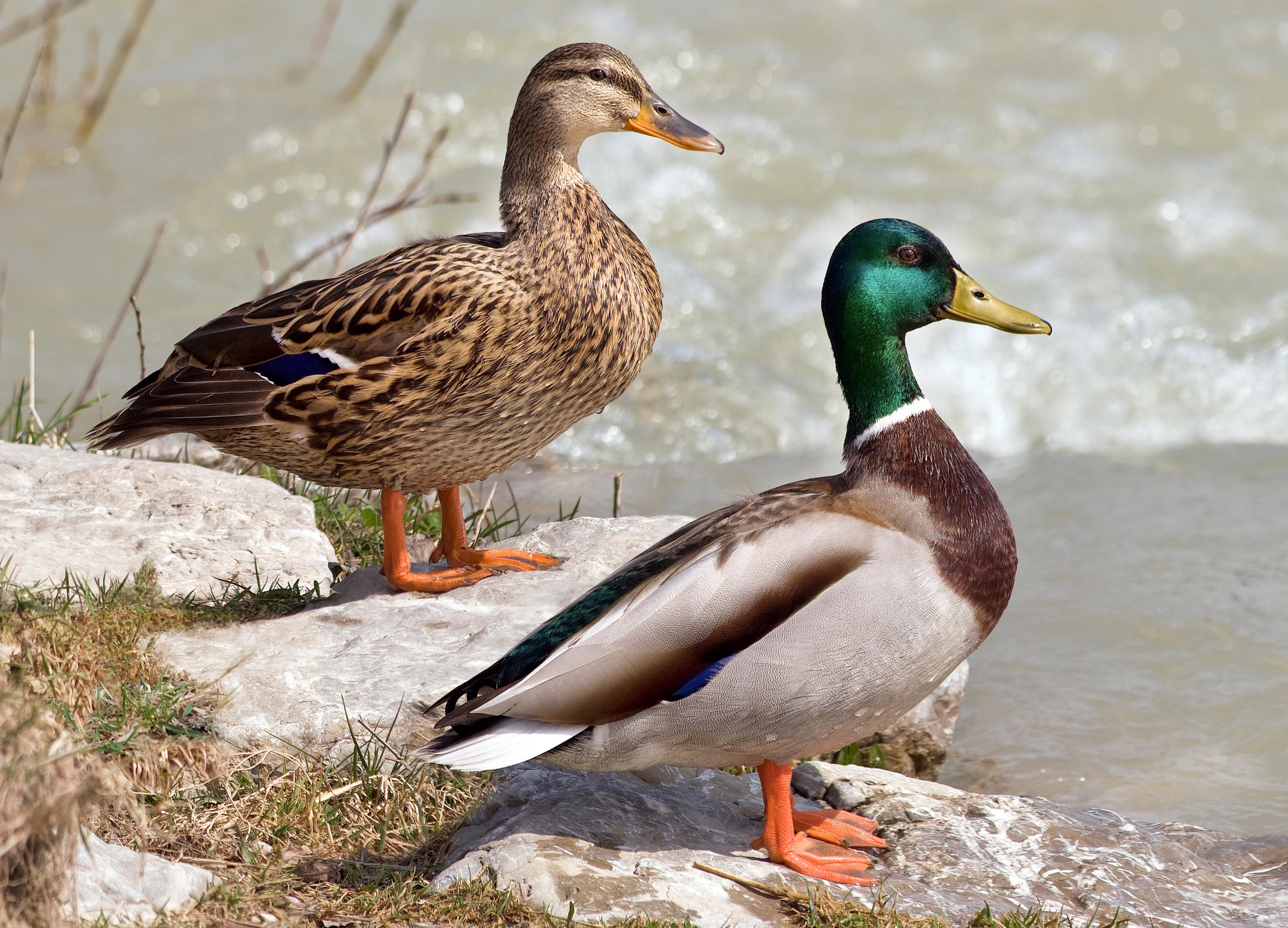
The Mallard is a medium-sized duck with a broad body, rounded head, and wide flattened bill.
Adult males are easy to recognize by their glossy green heads, narrow white neck rings, chestnut breasts, and pale gray sides.
Females are more subdued, with mottled brown plumage that provides camouflage while nesting. Their orange-and-brown bills can also help distinguish them from some similar ducks.
In flight, look for the bright blue-violet wing patch bordered with white.
Mallards often make the familiar quacking calls associated with ducks, especially females.
Where it lives
Mallards are found across much of Europe, Asia, and North America.
They live on lakes, ponds, rivers, canals, reservoirs, wetlands, marshes, and other areas with calm or slow-moving water.
They are also extremely common in city parks and gardens with ponds, where they can become very accustomed to people.
Some populations migrate, while others remain in the same region throughout the year.
What it eats
Mallards are omnivorous.
They eat aquatic plants, seeds, grain, grasses, insects, snails, worms, small crustaceans, and other invertebrates.
They often feed by dabbling, tipping the front of the body underwater while the tail points upward.
Mallards may also graze on land or feed in shallow water.
Young ducklings eat many small insects and aquatic invertebrates, which provide protein for growth.
Interesting facts
- The Mallard is the wild ancestor of most domestic duck breeds.
- Males are called drakes, females are hens, and young birds are ducklings.
- The glossy green color of the male’s head is produced partly by the structure of the feathers and changes with the angle of the light.
- Mallards have waterproof plumage. They spread oil from a gland near the base of the tail over their feathers while preening.
- The blue-violet wing patch, or speculum, is present in both males and females.
- Mallards are dabbling ducks, meaning they usually feed near the surface rather than diving deeply underwater.
- They are highly adaptable and can live successfully in both wild wetlands and busy urban environments.