- Scientific name: Passer montanus
- Group: Farmland Birds
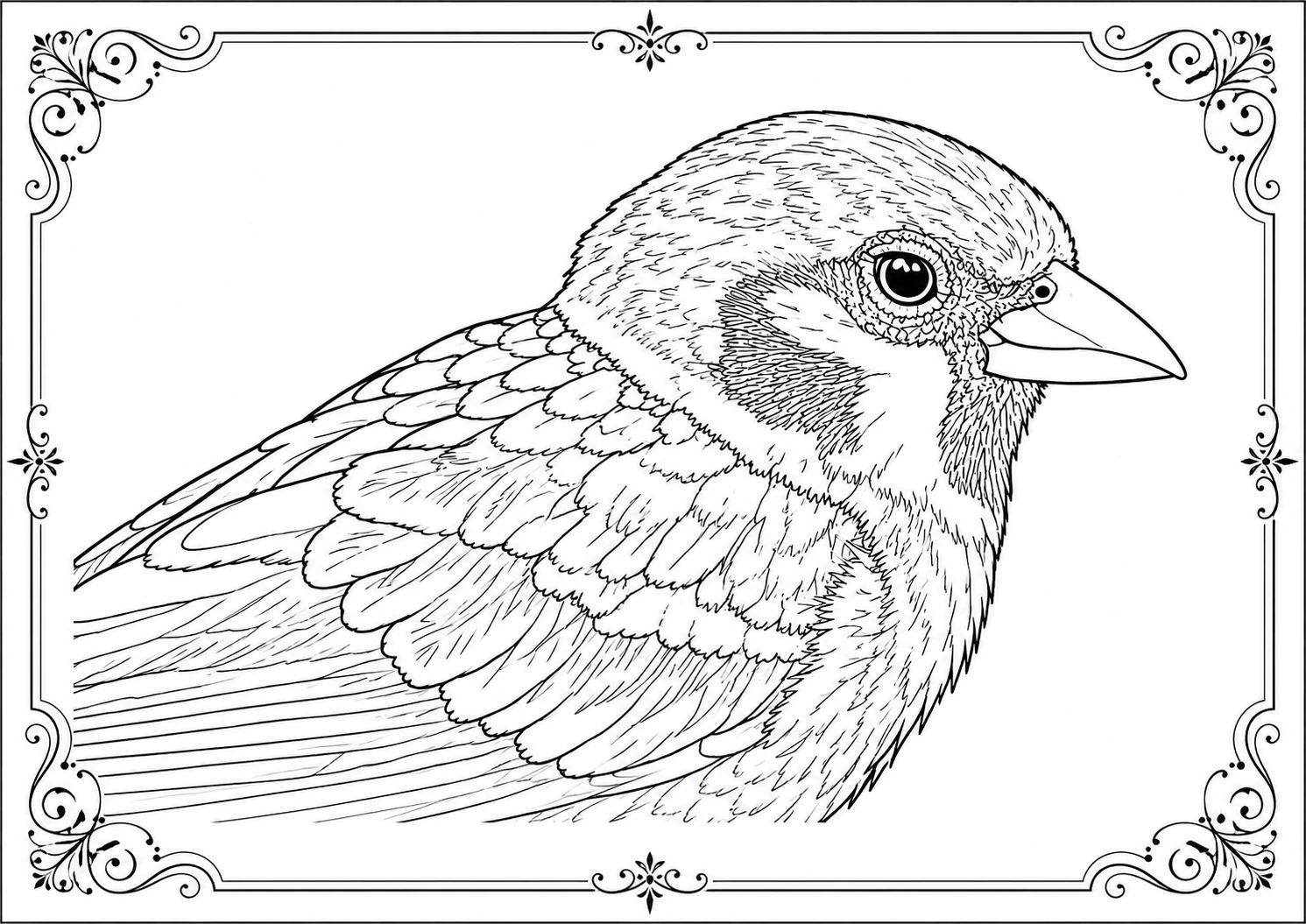
This printable Eurasian Tree Sparrow coloring page is based on the bird’s compact body, short strong bill, rounded head, and warm brown plumage.
The Eurasian Tree Sparrow is a small but distinctive sparrow. Its chestnut crown, white cheeks with a dark cheek spot, and black throat patch make it especially useful for learning bird identification through coloring.
Use the natural color guide for a realistic result, or choose your own colors for a more imaginative version.
Color guide
- Crown: rich chestnut brown
- Back: warm brown with darker streaks
- Wings: brown with black markings and pale wing bars
- Cheeks: white
- Cheek spot: black
- Throat and bib: black
- Breast and belly: pale gray to buff
- Tail: brown
- Bill: dark gray to black
- Eyes: dark brown
- Legs and feet: pinkish brown or gray-brown
Unlike the House Sparrow, males and females of the Eurasian Tree Sparrow look very similar.
How to recognize a Eurasian Tree Sparrow
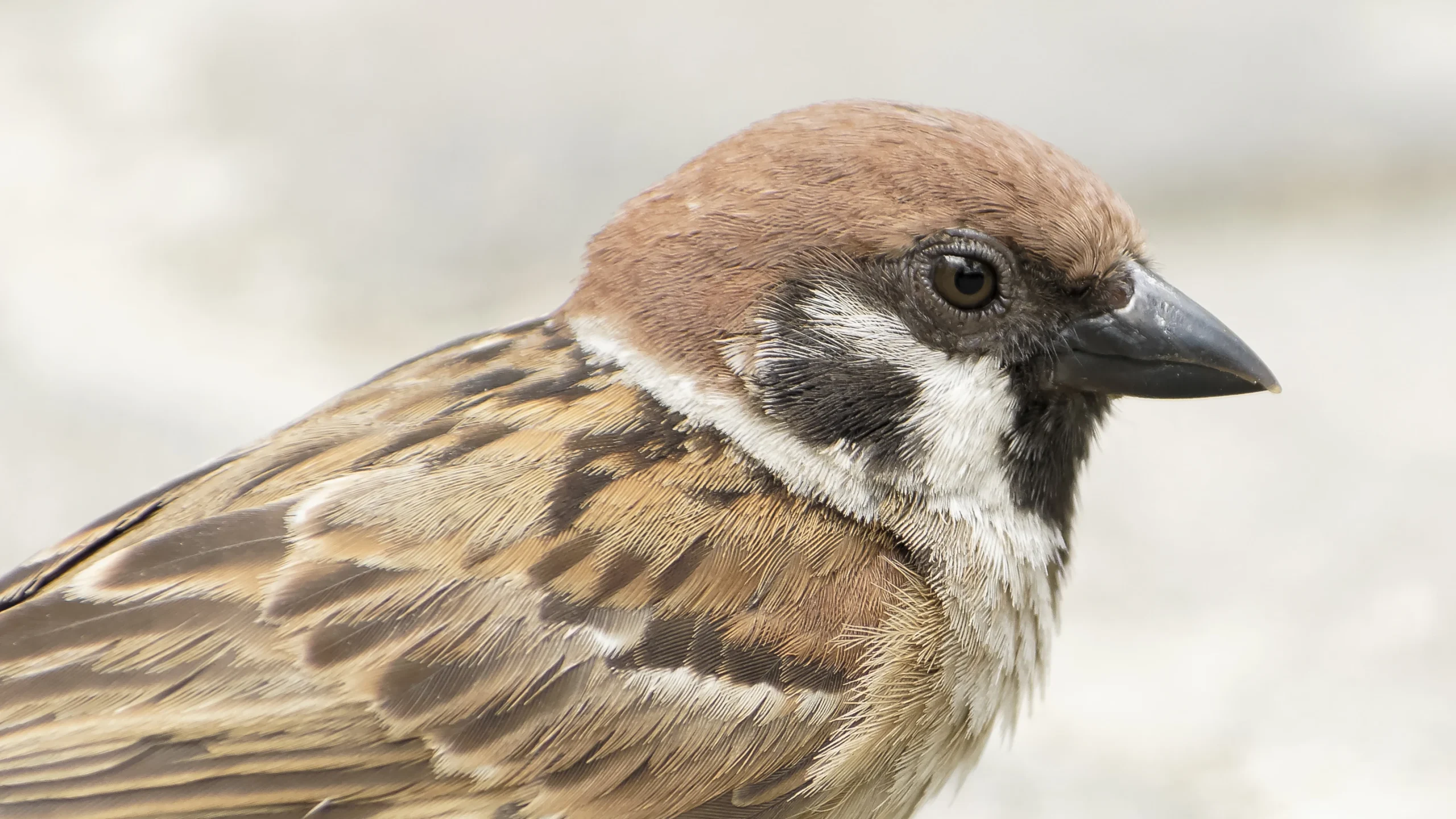
The Eurasian Tree Sparrow is a small, compact sparrow with a short, conical bill adapted for eating seeds.
Its most useful field marks are the chestnut-colored crown, white cheeks, and the round black spot on each cheek. It also has a small black bib on the throat.
This cheek spot is one of the easiest ways to distinguish it from the House Sparrow.
The Eurasian Tree Sparrow is often seen in small groups, especially outside the breeding season. It spends much of its time feeding on the ground or around bushes, hedgerows, farm buildings, and field edges.
Where it lives
Eurasian Tree Sparrows are found across much of Europe and Asia.
They are strongly associated with open countryside, farmland, villages, orchards, hedgerows, field margins, and areas with scattered trees.
They also occur around gardens and settlements, although in many parts of Europe they are more closely linked with rural landscapes than the House Sparrow.
They usually nest in cavities, including holes in trees, buildings, walls, and nest boxes.
What it eats
Eurasian Tree Sparrows feed mainly on seeds and grain.
Their diet includes grass seeds, cereal grains, weed seeds, and other plant material.
During the breeding season, they also eat insects, spiders, and other small invertebrates. These protein-rich foods are especially important for feeding growing chicks.
They often forage on the ground, around field margins, beneath feeders, and in agricultural areas.
Interesting facts
- The Eurasian Tree Sparrow belongs to the sparrow family, Passeridae.
- Its scientific name, Passer montanus, roughly refers to a sparrow associated with the countryside or upland areas.
- Unlike House Sparrows, male and female Eurasian Tree Sparrows have very similar plumage.
- The black cheek spot is one of the species’ most distinctive identification features.
- They are cavity nesters and readily use nest boxes.
- Outside the breeding season, Eurasian Tree Sparrows often gather in flocks with other sparrows and seed-eating birds.
- Their short, powerful bills are well adapted for cracking and handling seeds.