- Scientific name: Vanellus vanellus
- Group: Farmland Birds
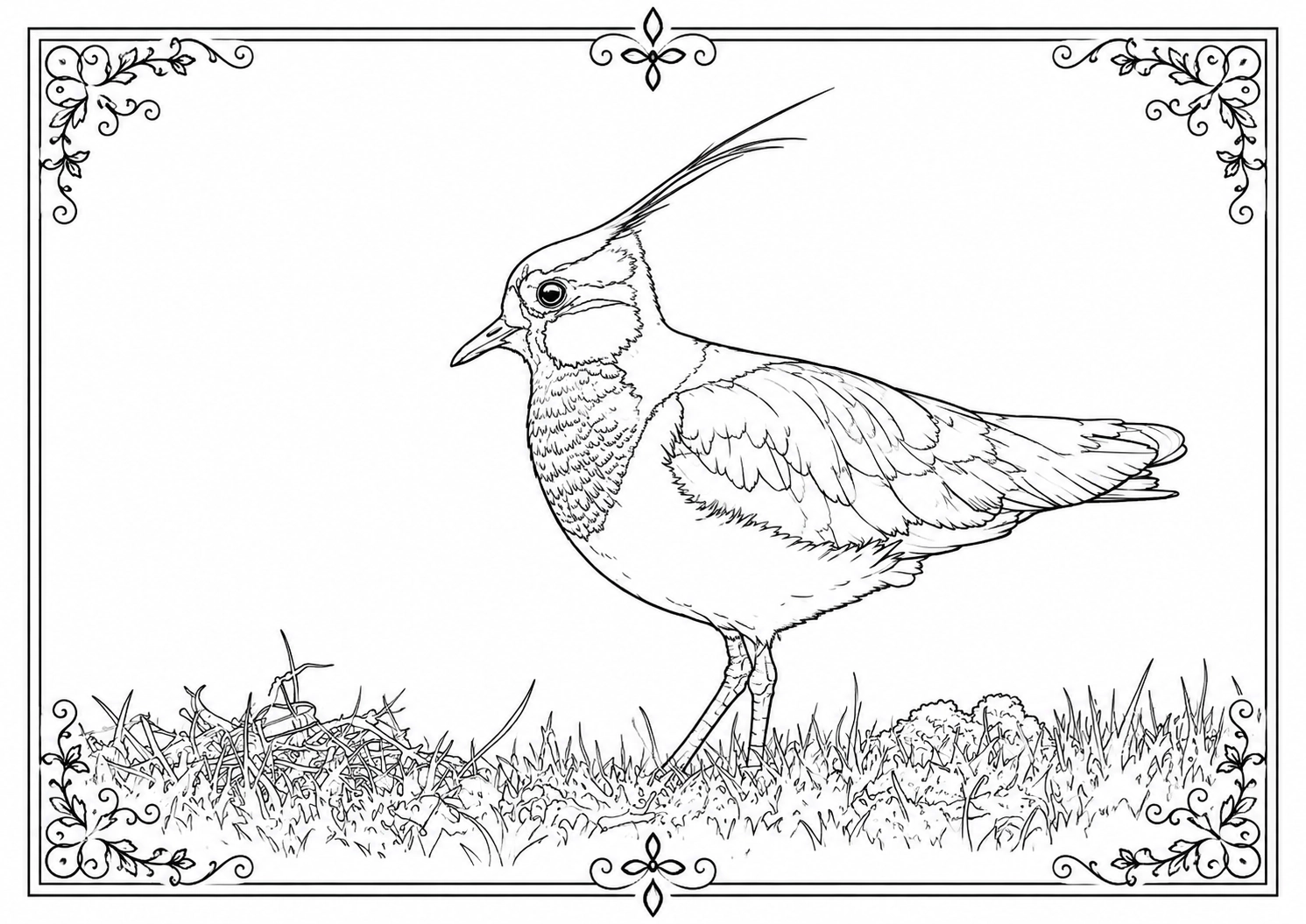
This printable Northern Lapwing coloring page is inspired by the bird’s rounded body, broad wings, long legs, short bill, and distinctive upright crest. The clear outlines make the illustration suitable for colored pencils, crayons, markers, or paint.
Use black, white, green, purple, chestnut, and orange to recreate the natural plumage of an adult Northern Lapwing. Pay special attention to the glossy upperparts, dark breast, white belly, and long crest feathers.
Color guide
- Head and throat: black with a glossy green or purple sheen
- Face and neck: black and white markings
- Back and wings: dark green with bronze, blue, and purple iridescence
- Breast: black
- Belly and sides: white
- Undertail area: warm chestnut or orange-brown
- Tail: white with a broad black band near the tip
- Bill: black
- Eyes: dark brown
- Legs and feet: orange, pinkish orange, or reddish
- Crest: black
Females generally have a shorter crest and less sharply defined black markings than males. Young birds are browner, with pale-edged feathers and a much shorter crest.
How to recognize a Northern Lapwing
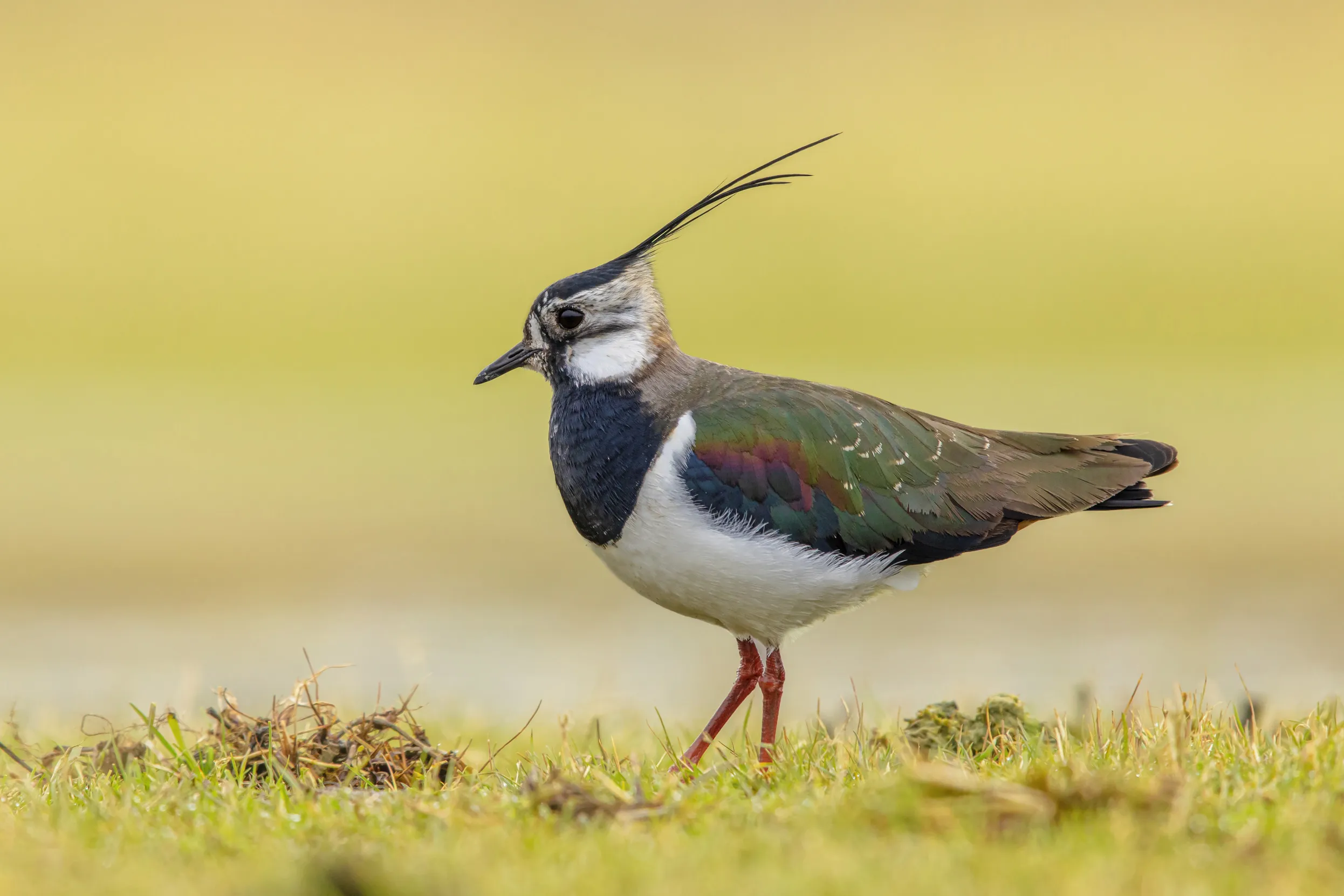
The Northern Lapwing is a medium-sized wader with a rounded body, a short straight bill, broad wings, and a long, thin crest rising from the back of the head. Its plumage may look black and white from a distance, but the dark upperparts shine green, purple, and bronze in good light.
The bird has a black breast, white belly, and chestnut-colored feathers beneath the tail. In flight, its broad, rounded wings create a distinctive silhouette, while the contrasting black-and-white pattern is easy to see.
Northern Lapwings are also known as peewits because of their far-carrying, two-part call. During the breeding season, males perform twisting and tumbling display flights above fields and wetlands.
Where it lives
Northern Lapwings live in open landscapes with short vegetation. Typical habitats include wet grassland, farmland, pastures, marshes, river valleys, moorland, and the edges of lakes and coastal wetlands.
They nest on the ground in open fields, usually choosing places where they can see approaching predators. During winter, they often gather into large flocks and move between farmland, flooded fields, estuaries, and mudflats.
The species breeds across much of Europe and northern Asia. Some populations remain near their breeding areas, while others migrate south or west to avoid severe winter weather.
What it eats
Northern Lapwings mainly eat small invertebrates found on or beneath the ground. Their diet includes earthworms, beetles, insect larvae, spiders, snails, and other small animals.
They usually feed by walking across short grass, soft soil, or mud and stopping when they detect movement. The bird may tap or shake the ground with one foot to disturb hidden prey before quickly picking it up with its bill.
Lapwings often feed at night as well as during the day, especially when moonlight and soft ground make earthworms easier to find.
Interesting facts
- The Northern Lapwing is also called the peewit, an imitation of its distinctive call.
- Its dark feathers are not simply black. In sunlight, they can shine green, blue, purple, and bronze.
- The species belongs to the plover family and is classified as a wader, even though it often lives and feeds far from the coast.
- Males perform dramatic aerial displays during the breeding season, diving, rolling, and calling above their territories.
- Northern Lapwings nest directly on the ground. Their eggs are spotted and blend well with soil and short vegetation.
- Newly hatched chicks can walk and search for food soon after leaving the egg.
- In winter, Northern Lapwings may form large flocks, sometimes mixing with golden plovers and other farmland birds.