- Scientific name: Columba palumbus
- Group: Garden and Park Birds
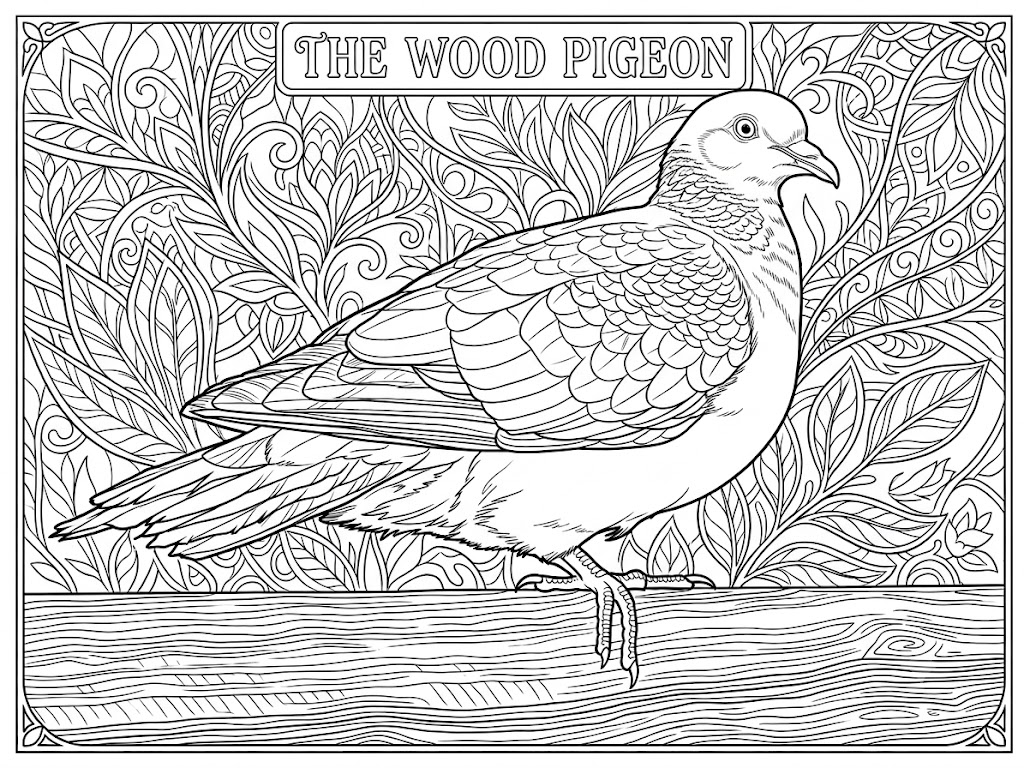
Download and print this Common Wood Pigeon coloring page, inspired by the real bird’s broad body, small head, long tail, and distinctive plumage markings.
Use soft gray, pink, green, and white to recreate the natural appearance of an adult Wood Pigeon, or choose your own colors and turn it into a completely original bird.
About this coloring page
This printable Common Wood Pigeon illustration turns the bird’s recognizable shape and markings into clean, easy-to-color linework. Its rounded chest, folded wings, long tail, short bill, and strong feet are separated into clear areas suitable for colored pencils, crayons, markers, or paint.
Pay special attention to the pale patches on the sides of the neck and the contrasting markings on the wings. These details help distinguish the Common Wood Pigeon from other pigeons and doves.
Download the print-ready PDF and follow the natural color guide below, or create your own imaginative version.
Color guide
- Head: blue-gray
- Neck and breast: soft gray with warm pink or mauve tones
- Sides of the neck: bright white patches
- Neck sheen: green and purple
- Back and wings: gray-brown
- Wing patches: white
- Tail: dark gray with a black terminal band
- Bill: yellow-orange with a pale tip
- Eye: pale yellow or cream with a dark pupil
- Legs and feet: pink or reddish
Adult Common Wood Pigeons are large gray pigeons with conspicuous white patches on the neck and wings. Their breast often has a muted pink tone, while the sides of the neck can show green and purple iridescence.
How to recognize a Common Wood Pigeon
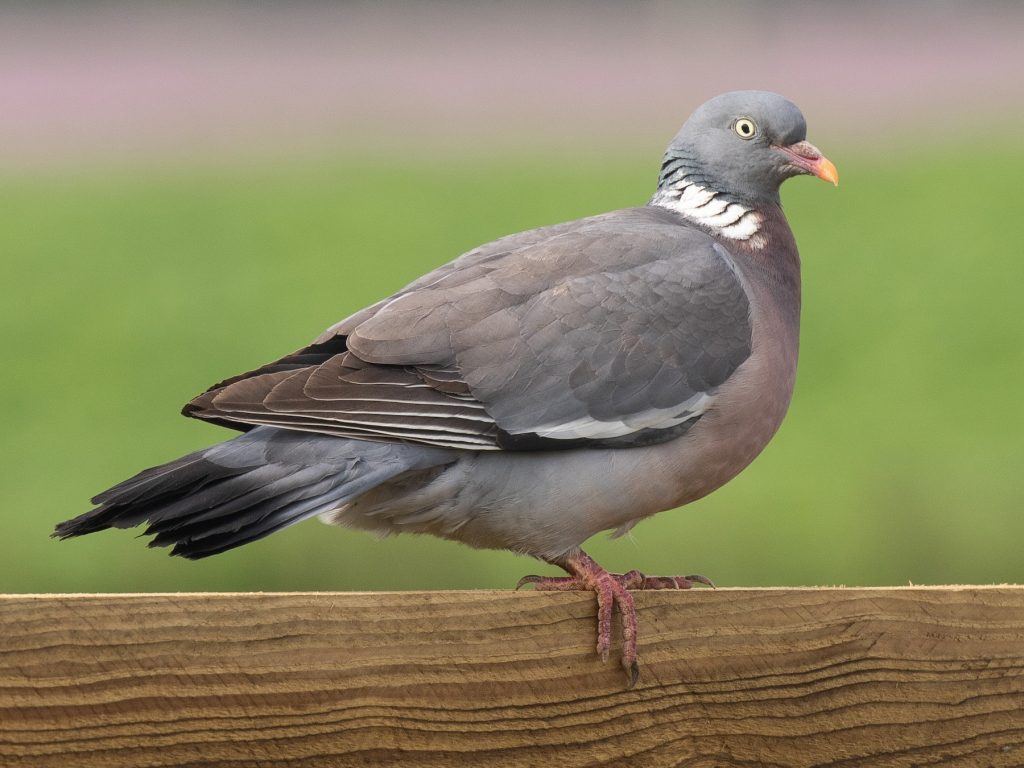
The Common Wood Pigeon is a large, heavy-bodied pigeon with a relatively small head, a broad chest, and a long tail. Adults are mostly gray, with a pinkish breast and a noticeable white patch on each side of the neck.
In flight, a broad white band across each wing is one of the easiest identification features to see. The tail has a dark band near the tip, and the neck may shine green or purple when light catches the feathers.
Young Wood Pigeons are duller than adults and do not yet have the white neck patches. They can still be recognized by their large size, long tail, and pale wing markings.
Where it lives
Common Wood Pigeons live in woodland, farmland, parks, gardens, orchards, and towns. They are especially common in places where mature trees provide safe nesting sites and open ground offers plenty of food.
Although once strongly associated with woodland and farmland, they have adapted well to urban environments. They can now be seen feeding on lawns, resting in large trees, and visiting garden bird tables.
Some populations remain in the same area throughout the year, while others move south or west during colder months.
What it eats
Common Wood Pigeons mainly eat plant material. Their diet includes seeds, grains, leaves, buds, berries, acorns, and cultivated crops.
They often feed on the ground in fields and gardens, but they can also reach fruit and leaves directly from trees and shrubs. In towns, they may visit bird tables for seeds and grain.
Wood Pigeons have a large crop that allows them to collect food quickly and digest it later in a safer resting place.
Interesting facts
- The Common Wood Pigeon is one of the largest pigeons regularly seen across Europe.
- Its white wing bands are especially visible when the bird takes flight.
- Young Wood Pigeons lack the white neck patches seen in adults.
- Its familiar call is a deep, rhythmic series of coos that is often heard from trees and rooftops.
- Unlike many birds, pigeons can drink by drawing water into the bill without repeatedly tipping the head backwards.
- Both parents feed their chicks with a nutrient-rich substance commonly called crop milk.