
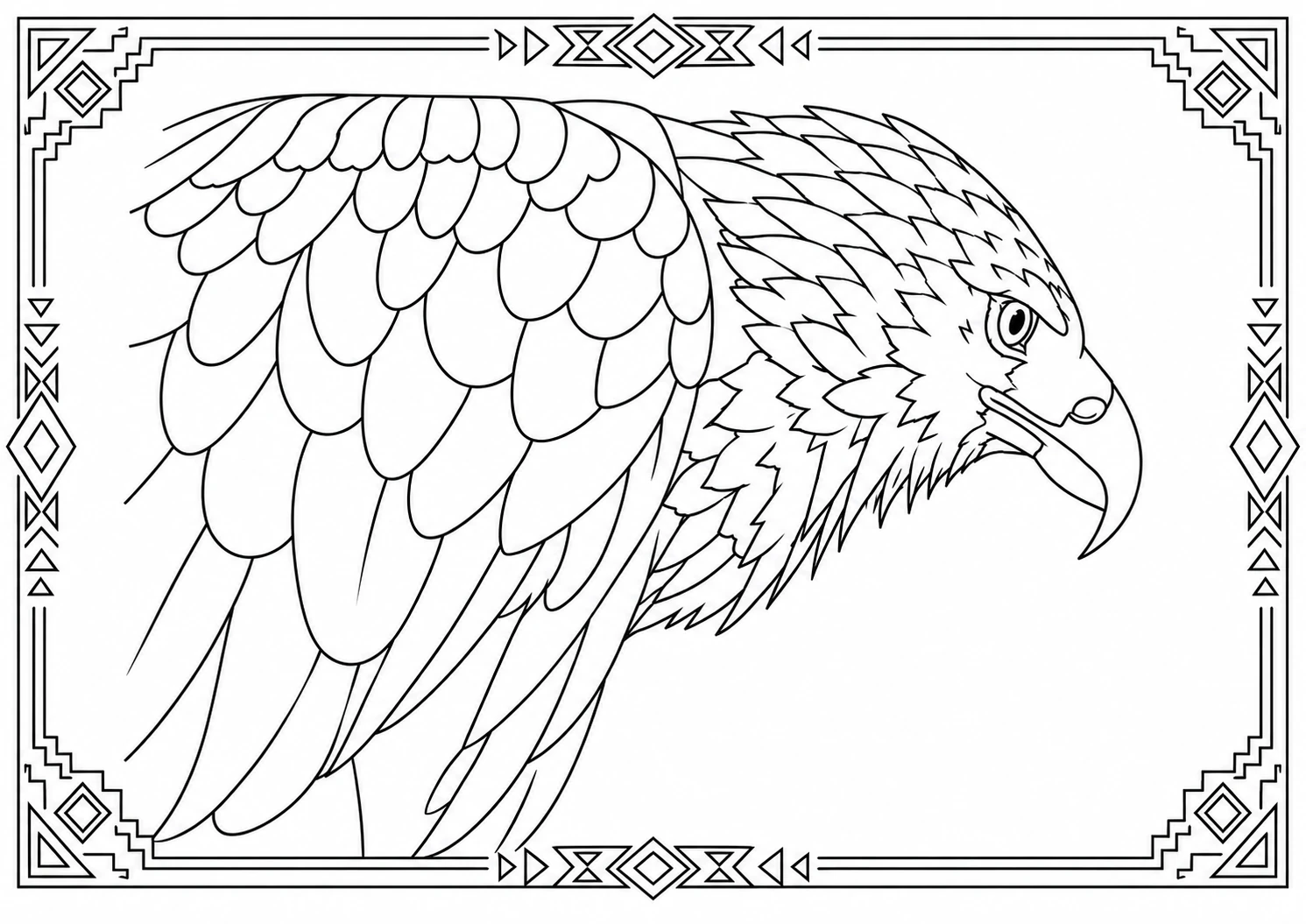
- Scientific name: Aquila chrysaetos
- Group: Birds of Prey
This printable Golden Eagle coloring page is based on the bird’s powerful body, broad wings, strong hooked bill, and impressive eagle shape.
The Golden Eagle is one of the most iconic birds of prey in the Northern Hemisphere. Its rich brown plumage, golden tones on the head and neck, and broad soaring wings make it an exciting bird to color and a memorable species to learn.
Use the natural color guide for a realistic result, or choose your own colors and create a more imaginative version.
Color guide
- Head and neck: golden brown to tawny gold
- Body: dark brown
- Back and wings: dark brown with slightly paler feather edges
- Flight feathers: dark brown to black-brown
- Tail: brown, sometimes with grayish tones; young birds often show white patches at the base
- Bill: dark gray or black with a yellow base
- Eyes: dark brown
- Cere: yellow
- Legs and feet: yellow, covered in feathers down to the toes
- Claws: black
Young Golden Eagles are often darker overall and may show more white in the tail and wings than adults.
How to recognize a Golden Eagle
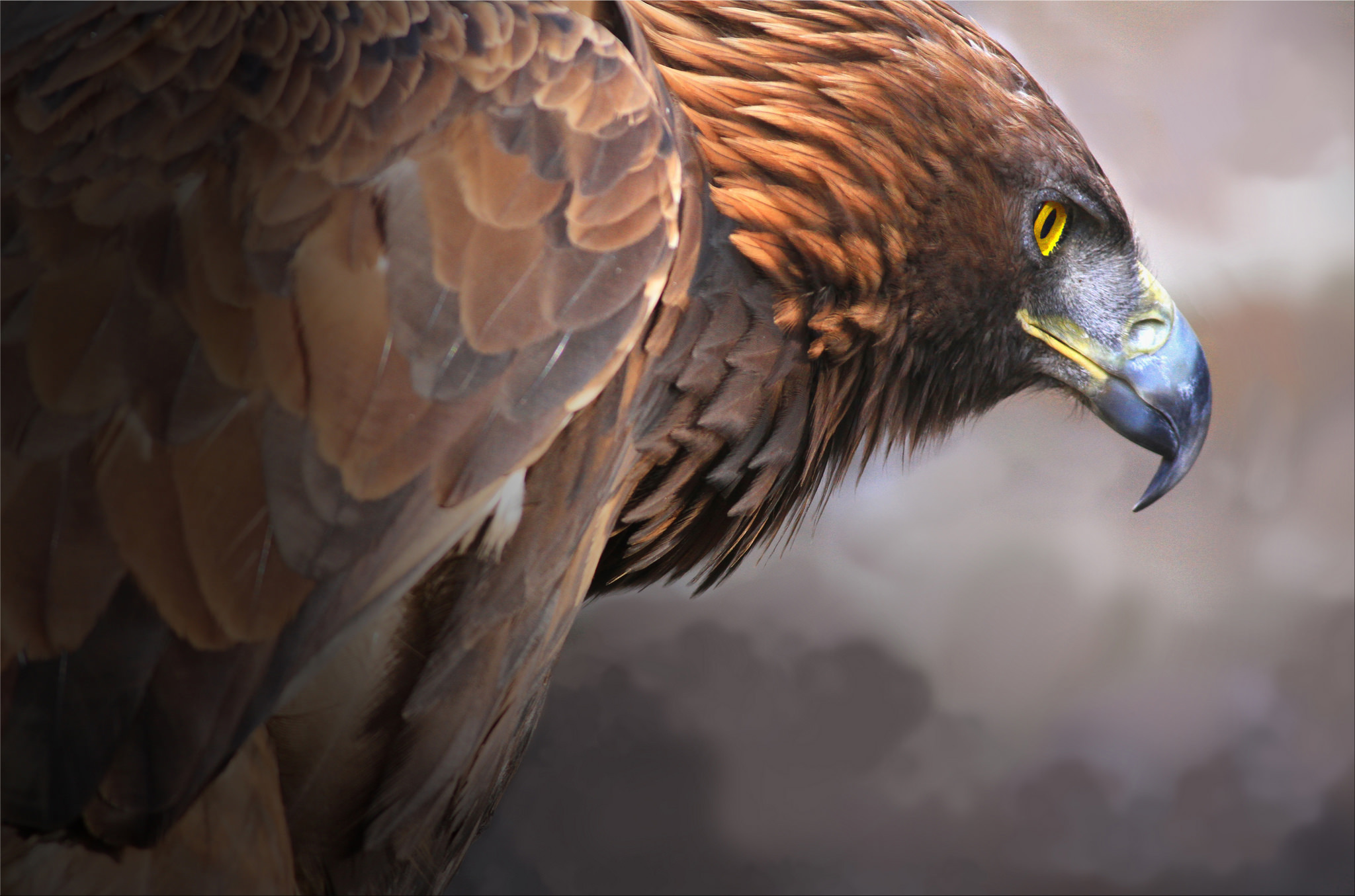
The Golden Eagle is a very large bird of prey with long broad wings, a strong body, and a relatively long tail. It looks powerful both when perched and when soaring high above open country.
Adult birds are mostly dark brown, but the head and back of the neck are usually washed with warm golden tones, which give the species its name. The wings are broad and slightly raised when soaring, and the tail is longer than that of many other large eagles.
Young Golden Eagles often show white patches in the wings and at the base of the tail, making them look different from adults. Even at a distance, the bird’s large size, broad wings, and confident soaring flight can make it stand out.
Where it lives
Golden Eagles are found across large parts of Europe, Asia, North America, and North Africa.
They prefer open landscapes where they can hunt and soar easily. Typical habitats include mountains, cliffs, moorland, steppe, open woodland, tundra, and wide stretches of rough countryside.
They often nest on cliffs or rocky ledges, although in some areas they may also nest in large trees. The species usually needs large territories, especially in places where prey is spread out.
Some populations remain in the same area all year, while others move seasonally or make longer migrations.
What it eats
Golden Eagles are powerful hunters and feed mainly on mammals and birds.
Their prey can include rabbits, hares, ground squirrels, marmots, and medium-sized birds such as grouse or waterfowl. They may also take reptiles and other animals when available.
Golden Eagles hunt by soaring over open ground, scanning for movement below, or by using the landscape to approach prey unseen. They may also feed on carrion, especially during winter or in harsh conditions.
Their strong talons are their main hunting weapon, while the hooked bill is used for tearing food.
Interesting facts
- The Golden Eagle is one of the largest and most powerful birds of prey in the world.
- Its name comes from the golden or tawny feathers on the back of the head and neck.
- Unlike many birds, its legs are feathered all the way down to the toes.
- Golden Eagles can soar for long periods with very little wing movement, using rising air currents to stay aloft.
- Pairs often occupy large territories and may return to the same nesting area for many years.
- Their nests, known as eyries, can become enormous when reused and added to over time.
- The Golden Eagle is a symbol of strength, wild landscapes, and freedom in many cultures.