- Scientific name: Coloeus monedula
- Group: Urban Birds
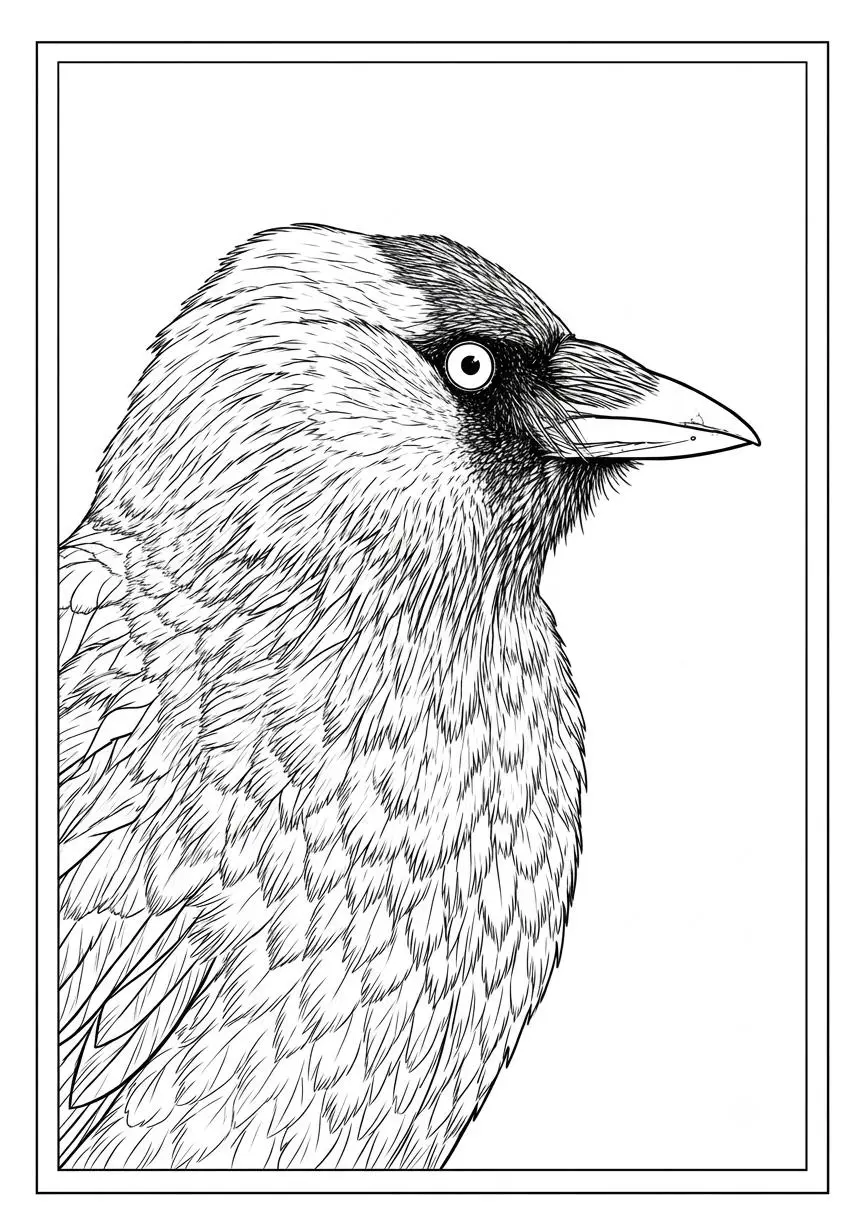
This printable Eurasian Jackdaw coloring page is based on the bird’s compact body, short bill, rounded head, and distinctive gray-and-black plumage.
The Eurasian Jackdaw is a small member of the crow family and is easy to recognize once you notice its pale eyes and contrasting gray neck. It is a particularly good bird for learning how subtle color differences can help with identification.
Use the natural color guide for a realistic result, or choose your own colors for a more imaginative version.
Good detail, vertical
|
|
Average detail, horizontal |
Color guide
- Head and crown: black
- Face: dark gray to black
- Back and wings: glossy black with subtle blue or purple sheen
- Neck and sides of head: pale gray to silvery gray
- Breast and belly: dark gray to black
- Tail: black
- Bill: black
- Eyes: very pale gray, blue-gray, or almost white
- Legs and feet: black
Young birds are generally duller and browner than adults, and their eyes are darker.
How to recognize a Eurasian Jackdaw
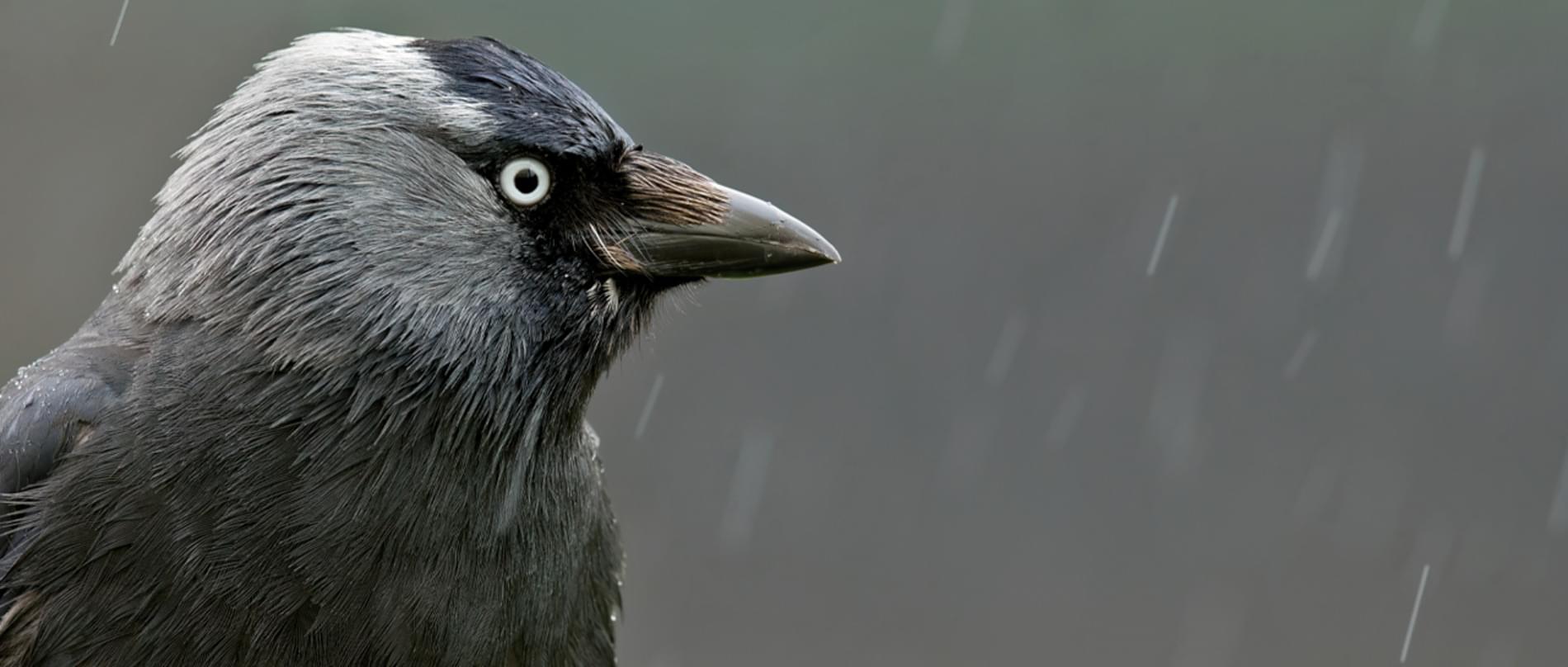
The Eurasian Jackdaw is smaller and more compact than many other crows.
Its most useful field marks are the pale gray neck and the very light-colored eyes, which stand out strongly against the darker head.
The bill is shorter than that of a Rook or Carrion Crow, and the bird often has a neat, rounded appearance.
Jackdaws are highly social and are frequently seen in pairs or flocks. Their calls are short, sharp, and metallic, often sounding like a repeated “jack” or “kya.”
Where it lives
Eurasian Jackdaws are widespread across much of Europe and parts of western Asia.
They are very adaptable and can be found in towns, villages, farmland, parks, cliffs, woodland edges, and around old buildings.
They often nest in cavities, including holes in trees, chimneys, church towers, cliffs, ruins, and buildings.
Because they adapt well to human environments, they are a familiar sight in many European cities and towns.
What it eats
Eurasian Jackdaws are omnivorous.
They eat insects, worms, seeds, grain, fruit, berries, small animals, eggs, carrion, and food scraps.
They often forage on the ground in fields, parks, lawns, and streets.
Jackdaws are opportunistic feeders and quickly learn to take advantage of new food sources.
Interesting facts
- Eurasian Jackdaws belong to the crow family, Corvidae.
- They are highly intelligent and social birds.
- Pairs often form strong long-term bonds and can frequently be seen staying close together even outside the breeding season.
- Their pale eyes are unusual among European corvids and are one of the easiest ways to recognize the species.
- Jackdaws often nest in buildings and have a long history of living close to people.
- They may gather in large communal roosts, sometimes together with Rooks and other corvids.
- Their scientific name, monedula, is an old Latin name associated with jackdaws.