
- Scientific name: Cyanistes caeruleus
- Group: Garden Birds
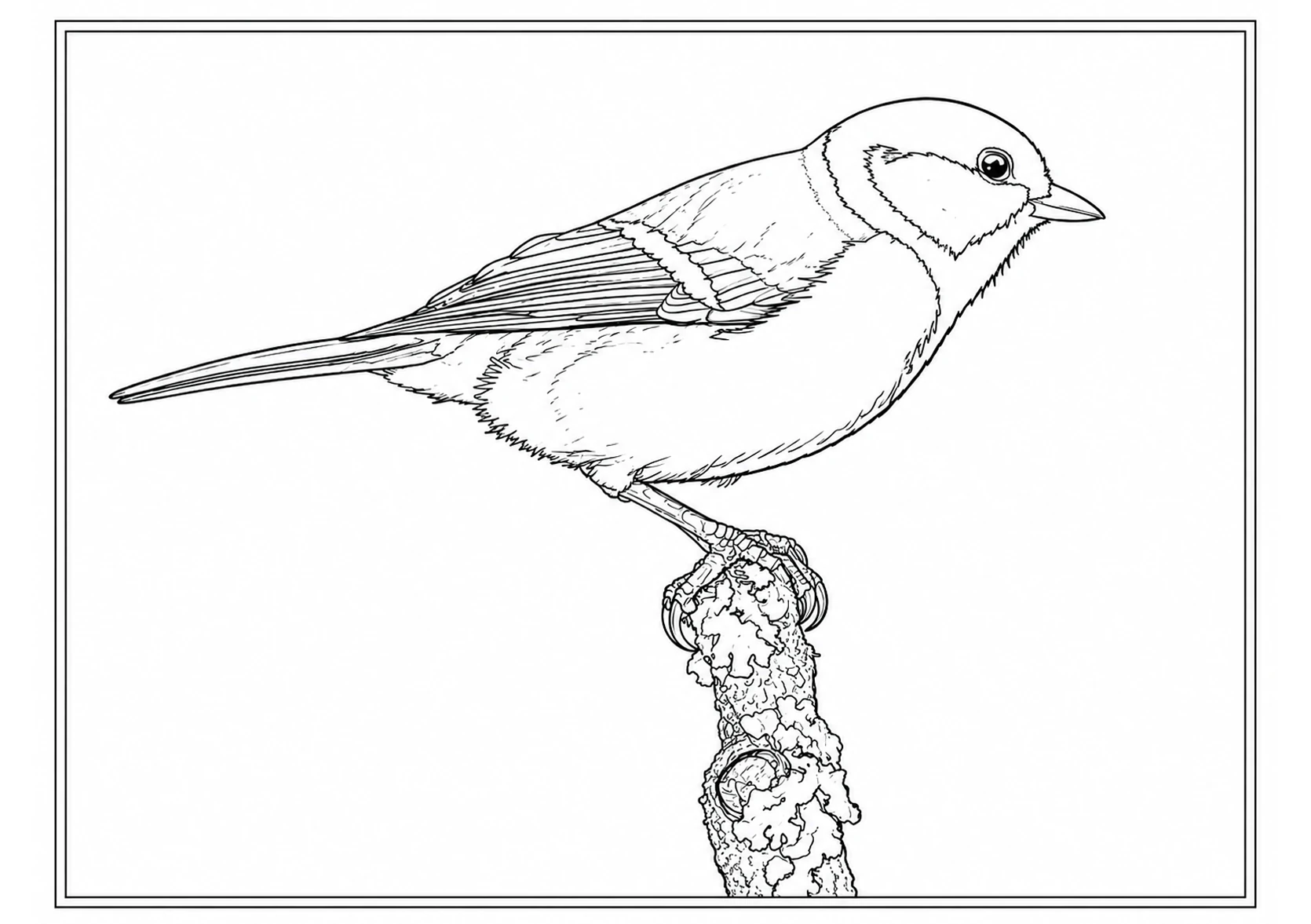
This printable Great Tit coloring page is inspired by the bird’s compact body, rounded head, short pointed bill, and bold black, white, yellow, and green plumage. The clean outlines make it suitable for colored pencils, crayons, markers, or paint.
Use the species’ natural colors as a guide, especially the black head, white cheeks, yellow underparts, and dark stripe running down the center of the breast. You can also create your own color pattern if you prefer a more imaginative version.
Color guide
- Head: glossy black
- Cheeks: white
- Throat: black
- Back: olive-green
- Wings: blue-gray with pale markings
- Breast and belly: bright yellow
- Central breast stripe: black
- Tail: blue-gray or dark gray
- Bill: dark gray or black
- Eyes: dark brown or black
- Legs and feet: gray-blue
Adult males usually have a broader black stripe running down the belly, while females often have a narrower and less strongly defined stripe.
How to recognize a Great Tit
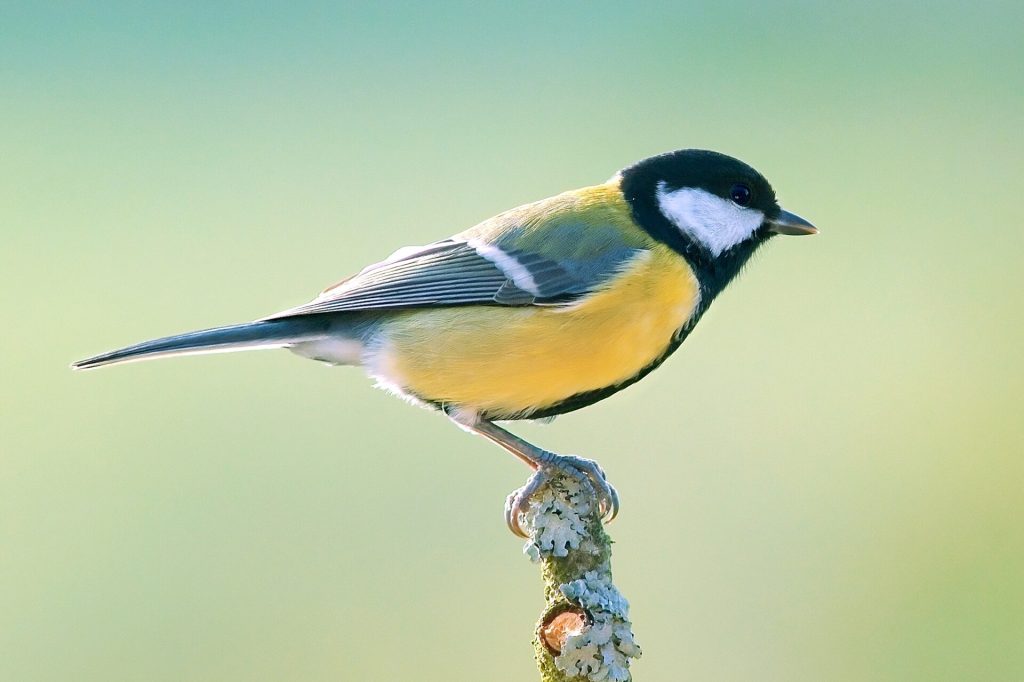
The Great Tit is a small, sturdy songbird with a relatively large head and a strong, pointed bill. Its most noticeable features are the glossy black head, large white cheek patches, yellow underparts, and black stripe running down the center of the chest and belly.
The back is usually olive-green, while the wings and tail are bluish gray. Compared with the smaller Eurasian Blue Tit, the Great Tit has a black cap rather than a blue one and a much bolder black stripe on the underparts.
It is an active and confident bird that often moves quickly between branches, feeders, and the ground. Its varied calls and clear two-note song are common sounds in gardens and woodland.
Where it lives
Great Tits are widespread across Europe and large parts of Asia. They live in deciduous and mixed woodland, parks, gardens, orchards, hedgerows, and suburban areas.
They readily use nest boxes and natural tree holes for breeding. Because they adapt well to human environments, Great Tits are among the most familiar garden birds in many parts of Europe.
Most populations remain in the same general area throughout the year, although some birds make seasonal movements.
What it eats
Great Tits eat a varied diet. During spring and summer, they feed mainly on insects, caterpillars, spiders, and other small invertebrates.
In autumn and winter, they eat more seeds, nuts, berries, and other plant material. They are frequent visitors to garden feeders and readily take sunflower seeds, peanuts, and fat-rich foods.
Their strong bill allows them to handle larger seeds and harder food items than many smaller tit species.
Interesting facts
- Great Tits are highly adaptable and can live successfully in forests, farmland, towns, and gardens.
- They are cavity nesters and often use nest boxes placed in gardens and parks.
- Great Tits are intelligent birds and can learn new ways of finding food by watching other individuals.
- Their song varies between individuals and regions, and a single bird may use several different call patterns.
- Males and females look similar, but the black stripe on the belly is usually broader and more continuous in males.
- During the breeding season, parents may make hundreds of feeding trips to the nest each day to supply their chicks with caterpillars and other insects.