- Scientific name: Cyanistes caeruleus
- Group: Garden Birds
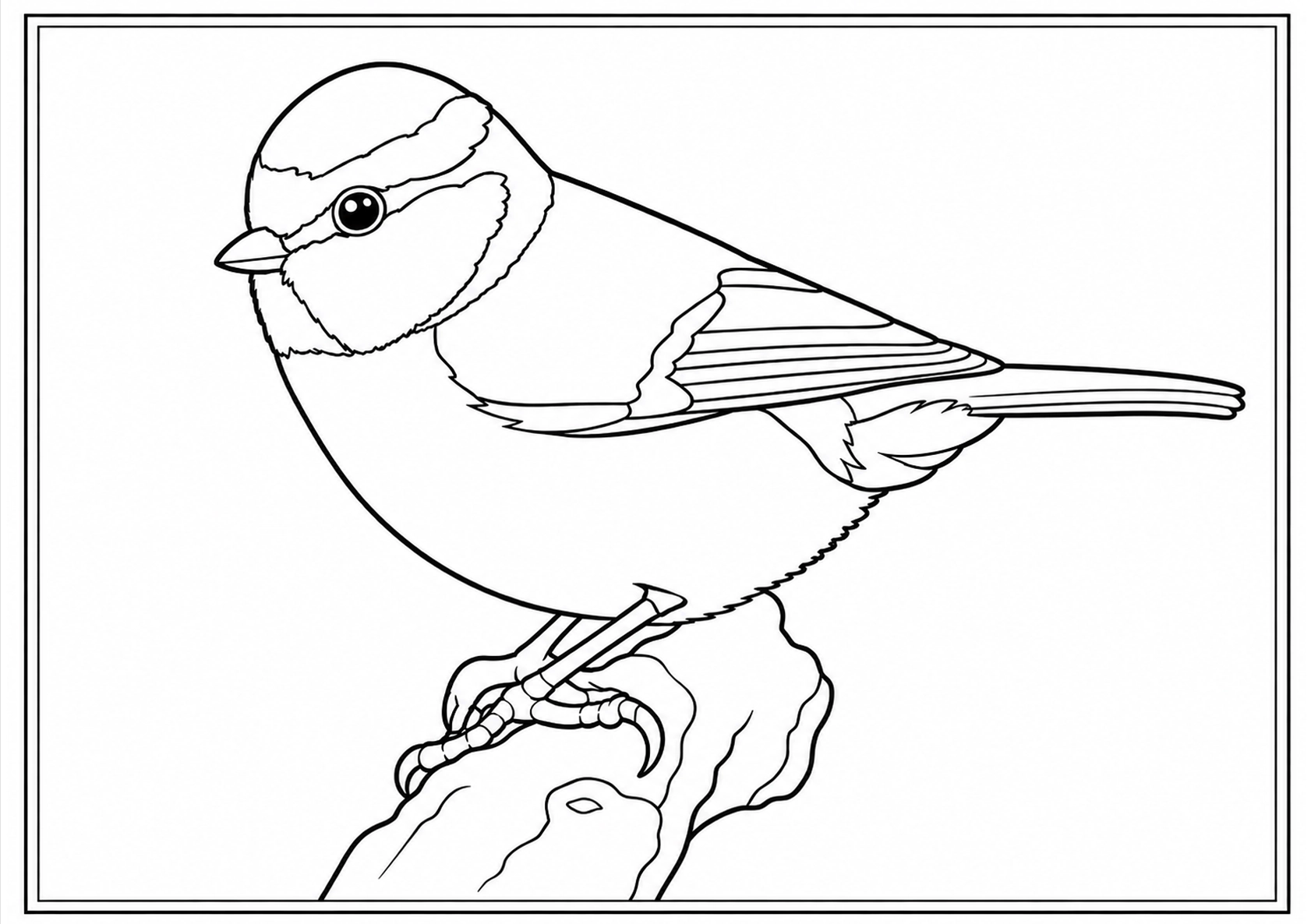
This printable Eurasian Blue Tit coloring page is inspired by the bird’s small rounded body, short bill, blue crown, patterned face, and compact wings. The clear outlines make it suitable for colored pencils, crayons, markers, or paint.
Use blue, yellow, green, white, and black to recreate the bird’s natural plumage. Pay special attention to the blue cap, dark eye stripe, white cheeks, and bright yellow underparts.
Good detail
|
|
Average detail |
Color guide
- Crown: bright blue
- Cheeks and forehead: white
- Eye stripe and neck markings: dark blue or black
- Back: soft green or olive
- Wings and tail: blue with pale markings
- Breast and belly: bright yellow
- Central belly stripe: dark gray or blue-black
- Bill: dark gray or black
- Eyes: dark brown or black
- Legs and feet: blue-gray
Young birds are usually duller than adults and may have a yellowish face instead of clean white cheeks.
How to recognize a Eurasian Blue Tit
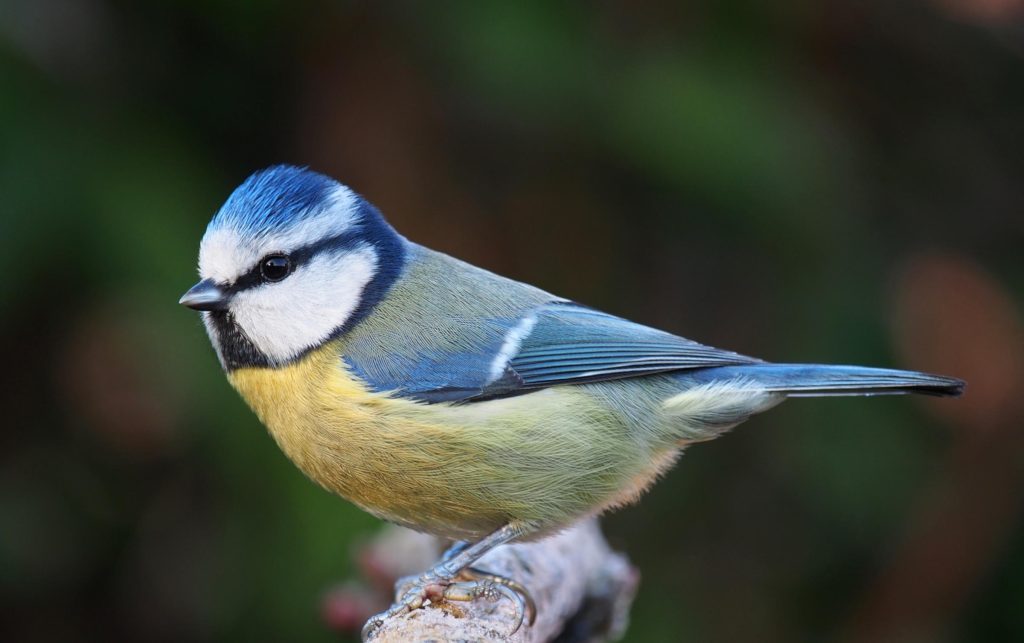
The Eurasian Blue Tit is a small, active songbird with a rounded head, short pointed bill, and relatively short tail. Its blue crown, white cheeks, dark eye stripe, greenish back, blue wings, and yellow underparts create a distinctive multicolored appearance.
A narrow dark line runs through the eye, while a darker collar surrounds the pale face. The wings show a white bar and pale feather edges. Compared with the larger Great Tit, the Eurasian Blue Tit has a blue cap and lacks the Great Tit’s broad black head and heavy central breast stripe.
Where it lives
Eurasian Blue Tits live in deciduous and mixed woodland, especially where mature trees provide holes for nesting. They are also common in parks, orchards, gardens, hedgerows, and suburban areas.
They readily use nest boxes and frequently visit garden feeders. Most populations remain within the same general region throughout the year, although some birds make seasonal movements.
What it eats
Eurasian Blue Tits mainly eat small insects, spiders, caterpillars, and other invertebrates, especially during spring and summer. They search among leaves, buds, bark, and thin branches, sometimes hanging upside down to reach food.
During autumn and winter, they also eat seeds, nuts, berries, and food from garden feeders. Sunflower seeds, peanuts, and fat-rich foods can attract them when natural food is less abundant.
Interesting facts
- Eurasian Blue Tits are highly agile and can cling to very thin branches while searching for insects.
- They commonly nest inside tree holes, walls, and nest boxes.
- Their blue plumage contains structural coloration, meaning the feather structure helps create the blue appearance.
- In the twentieth century, some Blue Tits in Britain became famous for opening foil-topped milk bottles to reach the cream inside.
- Parents may make many feeding trips each day when raising a brood of hungry chicks.
- Despite their small size, Eurasian Blue Tits can be bold and competitive at bird feeders.