- Scientific name: Streptopelia decaocto
- Group: Garden and Park Birds
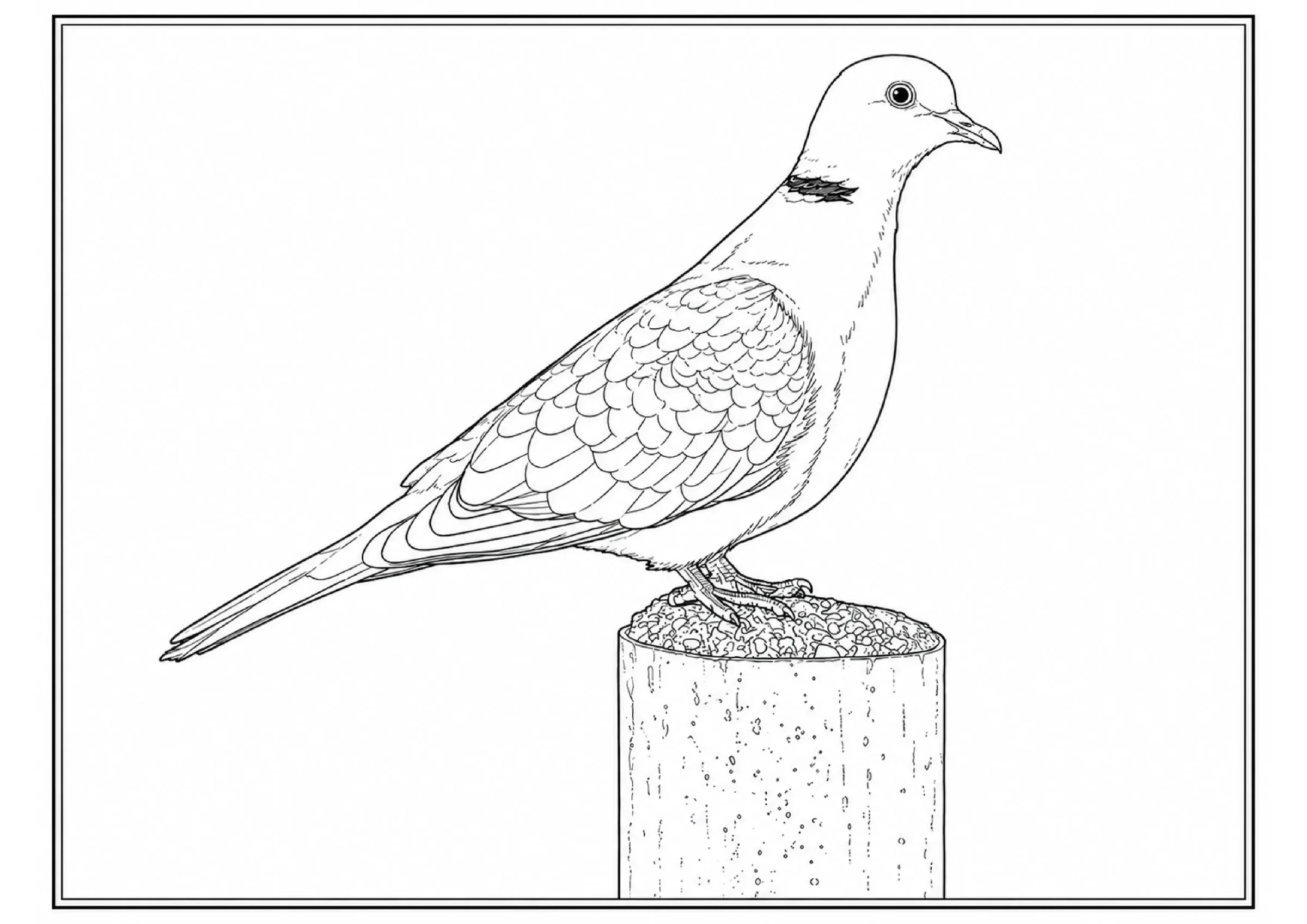
This printable Eurasian Collared Dove coloring page is inspired by the bird’s slender body, small head, long tail, and distinctive neck marking. The clean outlines make the illustration suitable for colored pencils, crayons, markers, or paint.
Use the species’ natural pale gray and warm buff colors as a guide, paying special attention to the narrow black collar on the back of the neck. You can also create your own imaginative color pattern.
Good detail
|
|
Average detail |
Color guide
- Head and body: pale gray or gray-buff
- Breast: soft pinkish gray
- Back and wings: light brownish gray
- Neck collar: black with a narrow pale border
- Tail: gray with darker central feathers and pale outer edges
- Bill: dark gray or black
- Eyes: dark red or brown with a black pupil
- Legs and feet: pinkish red
- Young birds are usually duller and may lack the complete black neck collar seen in adults.
How to recognize a Eurasian Collared Dove
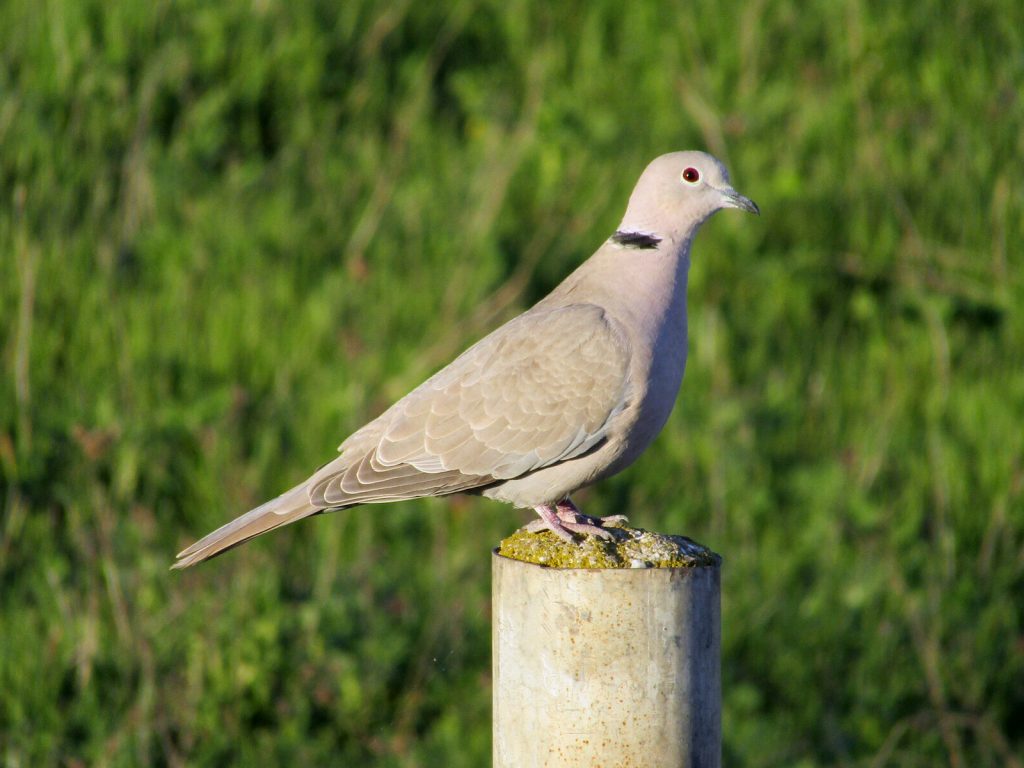
The Eurasian Collared Dove is a medium-sized dove with a slim body, a relatively small head, pointed wings, and a long, square-ended tail. Its plumage is mostly pale gray-buff, often with a subtle pink tone across the breast.
The most recognizable feature of an adult is the narrow black crescent on the back and sides of the neck. In flight, the pale outer tail feathers contrast with the darker center of the tail. Its familiar call is a repeated three-part coo, often heard from trees, rooftops, and utility wires.
Where it lives
Eurasian Collared Doves are commonly found in towns, villages, farms, gardens, parks, and other open areas close to people. They often rest and nest in trees but also use buildings, telephone poles, and other human-made structures.
Originally associated with parts of Asia, the species expanded rapidly across Europe during the twentieth century. It has also established populations in other regions, including North America. Bird feeders and planted trees have helped it thrive in urban and suburban environments.
What it eats
Eurasian Collared Doves mainly eat seeds and grains. They forage on the ground in gardens, farmland, roadsides, and around buildings, searching for spilled grain, grass seeds, and other plant material.
They frequently visit bird feeders and may also eat small amounts of fruit and other available foods. Their diet and willingness to live near people have helped the species successfully colonize new areas.
Interesting facts
- The Eurasian Collared Dove spread across much of Europe remarkably quickly and is considered one of the most successful natural colonizers among modern birds.
- The species name decaocto is connected to an ancient Greek legend about a servant girl who was transformed into a dove. Its repetitive call was said to recall the number eighteen in Greek.
- Young birds do not initially have the complete black collar of adults.
- Pairs may breed several times during a long breeding season when food and weather conditions are favorable.
- Like other pigeons and doves, both parents produce a nutrient-rich substance known as crop milk to feed their young.