- Scientific name: Larus argentatus
- Group: Coastal Birds
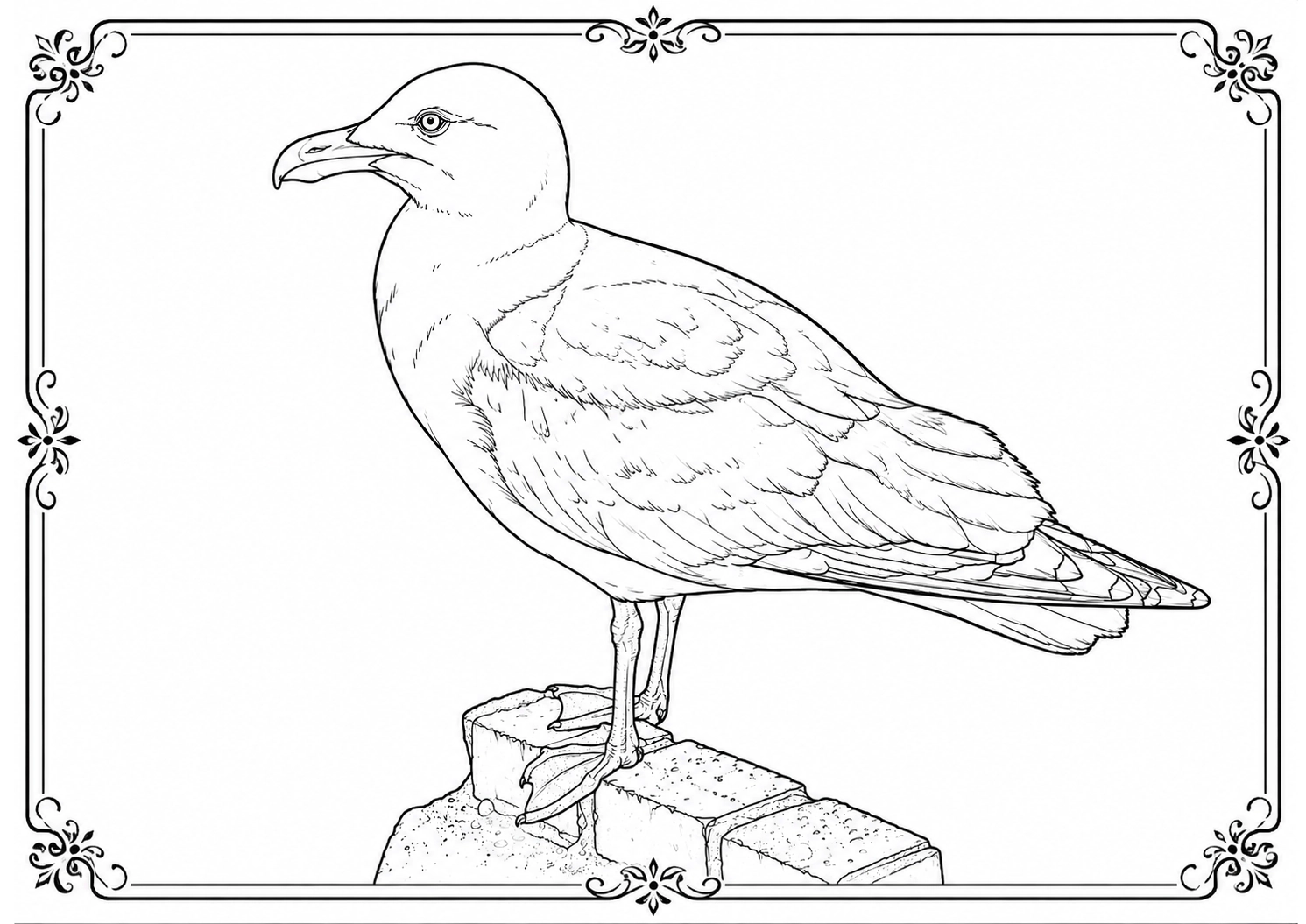
This printable European Herring Gull coloring page is inspired by the bird’s large body, long wings, strong bill, sturdy legs, and familiar gull shape. The clear outlines make it suitable for colored pencils, crayons, markers, or paint.
Use white, pale gray, black, yellow, and pink to recreate the plumage of an adult European Herring Gull. Pay special attention to the pale gray back, black wing tips, yellow bill, and pink legs.
Color guide
- Head and underparts: white
- Back and upper wings: pale gray
- Wing tips: black with small white spots
- Tail: white
- Bill: yellow with a red spot near the tip
- Eyes: pale yellow with a dark pupil
- Legs and feet: pink
Young birds are very different from adults. They are mostly brown and mottled, with darker bills and patterned wings. Their plumage gradually becomes paler over several years.
How to recognize a European Herring Gull
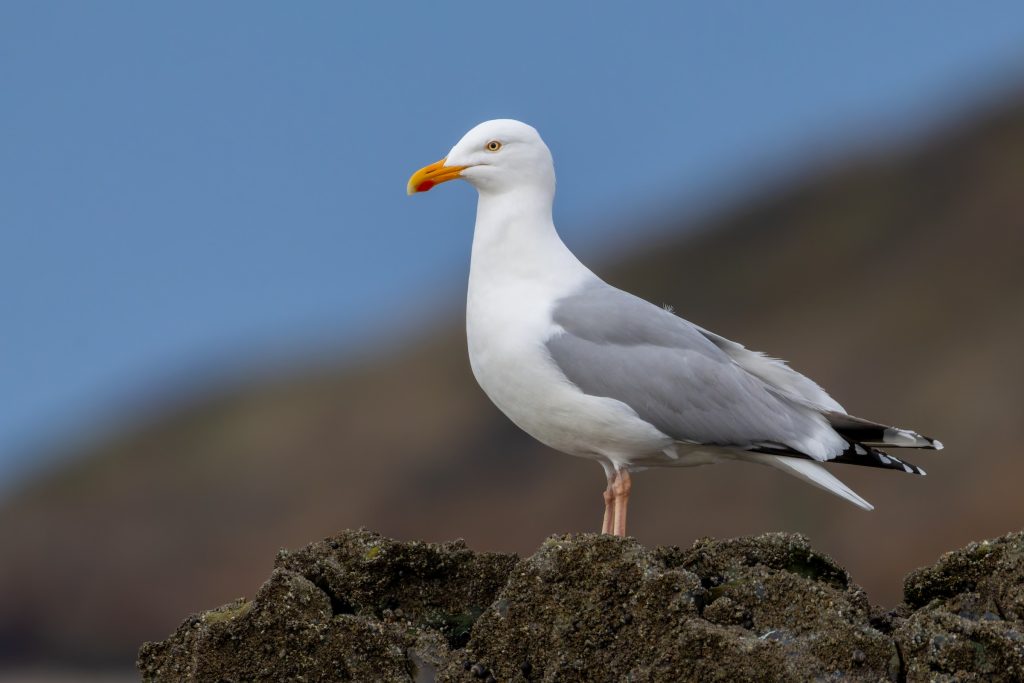
The European Herring Gull is a large, powerful gull with a broad body, long wings, a heavy bill, and relatively long legs. Adults have a white head and underparts, pale gray back and wings, and black wing tips marked with white spots.
The yellow bill has a noticeable red spot near the tip, while the legs are usually pink. In flight, the bird shows broad wings and a strong, steady wingbeat.
Young Herring Gulls can look very different from adults. Their brown, streaked plumage helps distinguish them from fully mature birds, but it can also make identification more difficult.
Where it lives
European Herring Gulls are strongly associated with coasts, harbors, cliffs, beaches, estuaries, and offshore islands. They also occur far inland around reservoirs, rivers, farmland, rubbish tips, and cities.
They often nest on rocky cliffs, islands, rooftops, and other elevated places. In urban areas, buildings can provide nesting sites similar to natural cliffs.
Many individuals remain in the same general region throughout the year, while others move between coastal and inland feeding areas depending on food and weather conditions.
What it eats
European Herring Gulls are highly adaptable feeders. Their diet includes fish, marine invertebrates, insects, worms, eggs, small animals, carrion, and plant material.
They also take advantage of food provided unintentionally by people, including discarded food and waste. Around the coast, they may search beaches and shallow water for crabs, shellfish, and other prey.
Their flexible diet is one reason they are able to live successfully in both natural coastal habitats and towns.
Interesting facts
- European Herring Gulls take several years to develop their full adult plumage.
- Young birds are heavily mottled brown, while adults are mostly white and pale gray.
- The red spot on the adult’s bill plays a role in feeding chicks, which peck at the spot to stimulate the parent to provide food.
- Herring Gulls are intelligent and opportunistic birds that can learn to exploit new food sources.
- They may drop hard-shelled food such as mussels onto rocks or other hard surfaces to break them open.
- Many have adapted to nesting on rooftops in towns and cities.
- Their loud calls are a familiar sound in coastal areas, especially around breeding colonies.