- Scientific name: Carduelis carduelis
- Group: Garden and Park Birds
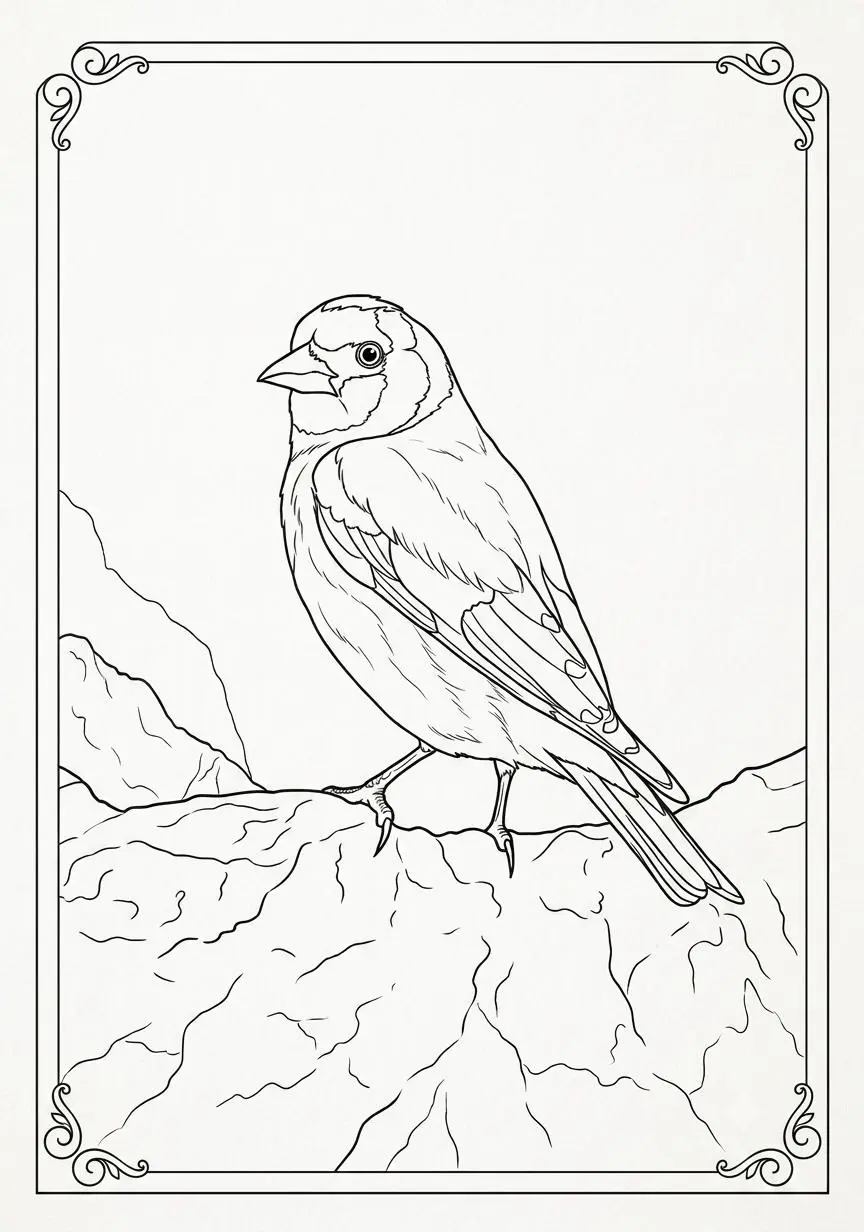
This printable European Goldfinch coloring page is based on the bird’s small body, pointed bill, compact shape, and striking wing and face patterns.
The European Goldfinch is one of the most colorful small birds found in gardens, parks, farmland, and open countryside. Its red face, black-and-white head, warm buff body, and bright yellow wing stripe make it especially enjoyable to color.
Use the natural color guide for a realistic result, or choose your own colors and create a more imaginative version.
European Goldfinch Coloring Page Color guide
- Face: bright red
- Top and back of head: black
- Cheeks and sides of head: white
- Back: warm brown to buff
- Breast and flanks: pale buff or warm beige
- Belly: white to pale cream
- Wings: black with a broad bright yellow band
- Wing spots and tips: white
- Tail: black with white markings
- Bill: pale ivory to pinkish
- Eyes: dark brown
- Legs and feet: pale brown to pinkish gray
Young birds lack the bright red face of adults and have a browner, more streaked appearance.
How to recognize a European Goldfinch
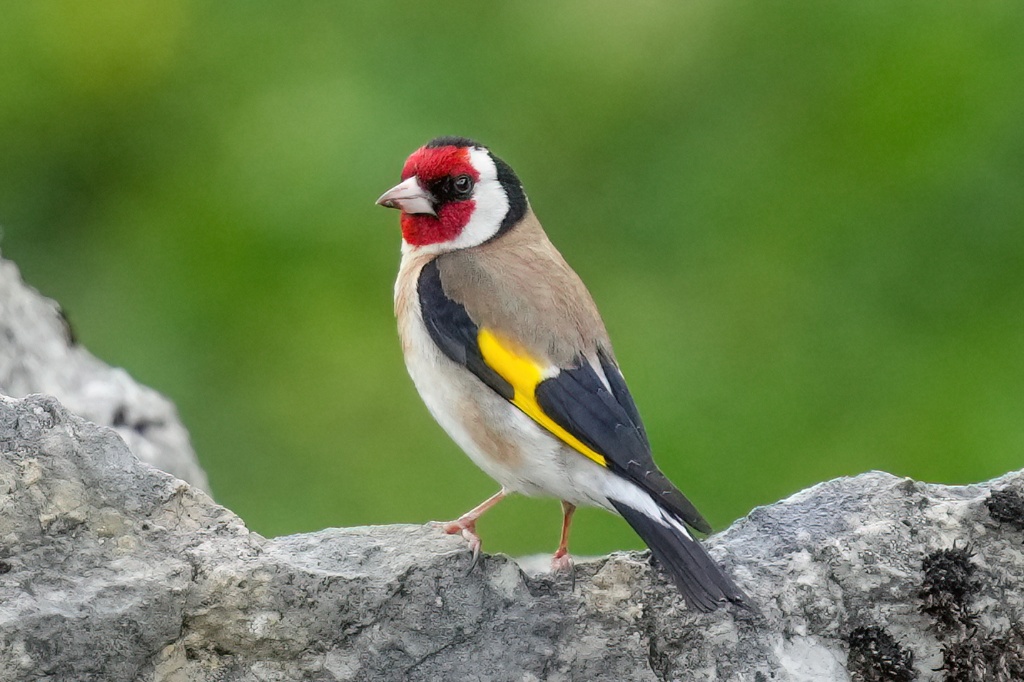
The European Goldfinch is a small finch with a slim pointed bill and a very distinctive color pattern.
Adult birds are easy to recognize by their red face, black-and-white head, and broad yellow stripe across the dark wings.
In flight, the yellow wing band can be particularly noticeable.
Goldfinches are often seen in small, active flocks and frequently feed on seed heads while clinging to thin stems.
Their call is light, musical, and tinkling, and groups of birds can often be heard before they are noticed.
Where it lives
European Goldfinches are widespread across much of Europe, North Africa, and western and central Asia.
They prefer open habitats with scattered trees and plenty of seed-producing plants.
They can be found in gardens, parks, orchards, farmland, hedgerows, woodland edges, meadows, and urban green spaces.
They often visit places where thistles, teasels, and other wild plants are allowed to produce seeds.
What it eats
European Goldfinches feed mainly on seeds.
They are especially associated with thistles, teasels, dandelions, and other plants with small seeds.
Their long, fine bills allow them to reach seeds that are difficult for some other finches to extract.
During the breeding season, they also eat small insects and feed some invertebrates to their chicks.
Goldfinches may also visit garden feeders, particularly those offering small seeds.
Interesting facts
- The European Goldfinch belongs to the finch family, Fringillidae.
- Its scientific name, Carduelis carduelis, is connected with the Latin name for thistles, reflecting the bird’s strong association with thistle seeds.
- The bright yellow stripe on the wing remains conspicuous even when the bird is flying.
- European Goldfinches are highly social outside the breeding season and often form feeding flocks.
- Their delicate pointed bills are specially suited to extracting small seeds from seed heads.
- The species has long appeared in European art and symbolism, partly because of its striking plumage.
- Young birds look quite different from adults because they lack the characteristic red, black, and white head pattern.