- Scientific name: Coccothraustes coccothraustes
- Group: Woodland Birds
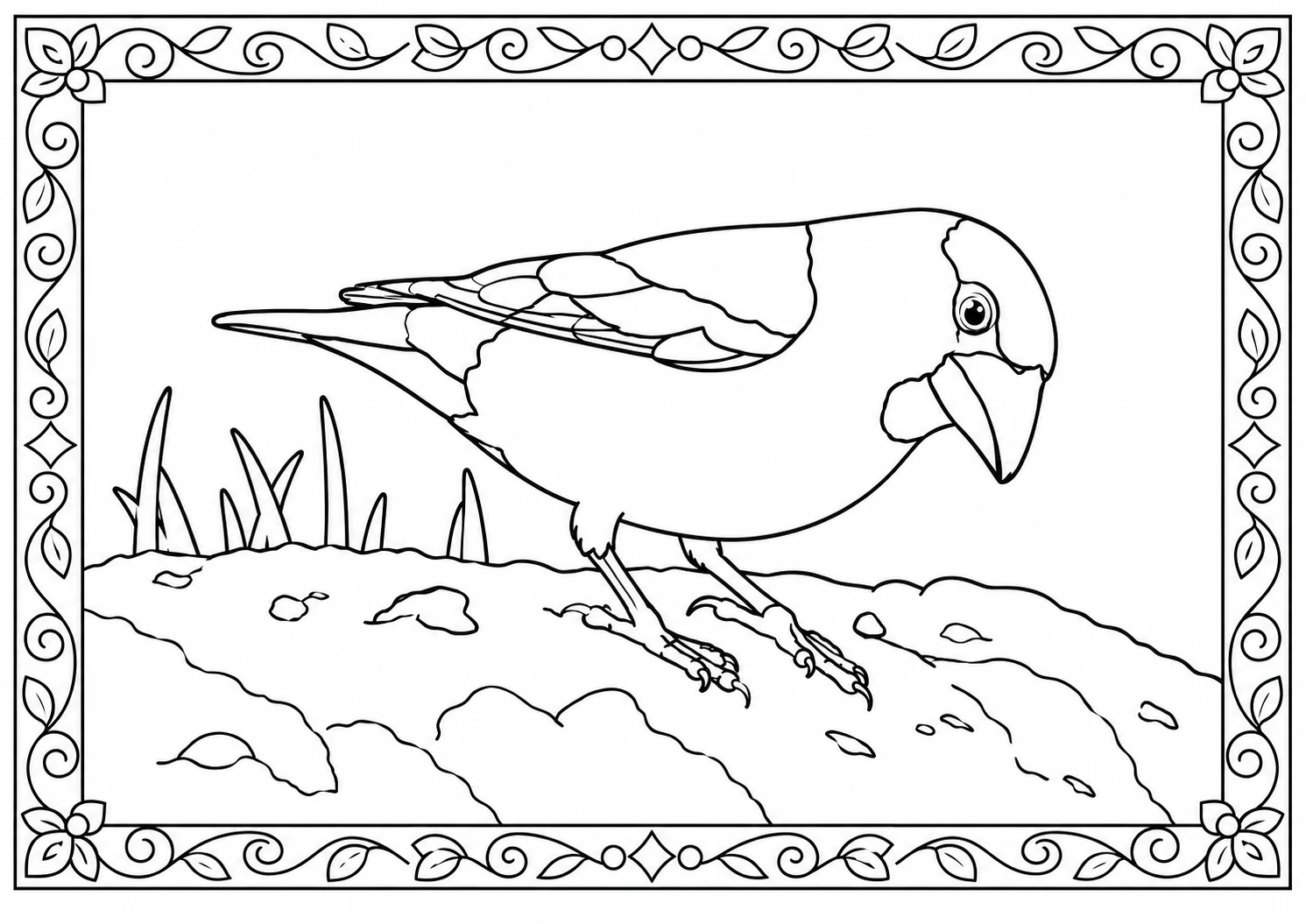
This printable Hawfinch coloring page is based on the bird’s large head, extremely powerful bill, compact body, and short tail.
The Hawfinch is one of Europe’s most distinctive finches. Its warm brown plumage, black facial markings, pale wing patches, and massive bill make it especially interesting to color and easy to recognize once you know the main field marks.
Use the natural color guide for a realistic result, or choose your own colors and create a more imaginative version.
Color guide
- Head: warm orange-brown to chestnut
- Face and area around the bill: black
- Nape and upper back: gray-brown to warm brown
- Wings: dark brown to black with white and bluish-gray patches
- Breast and belly: pale pinkish brown to buff
- Tail: dark brown to black with pale markings
- Bill: pale horn-colored or bluish gray, becoming darker in breeding season
- Eyes: dark brown
- Legs and feet: pinkish brown
Males are generally more strongly colored than females. Females tend to be slightly duller and more gray-brown overall.
How to recognize a Hawfinch
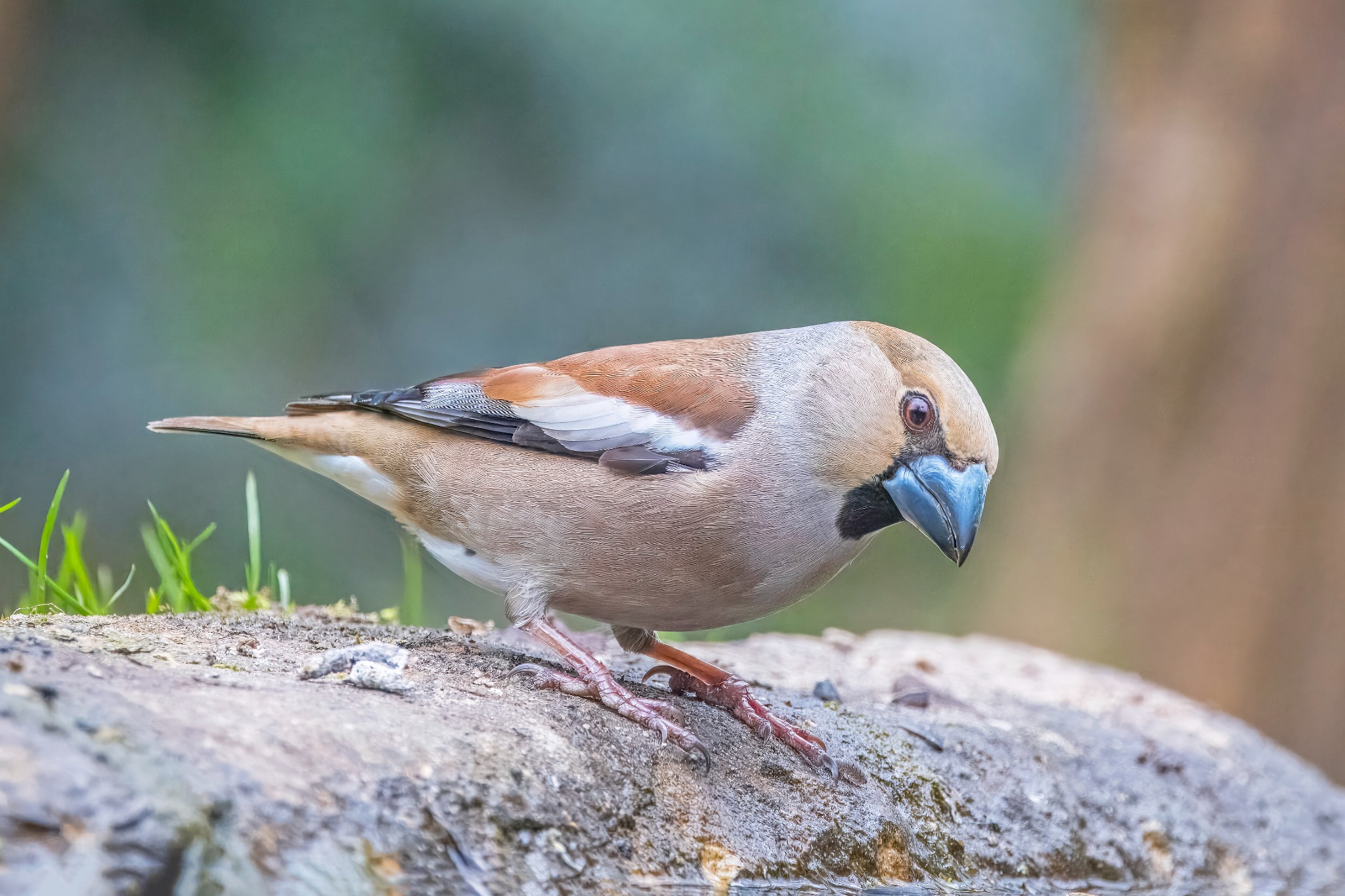
The Hawfinch is a large, heavy-looking finch with an unusually thick, powerful bill.
Its large head and massive triangular bill are the most obvious identification features. The bird also has a warm brown head, black markings around the bill and throat, and contrasting dark wings with pale patches.
In flight, the broad white wing markings can be quite noticeable.
Hawfinches often spend time high in the canopy, so they may be difficult to see even in places where they are present. Their strong shape and unusually large bill make them much easier to identify when seen clearly.
Where it lives
Hawfinches are found across much of Europe and parts of western and central Asia.
They prefer mature deciduous and mixed woodland, especially areas with large trees that produce seeds and fruit.
They can also be found in parks, orchards, large gardens, woodland edges, and old tree-lined landscapes.
In winter they may move into more open areas in search of food and sometimes appear near feeders.
What it eats
Hawfinches feed mainly on seeds and fruit kernels.
Their exceptionally powerful bills allow them to crack hard cherry stones, plum stones, and other seeds that many smaller birds cannot open.
They also eat buds, berries, and seeds from trees such as hornbeam and beech.
During the breeding season, insects and other small invertebrates are also included in the diet, especially when feeding young birds.
Interesting facts
- The Hawfinch belongs to the finch family, Fringillidae.
- Its bill is among the strongest relative to body size of any European songbird.
- It can crack very hard fruit stones to reach the seed inside.
- Despite its chunky appearance, the Hawfinch can be surprisingly difficult to spot because it often stays high in trees.
- Its scientific name, Coccothraustes coccothraustes, comes from words associated with crushing or breaking kernels.
- Hawfinches may gather in small flocks outside the breeding season.
- The combination of a huge bill, large head, warm brown plumage, and bold wing markings makes it one of the most distinctive European finches.