- Scientific name: Erithacus rubecula
- Group: Garden Birds
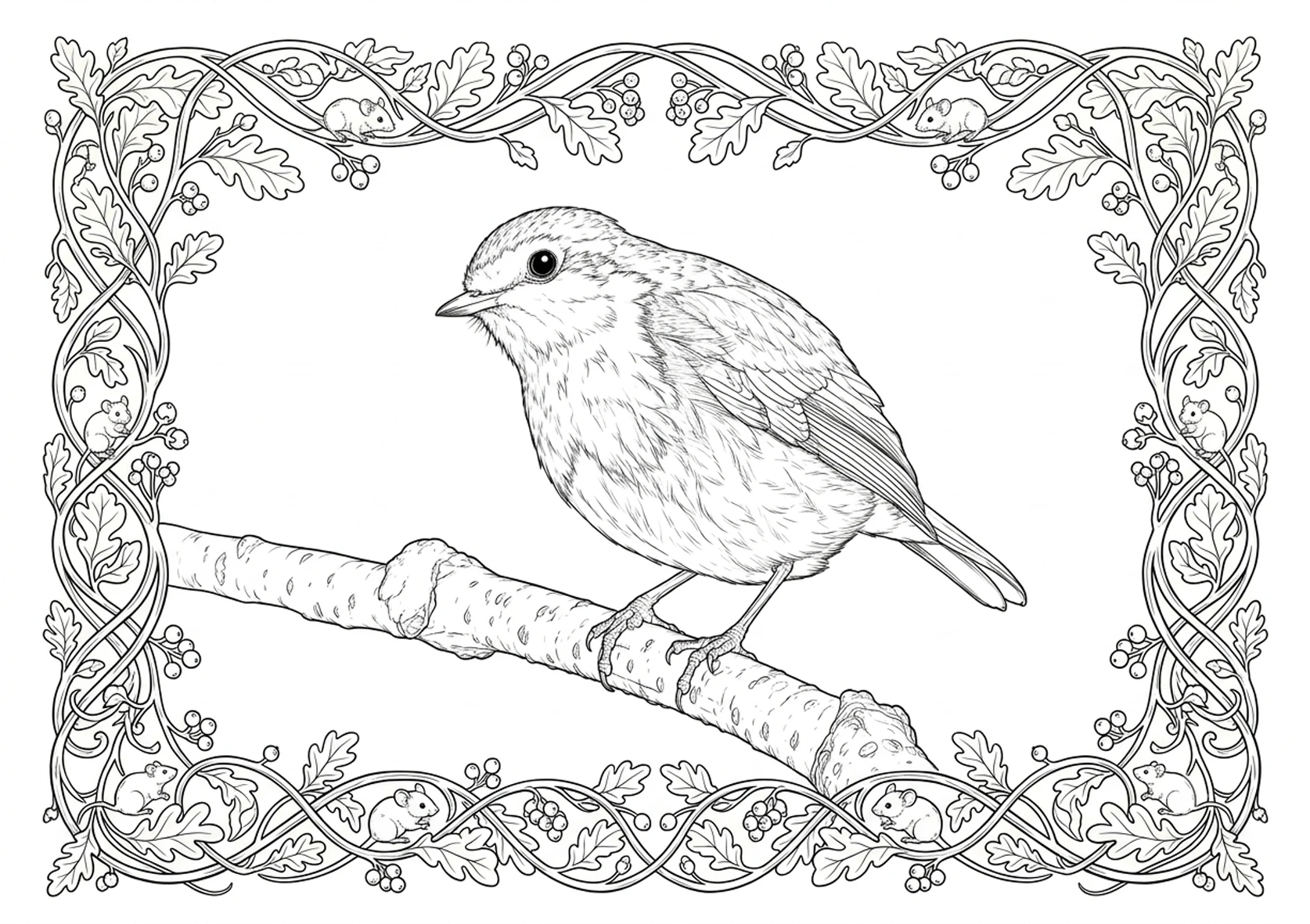
This printable European Robin coloring page is inspired by the bird’s small rounded body, upright posture, fine bill, and distinctive face and breast. The clean outlines make it suitable for colored pencils, crayons, markers, or paint.
Use orange-red, brown, olive, and pale gray tones to recreate the natural appearance of a real European Robin. The most important feature to notice is the bright orange-red face and breast that make this bird so easy to recognize.
Simple detail |
|
Average detail |
Color guide
- Face and breast: orange-red
- Forehead and throat: orange-red
- Back and wings: olive-brown or warm brown
- Belly: pale gray, buff, or whitish
- Tail: brown
- Bill: dark gray or black
- Eyes: dark brown or black
- Legs and feet: brown or pinkish brown
Young robins look different from adults. They are mostly brown with golden or buff mottling and do not yet have the bright red face and breast.
How to recognize a European Robin
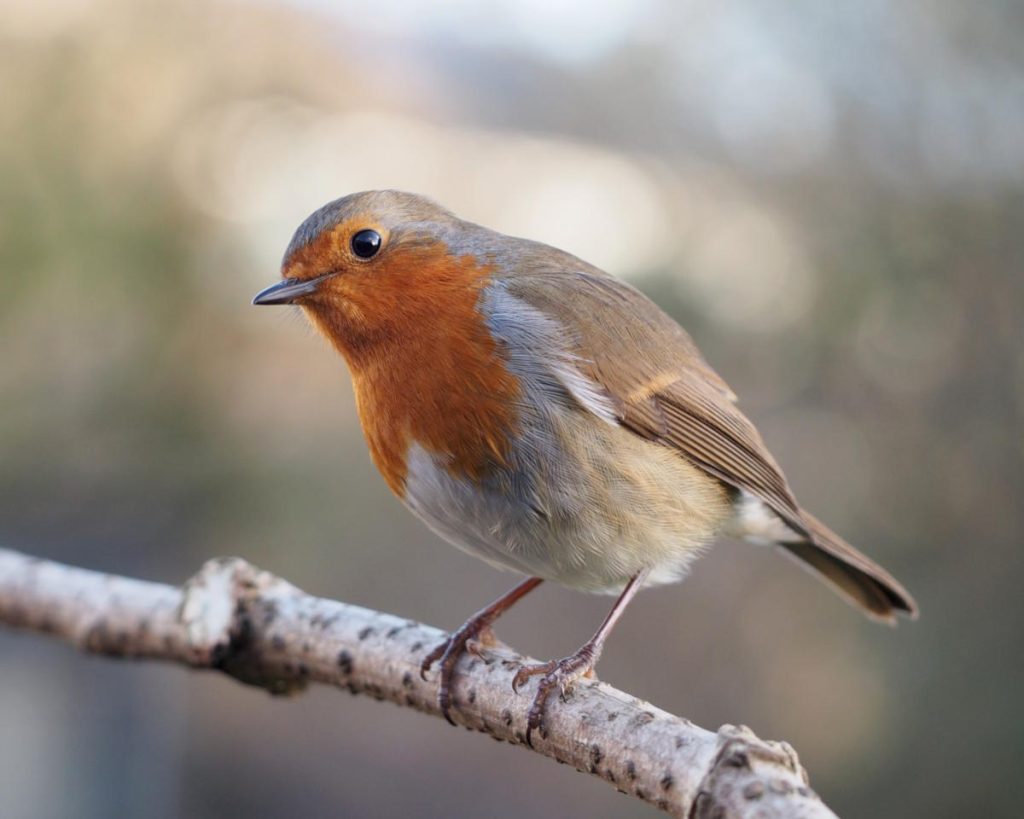
The European Robin is a small, rounded songbird with a fairly large eye, a thin pointed bill, and a gentle upright posture. Adult birds are easy to recognize by their orange-red face and breast, combined with brown upperparts and a paler belly.
Unlike many other small birds, the robin often appears alone and can be surprisingly bold around people. It frequently perches in the open, flicks its wings, and hops across the ground while searching for food.
Its song is clear, rich, and musical, and it can be heard for much of the year. The bird’s soft ticking call is also a familiar sound in gardens, hedges, and woodland edges.
Where it lives
European Robins live in woodland, hedgerows, parks, gardens, orchards, and scrubby places with bushes and low cover. They prefer habitats where dense vegetation offers shelter and nesting sites, while nearby open ground provides places to feed.
They are widespread across much of Europe and are among the most familiar garden birds in many countries. In towns and villages, they often stay close to flower beds, shrubs, lawns, and shady corners.
Some robins remain in the same area throughout the year, while others move seasonally, especially in colder parts of their range.
What it eats
European Robins eat insects, spiders, worms, larvae, and other small invertebrates. They usually feed on or near the ground, picking food from leaf litter, soil, moss, and low plants.
In autumn and winter, they also eat berries, seeds, and other small fruits. In gardens, they may visit feeders for mealworms, seed mixes, and soft foods, especially when natural food is harder to find.
Their habit of following gardeners is well known, because digging often exposes worms and insects.
Interesting facts
The European Robin belongs to the flycatcher family, not the thrush family.
Both males and females have the same orange-red face and breast.
Young robins do not resemble the adults at first and lack the famous red breast.
European Robins are strongly territorial and may defend a feeding area even in winter.
They are often more willing than many other birds to come close to people in gardens and parks.
The robin is one of the most loved and recognizable birds in Europe and appears frequently in art, cards, and seasonal decorations.