- Scientific name: Picus viridis
- Group: Woodpeckers
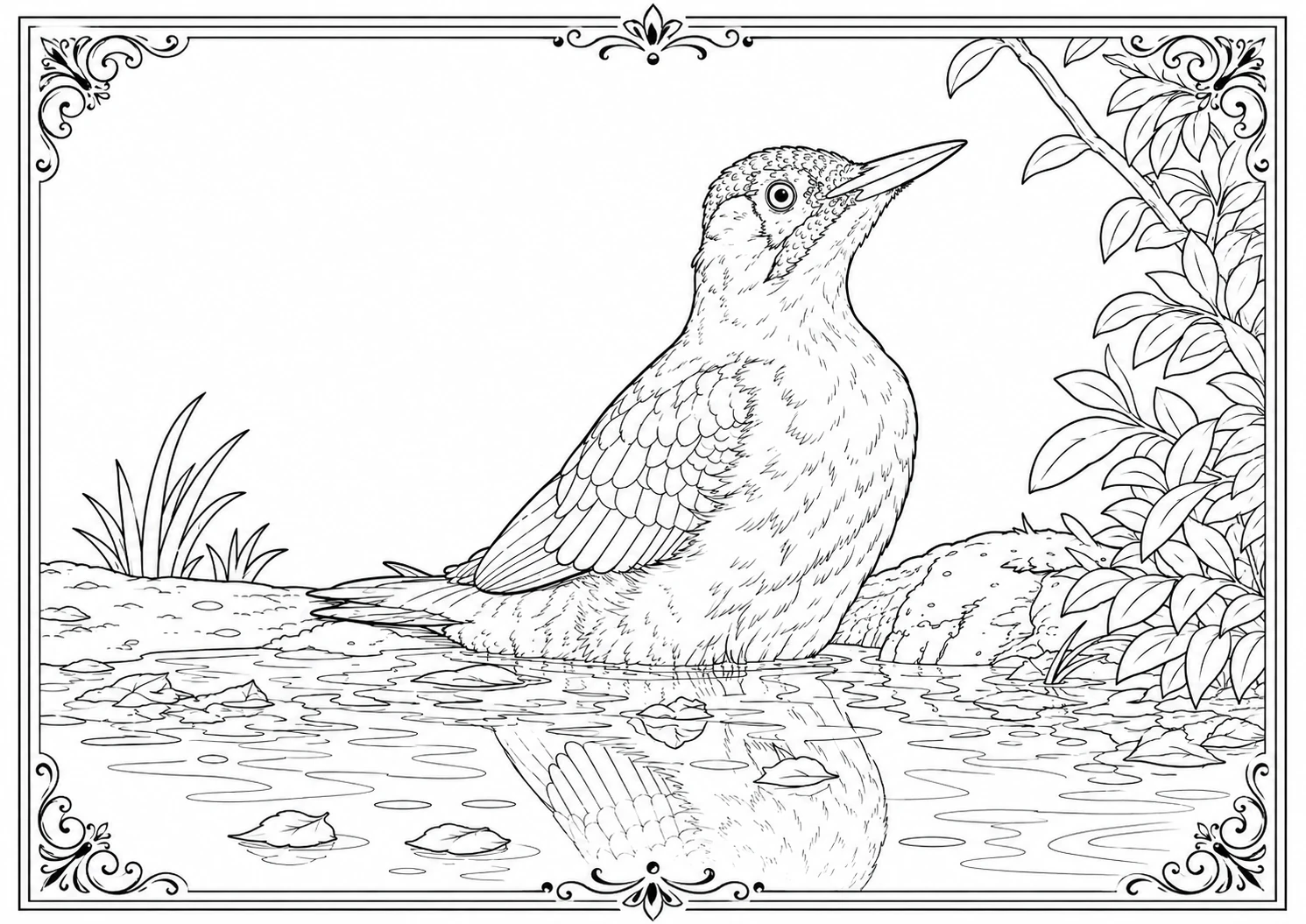
This printable European Green Woodpecker coloring page is based on the bird’s strong body, long pointed bill, stiff tail, and distinctive green plumage.
The European Green Woodpecker is one of the most colorful woodpeckers found in Europe. Its green back, pale underparts, bright red crown, and contrasting facial markings make it especially interesting to color.
Use the natural color guide for a realistic result, or choose your own colors and create a completely different version.
Color guide
- Crown and nape: bright red
- Face: pale gray or greenish gray
- Moustache stripe: black; males have a red center inside the black moustache
- Back and wings: olive green to yellow-green
- Rump: bright yellow-green
- Underparts: pale gray-green or yellowish gray
- Tail: dark greenish brown with darker barring
- Bill: gray-black
- Eyes: pale bluish white to gray with a dark pupil
- Legs and feet: gray or greenish gray
Young birds are more heavily spotted and barred than adults and usually look less cleanly patterned.
How to recognize a European Green Woodpecker
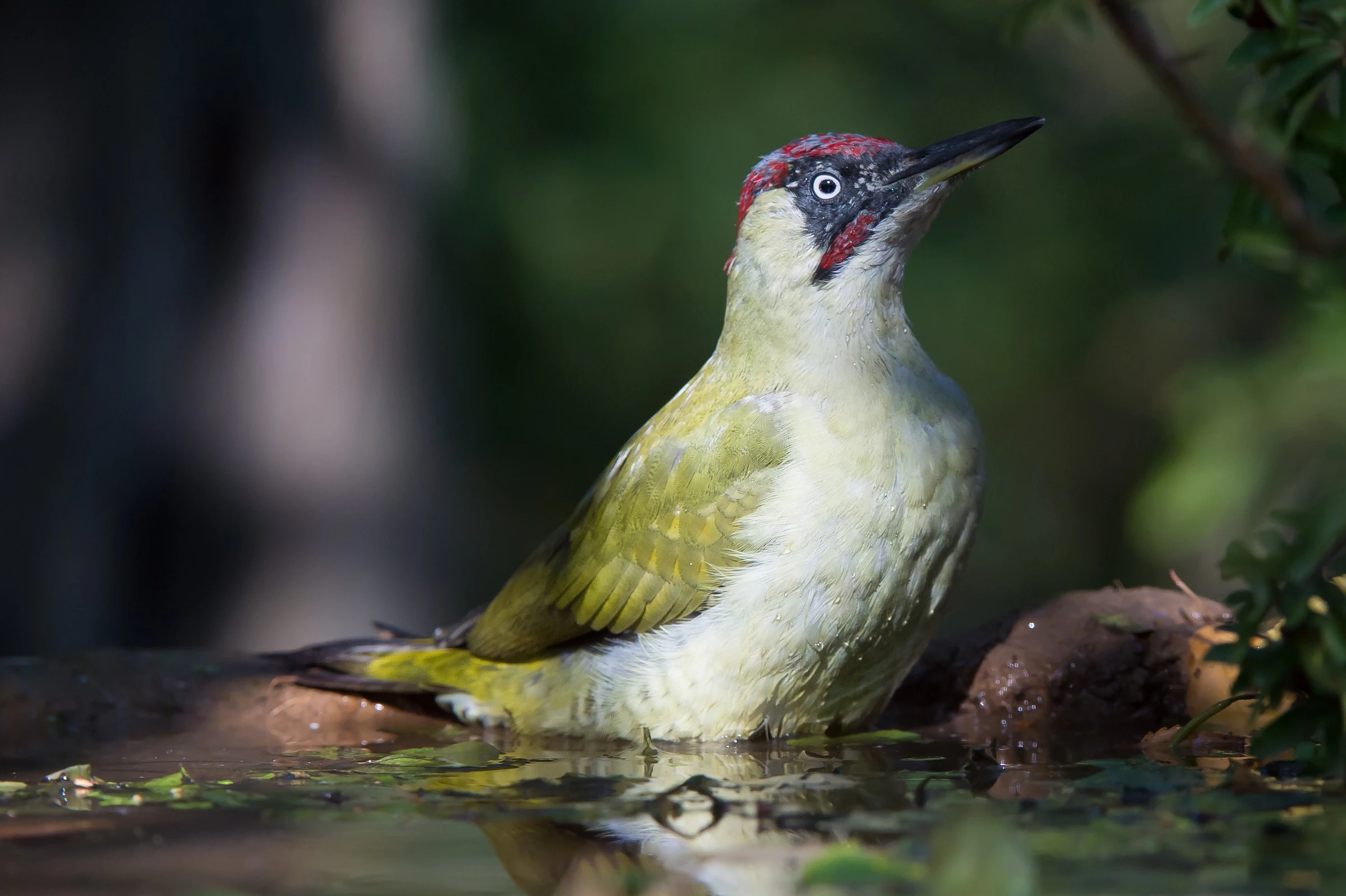
The European Green Woodpecker is a large woodpecker with a strong pointed bill, rounded body, and relatively long tail.
Its most obvious features are the green upperparts, bright red crown, and yellow-green rump. The face is paler, with a bold black moustache stripe.
Males and females look similar, but males have red inside the black moustache stripe, while females have an entirely black moustache.
In flight, the bird has the typical undulating flight pattern of a woodpecker, with several wingbeats followed by a short glide.
Its loud, laughing call is another useful clue and is often heard before the bird is seen.
Where it lives
European Green Woodpeckers are found across much of Europe.
They prefer landscapes with a mixture of mature trees and open grassy areas. Typical habitats include woodland edges, parks, orchards, farmland, large gardens, pastures, and old tree-lined countryside.
Unlike many other woodpeckers, they spend a considerable amount of time on the ground, especially on lawns and short grass.
They nest in cavities that they excavate in trees.
What it eats
European Green Woodpeckers specialize in eating ants.
They often feed on the ground, using their strong bill to open ant nests and their very long sticky tongue to collect ants, larvae, and pupae.
Ants make up a large part of their diet, although they may also eat other insects and occasionally fruit or seeds.
Their feeding behavior is one reason they are often seen on lawns, meadows, and other short grassy areas rather than constantly climbing tree trunks.
Interesting facts
- The European Green Woodpecker belongs to the woodpecker family, Picidae.
- Its tongue can extend far beyond the tip of the bill and is specially adapted for reaching insects deep inside ant nests.
- Unlike the Great Spotted Woodpecker, the European Green Woodpecker spends much of its feeding time on the ground.
- Its bright yellow-green rump can be especially noticeable when the bird flies away.
- The species is famous for its loud laughing call, which has sometimes led to the English nickname “yaffle.”
- Males can be distinguished from females by the red center of the moustache stripe.
- Despite being a woodpecker, it drums less frequently than many other European woodpecker species.