- Scientific name: Dendrocopos major
- Group: Woodpeckers
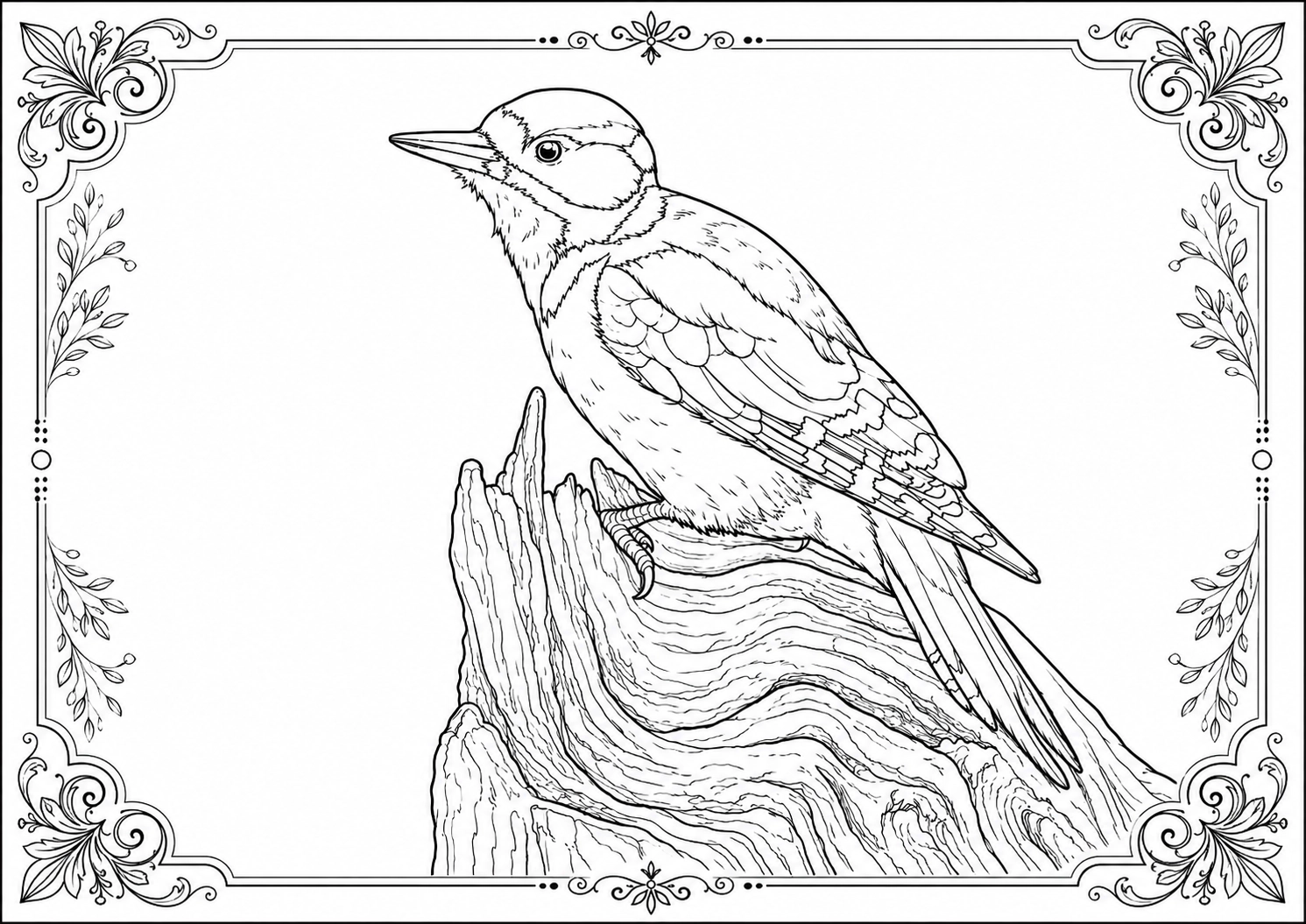
This printable Great Spotted Woodpecker coloring page is inspired by the bird’s strong body, pointed bill, stiff tail, and bold black-and-white plumage. The clear outlines make the illustration suitable for colored pencils, crayons, markers, or paint.
Use the species’ natural black, white, and red markings as a guide. Pay special attention to the large white shoulder patches, striped face, and bright red area beneath the tail.
Color guide
- Head and back: black
- Cheeks, throat, and underparts: white or pale cream
- Shoulder patches: bright white
- Wings: black with rows of white spots
- Undertail area: bright red
- Tail: mostly black with some white on the outer feathers
- Bill: dark gray or black
- Eyes: dark brown or black
- Legs and feet: gray
- Adult males have a small red patch on the back of the head. Females lack this marking, while young birds have a larger red crown.
How to recognize a Great Spotted Woodpecker
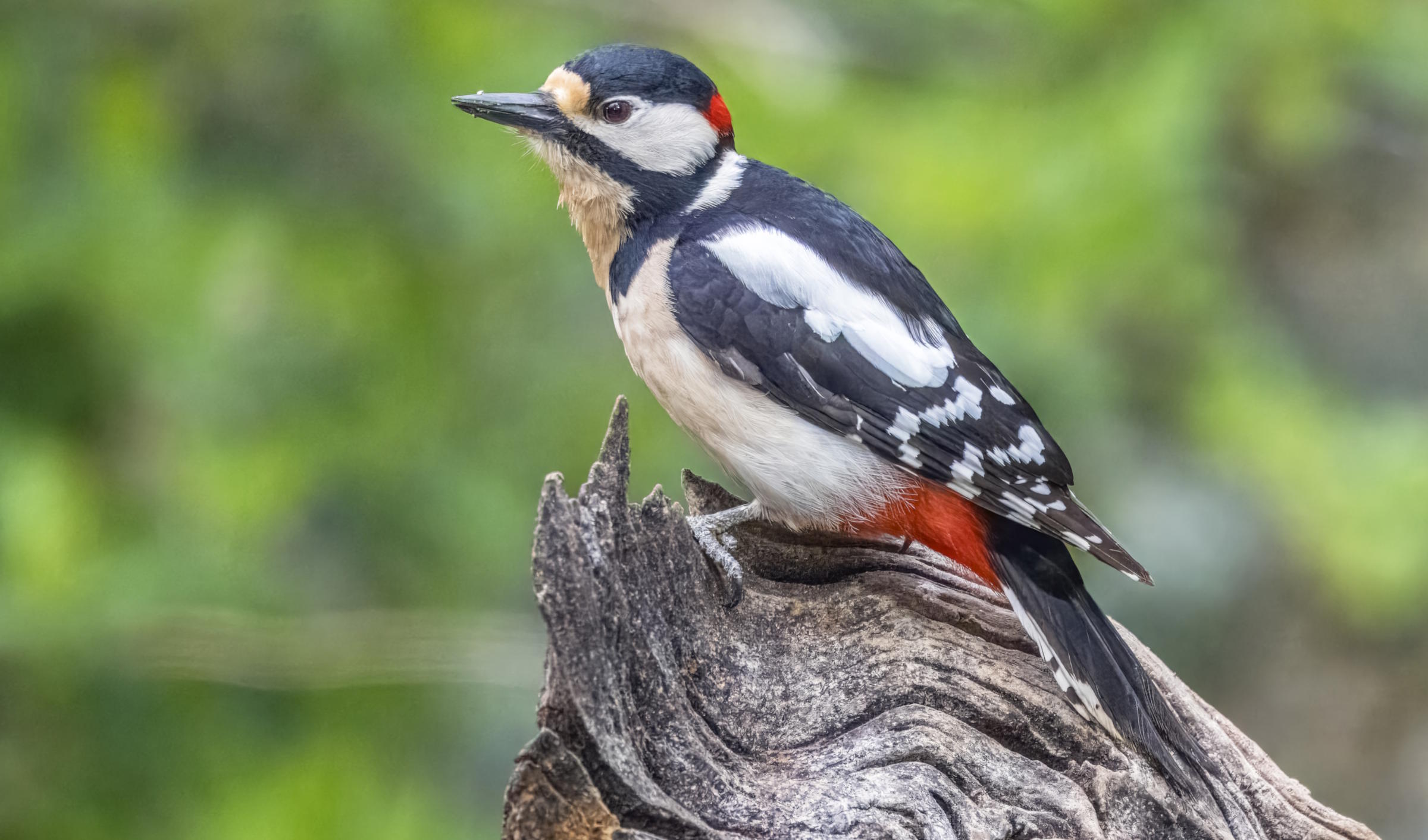
The Great Spotted Woodpecker is a medium-sized woodpecker with a compact body, a strong pointed bill, and a stiff tail used for support while climbing tree trunks.
Its plumage is strongly patterned in black and white. The large white shoulder patches are especially noticeable, while the wings show rows of smaller white spots. The lower belly and area beneath the tail are bright red.
Its flight is undulating, with several quick wingbeats followed by a short glide. It can also be recognized by its sharp call and rapid drumming on tree trunks and branches.
Where it lives
Great Spotted Woodpeckers live in deciduous, mixed, and coniferous woodland. They are also found in parks, orchards, large gardens, cemeteries, and other places with mature trees.
They spend much of their time climbing trunks and branches in search of food. The species is widespread across Europe and large parts of Asia and has adapted well to suburban environments where old trees and bird feeders are available.
What it eats
Great Spotted Woodpeckers eat insects, larvae, spiders, and other small invertebrates found beneath bark or inside wood. Their strong bills allow them to chip into tree trunks and reach hidden prey.
They also eat seeds, nuts, berries, and tree sap. In winter, they may visit bird feeders for peanuts, sunflower seeds, and suet.
They sometimes wedge cones or nuts into cracks in bark before breaking them open. These feeding places are sometimes called woodpecker anvils.
Interesting facts
- Great Spotted Woodpeckers use their stiff tail feathers as a support while climbing vertical tree trunks.
- Their feet have two toes pointing forward and two pointing backward, helping them grip bark securely.
- They drum on resonant branches and trunks to communicate and establish territory rather than to search for food.
- A woodpecker’s skull and neck are adapted to absorb much of the force produced by repeated pecking.
- Great Spotted Woodpeckers excavate nesting holes in dead or decaying wood. The cavity may later be used by other birds, bats, or small mammals.
- Males and females look similar, but adult males have a red patch on the back of the head.