- Scientific name: Prunella modularis
- Group: Garden and Park Birds
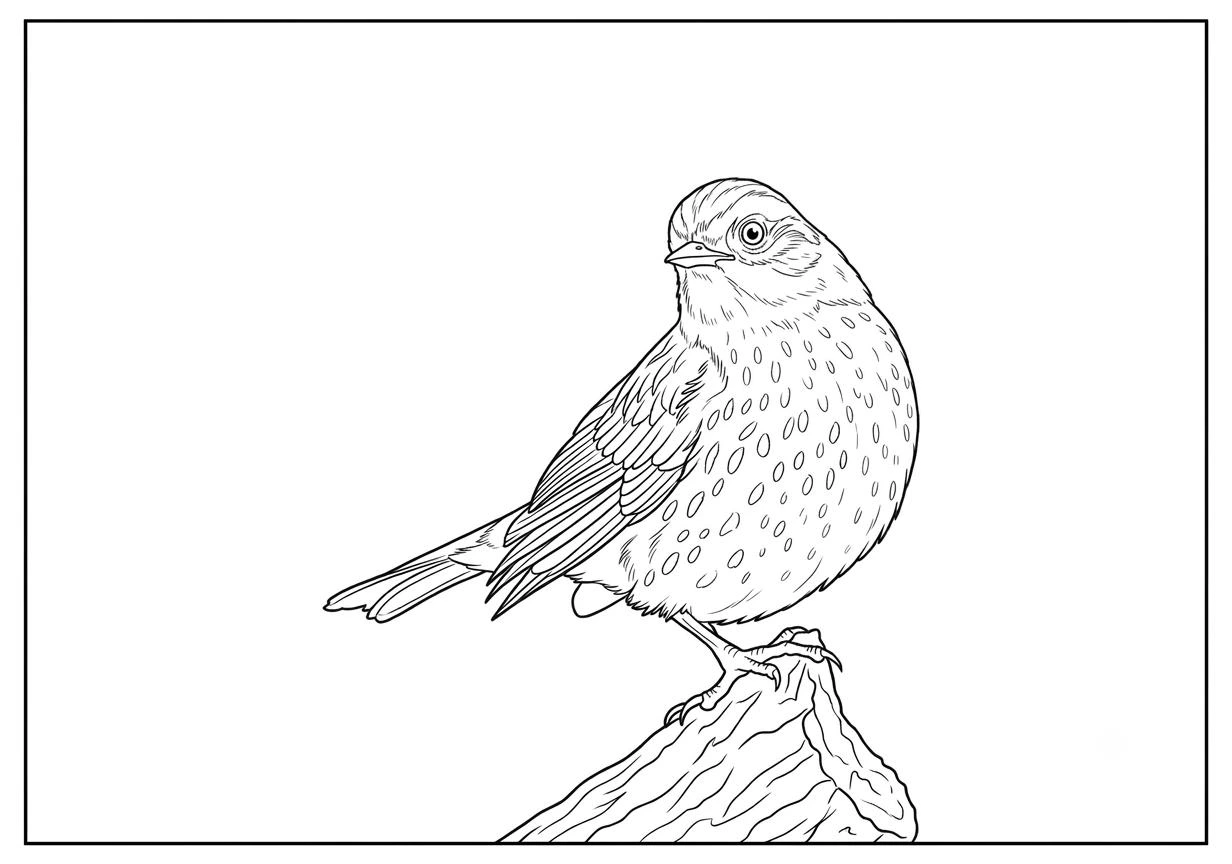
This printable Dunnock coloring page is based on the bird’s compact body, fine pointed bill, rounded wings, and subtle brown-and-gray plumage.
The Dunnock is not as brightly colored as many garden birds, but that makes it especially useful for learning how to notice small differences in pattern, posture, and shape. Its streaked brown back, gray head and breast, and thin bill are important clues for identification.
Use the natural color guide for a realistic result, or choose your own colors for a more imaginative version.
Color guide
- Head: gray to blue-gray
- Face: gray-brown
- Back: warm brown with dark streaks
- Wings: brown with darker centers and paler edges
- Breast: gray
- Flanks: brown with darker streaking
- Belly: pale gray-brown
- Tail: dark brown
- Bill: thin and dark gray to black
- Eyes: reddish brown to dark brown
- Legs and feet: pinkish brown
Young birds are browner overall and usually show heavier streaking than adults.
How to recognize a Dunnock
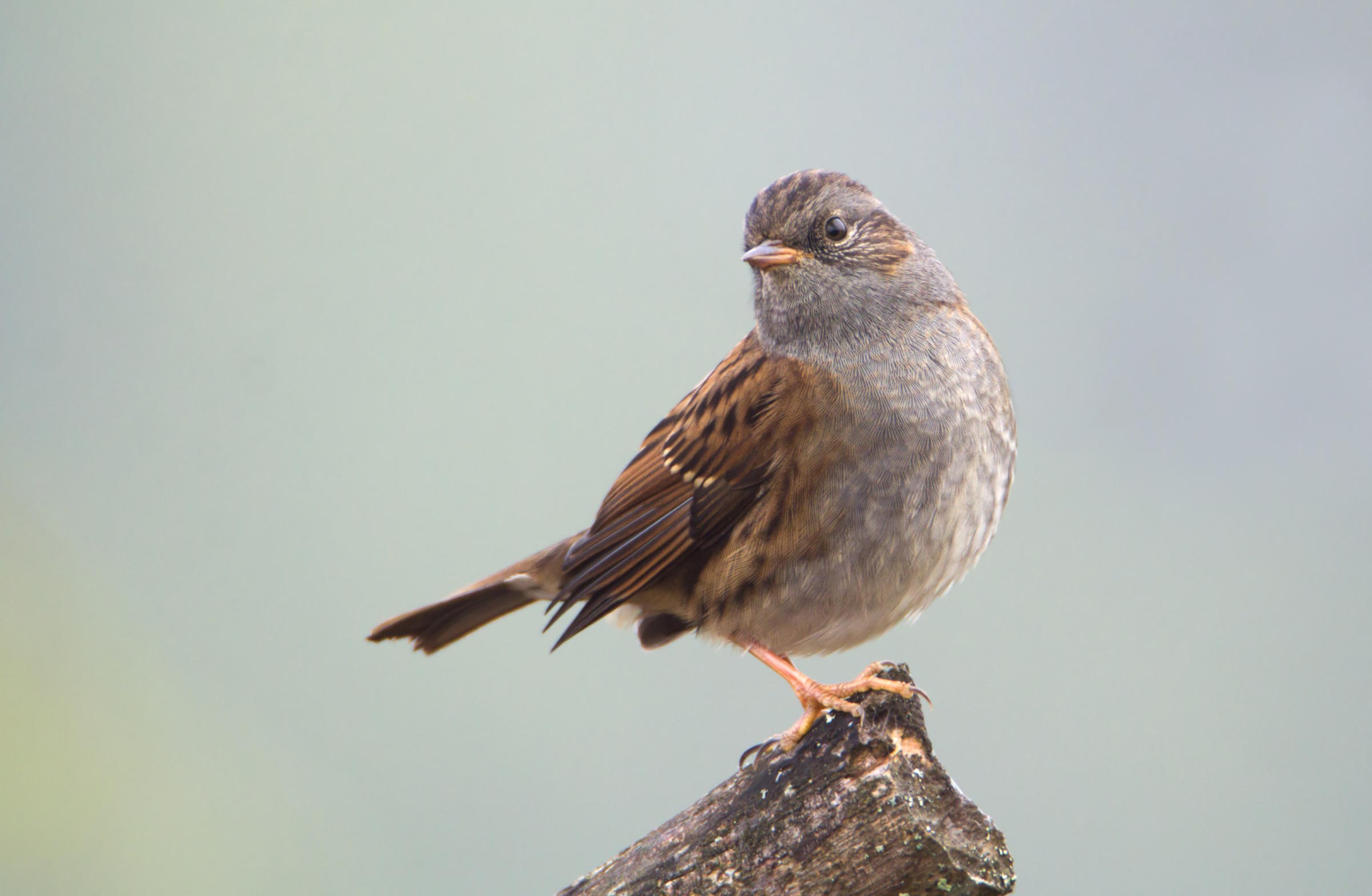
The Dunnock is a small, quiet songbird with a slim pointed bill and a fairly plain overall appearance.
Its gray head and breast contrast with the heavily streaked brown back and wings. The thin bill is an important clue, especially when comparing it with sparrows, which usually have shorter, thicker bills.
Dunnocks often spend time close to the ground, moving quietly beneath shrubs, hedges, and garden vegetation.
They may look shy and unobtrusive, but their quick movements and soft, high-pitched calls can help reveal their presence.
Where it lives
Dunnocks are widespread across much of Europe and parts of western Asia.
They are commonly found in gardens, parks, hedgerows, woodland edges, scrub, farmland, and areas with dense low vegetation.
They prefer places with bushes and ground cover where they can feed and remain partly hidden.
Dunnocks are especially familiar in European gardens, where they often stay lower and closer to cover than more obvious birds such as robins or tits.
What it eats
Dunnocks feed mainly on small invertebrates.
Their diet includes insects, spiders, beetles, larvae, and other tiny animals found on or near the ground.
During autumn and winter, they also eat seeds and other plant material when insects are less available.
They usually forage quietly beneath bushes, among fallen leaves, or along the edges of hedges.
Interesting facts
- The Dunnock belongs to the accentor family, Prunellidae.
- It is sometimes called the Hedge Sparrow, although it is not actually a sparrow.
- Its thin pointed bill reflects its insect-rich diet and helps distinguish it from true sparrows.
- Dunnocks have unusually complex breeding systems. Depending on the local population, one female may mate with more than one male, or one male may have more than one female.
- They often remain close to dense cover and can be easy to overlook despite being common in many gardens.
- Their song is light, fast, and musical, often delivered from the top of a hedge or low tree.
- Dunnocks are good examples of how subtle plumage can still contain useful field marks once you know what to look for.