- Scientific name: Accipiter nisus
- Group: Birds of Prey
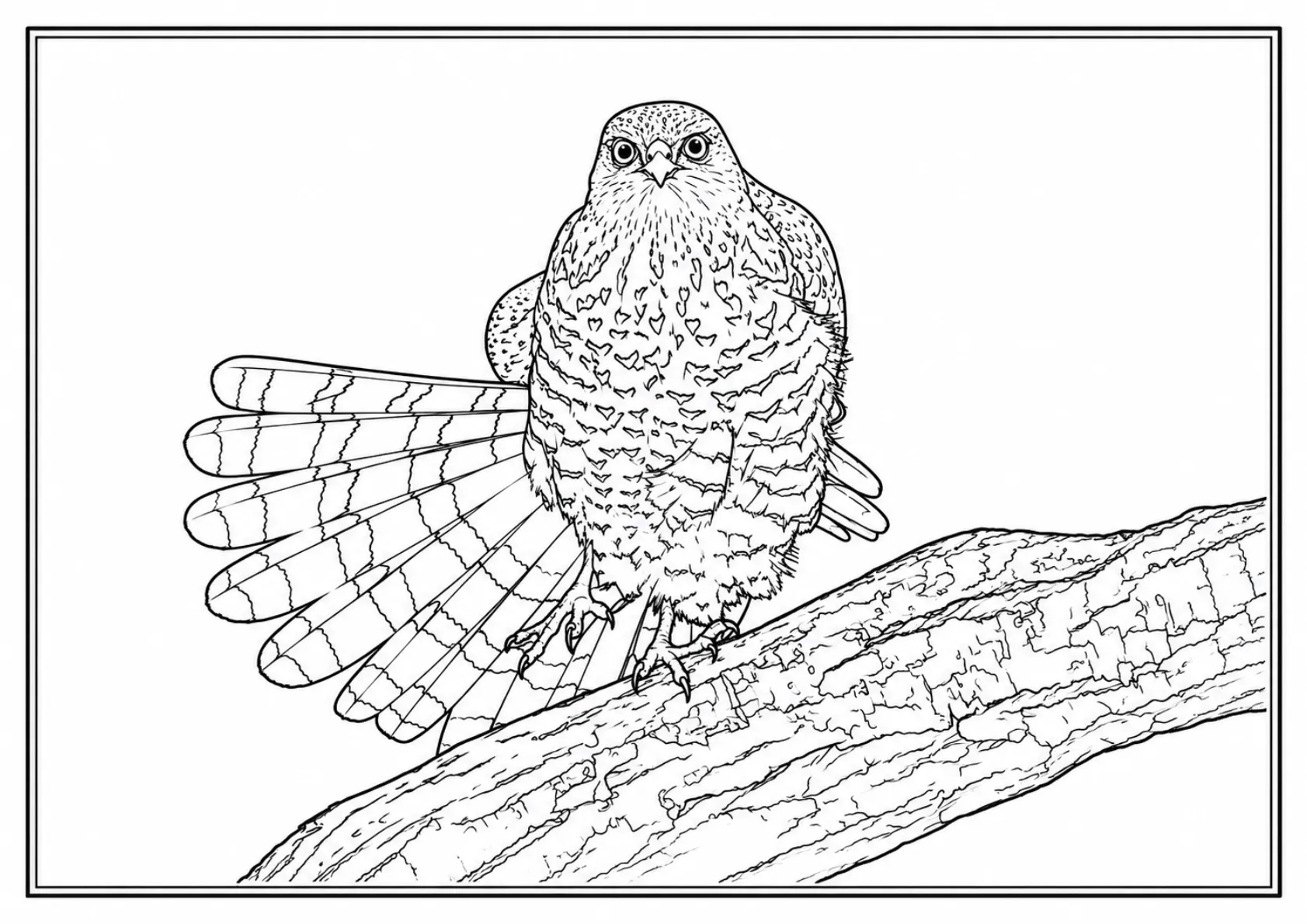
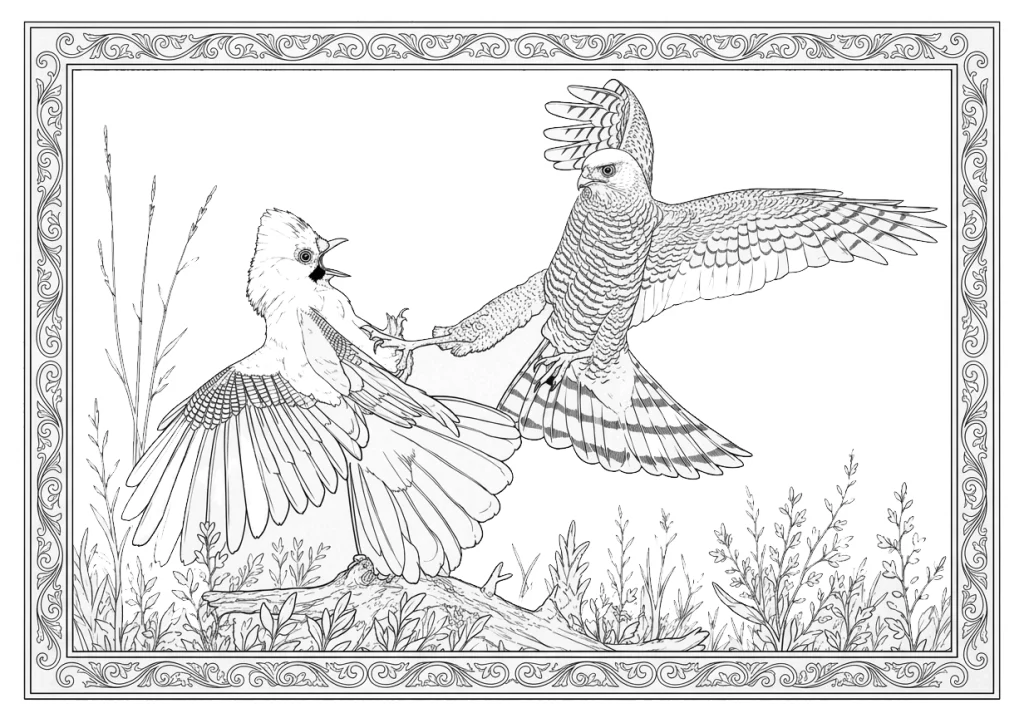
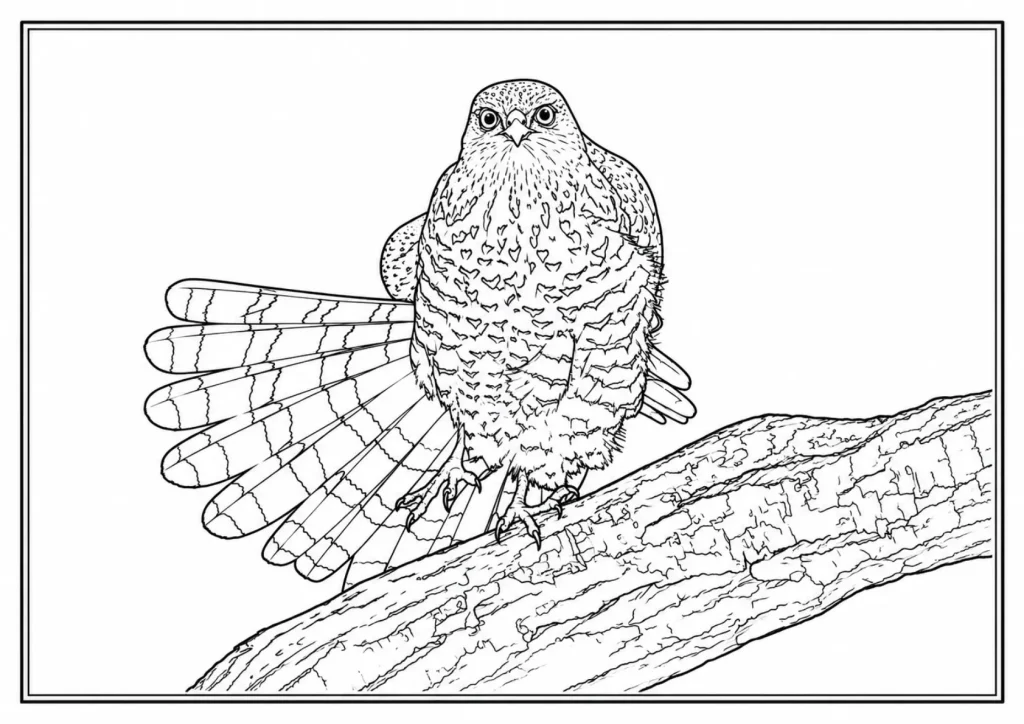
This printable Eurasian Sparrowhawk coloring page is inspired by the bird’s compact body, short rounded wings, long tail, hooked bill, and powerful feet. The clear outlines make the illustration suitable for colored pencils, crayons, markers, or paint.
Use blue-gray, brown, cream, orange, and yellow to recreate the natural plumage of an adult bird. Males and females look different, so you can choose between the colorful adult male, the larger brown female, or the streaked plumage of a young sparrowhawk.
Color guide
Adult male:
- Back and wings: blue-gray or slate-gray
- Cheeks and breast: warm orange or reddish brown
- Underparts: pale with fine orange horizontal bars
- Tail: gray with dark crossbars
- Eyes: orange or red-orange
- Cere and legs: yellow
- Bill: dark gray or black
Adult female:
- Back and wings: gray-brown or dark brown
- Underparts: pale cream with gray-brown horizontal bars
- Head: brown with a pale stripe above the eye
- Tail: brown-gray with dark bands
- Eyes: yellow or orange
- Cere and legs: yellow
Young birds are mostly brown above and have pale underparts marked with darker vertical streaks.
How to recognize a Eurasian Sparrowhawk
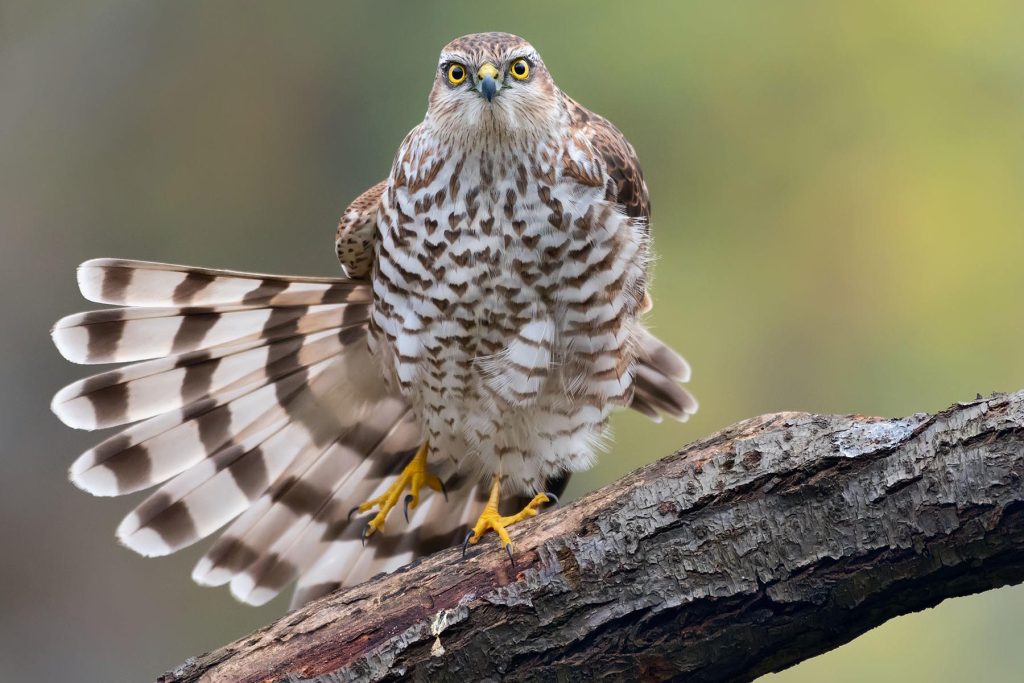
The Eurasian Sparrowhawk is a small, agile bird of prey with short, rounded wings and a long, narrow tail. This body shape allows it to fly quickly between trees, hedges, and buildings while chasing smaller birds.
Adult males are smaller than females and usually have blue-gray upperparts, orange cheeks, and finely barred orange-and-white underparts. Females are larger and browner, with pale underparts crossed by gray-brown bars.
In flight, the sparrowhawk often alternates several rapid wingbeats with a short glide. Its long tail helps it turn sharply, while its relatively short wings are well suited to hunting in woodland and gardens.
Where it lives
Eurasian Sparrowhawks live across much of Europe, Asia, and parts of northern Africa. They are strongly associated with woodland but also occur in farmland, parks, gardens, suburban areas, and towns where trees and plenty of small birds are available.
They often hunt along woodland edges, hedgerows, and garden boundaries. Dense vegetation helps them approach prey without being noticed. Some populations remain in the same region throughout the year, while others migrate or move shorter distances during winter.
Their nests are usually built in trees, often inside woodland or mature plantations.
What it eats
Eurasian Sparrowhawks mainly eat small and medium-sized birds. Typical prey includes sparrows, finches, tits, thrushes, starlings, and pigeons.
Males generally catch smaller birds because of their smaller body size. The larger females can tackle heavier prey, including thrushes and pigeons.
A sparrowhawk usually attacks with speed and surprise. It may fly low along hedges, fences, or buildings before making a sudden chase. Its long legs and sharp talons are used to seize prey, while the hooked bill is used for feeding.
Interesting facts
- Female Eurasian Sparrowhawks are considerably larger and heavier than males. This is one of the most noticeable size differences between the sexes among European birds of prey.
- Their short wings and long tail give them exceptional maneuverability when flying through trees and narrow spaces.
- A sparrowhawk may appear suddenly at a garden bird feeder because gatherings of small birds provide hunting opportunities.
- Despite their name, sparrowhawks do not eat only sparrows. They hunt many different bird species, with prey size depending partly on whether the hunter is male or female.
- The species was affected by organochlorine pesticides during the twentieth century, but populations recovered in many areas after restrictions on those chemicals.
- The Eurasian Sparrowhawk belongs to the hawk family Accipitridae and is classified as a bird of prey.