- Scientific name: Chloris chloris
- Group: Garden and Park Birds
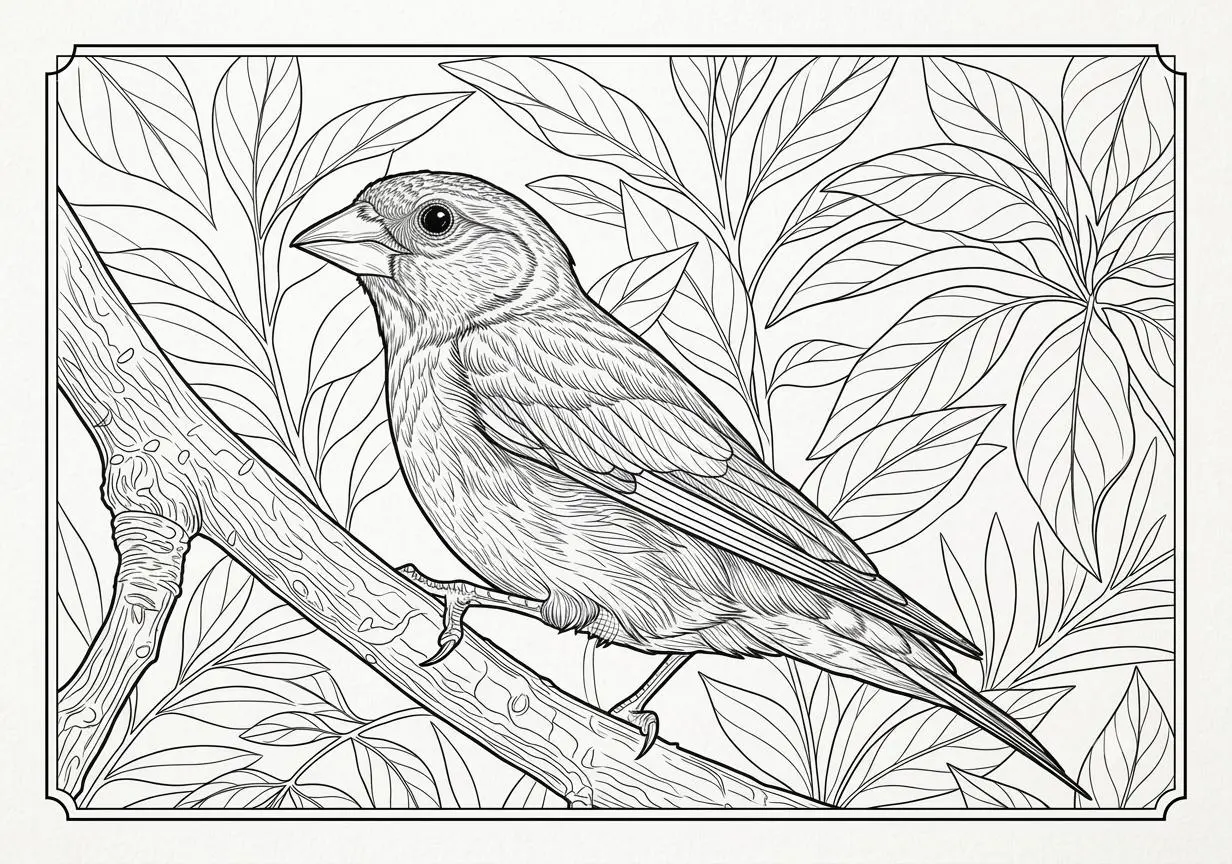
This printable European Greenfinch coloring page is based on the bird’s compact body, strong conical bill, relatively short tail, and distinctive green-and-yellow plumage.
The European Greenfinch is a familiar bird of gardens, parks, farmland, and woodland edges. Its olive-green body and bright yellow flashes in the wings and tail make it especially attractive to color and easy to recognize once you know the main field marks.
Use the natural color guide for a realistic result, or choose your own colors and create a more imaginative version.
Color guide
Adult male:
- Head and body: olive green to yellow-green
- Back: greenish brown
- Breast: yellow-green
- Wings: dark gray-brown with a bright yellow patch
- Tail: dark with yellow outer areas
- Bill: pale pinkish or horn-colored
- Eyes: dark brown
- Legs and feet: pinkish brown to gray-brown
Adult female:
- Body: duller olive-brown or gray-green
- Breast and flanks: more muted, sometimes lightly streaked
- Wings: brownish with yellow markings
- Tail: brownish with yellow outer feathers
Young birds are browner and more heavily streaked than adults.
How to recognize a European Greenfinch
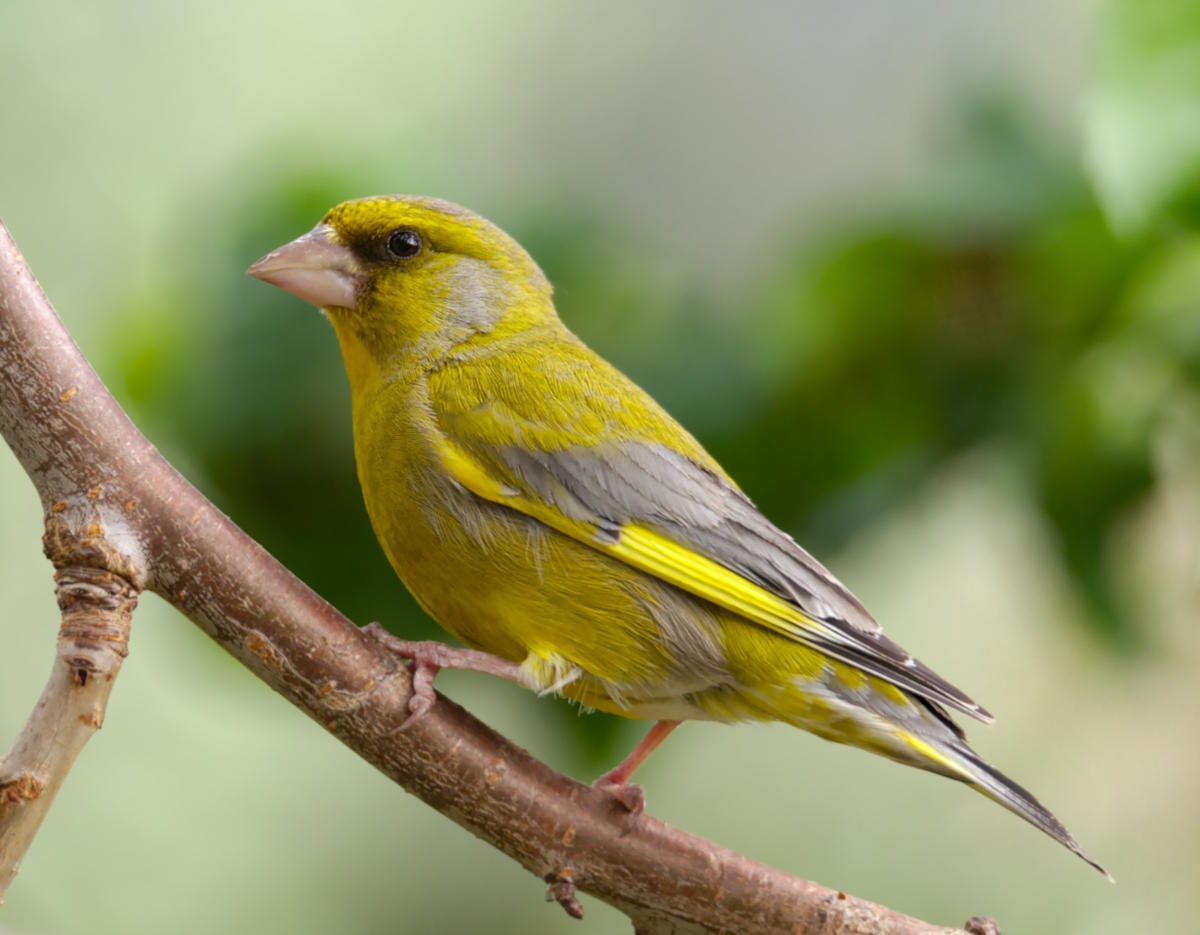
The European Greenfinch is a stocky finch with a large head and a thick, powerful bill designed for cracking seeds.
Adult males are mostly olive green, with bright yellow areas in the wings and along the sides of the tail. Females are duller and browner, but the yellow wing and tail markings are still useful identification features.
In flight, the yellow patches can be especially noticeable.
Greenfinches often have a slightly heavy, robust appearance compared with smaller finches such as Goldfinches or Siskins.
Where it lives
European Greenfinches are widespread across much of Europe and parts of western Asia and North Africa.
They are common in gardens, parks, farmland, hedgerows, orchards, woodland edges, and suburban areas.
They prefer places with a mixture of open feeding areas and nearby trees or bushes for nesting and shelter.
Greenfinches are also frequent visitors to bird feeders.
What it eats
European Greenfinches feed mainly on seeds.
Their strong bills allow them to crack larger seeds that some smaller finches struggle to open.
They eat seeds from grasses, weeds, trees, and garden plants, as well as grains and buds.
They often visit feeders for sunflower seeds and other seed mixes.
During the breeding season, they may also eat small insects and feed some invertebrates to their chicks.
Interesting facts
- The European Greenfinch belongs to the finch family, Fringillidae.
- Its scientific name, Chloris chloris, refers to the bird’s green coloration.
- The bright yellow flashes in the wings and tail are among the species’ most useful field marks.
- Greenfinches have especially strong bills adapted for crushing seeds.
- Their song includes musical phrases mixed with a distinctive drawn-out buzzing note.
- They often gather in small flocks outside the breeding season, especially around good feeding areas.
- Male Greenfinches are much brighter than females, making the species a good example of sexual dimorphism in birds.