Feather & Color logo Feather & Color

European Greenfinch Coloring Page

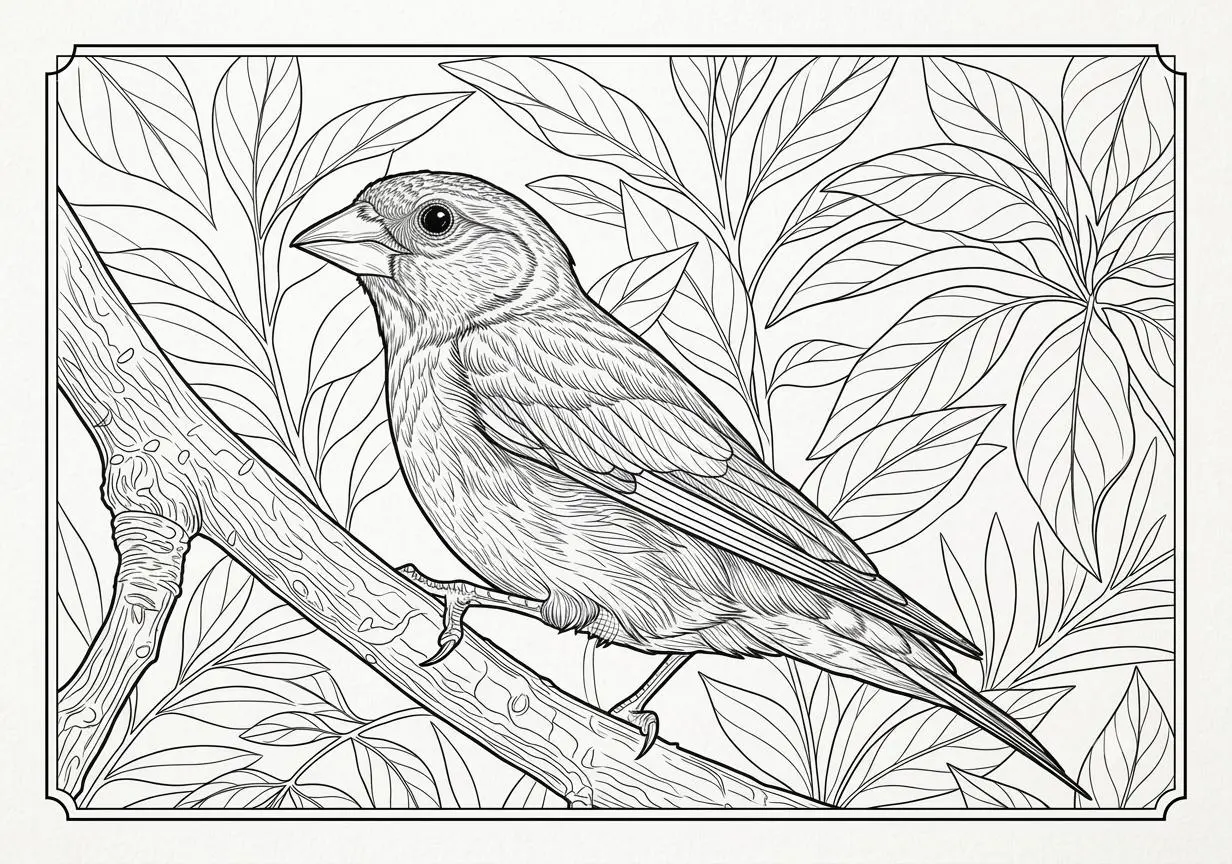
This printable European Greenfinch coloring page is based on the bird’s compact body, strong conical bill, relatively short tail, and distinctive green-and-yellow plumage.

The European Greenfinch is a familiar bird of gardens, parks, farmland, and woodland edges. Its olive-green body and bright yellow flashes in the wings and tail make it especially attractive to color and easy to recognize once you know the main field marks.

Use the natural color guide for a realistic result, or choose your own colors and create a more imaginative version.

Color guide

Adult male:

  • Head and body: olive green to yellow-green
  • Back: greenish brown
  • Breast: yellow-green
  • Wings: dark gray-brown with a bright yellow patch
  • Tail: dark with yellow outer areas
  • Bill: pale pinkish or horn-colored
  • Eyes: dark brown
  • Legs and feet: pinkish brown to gray-brown

Adult female:

  • Body: duller olive-brown or gray-green
  • Breast and flanks: more muted, sometimes lightly streaked
  • Wings: brownish with yellow markings
  • Tail: brownish with yellow outer feathers

Young birds are browner and more heavily streaked than adults.

How to recognize a European Greenfinch
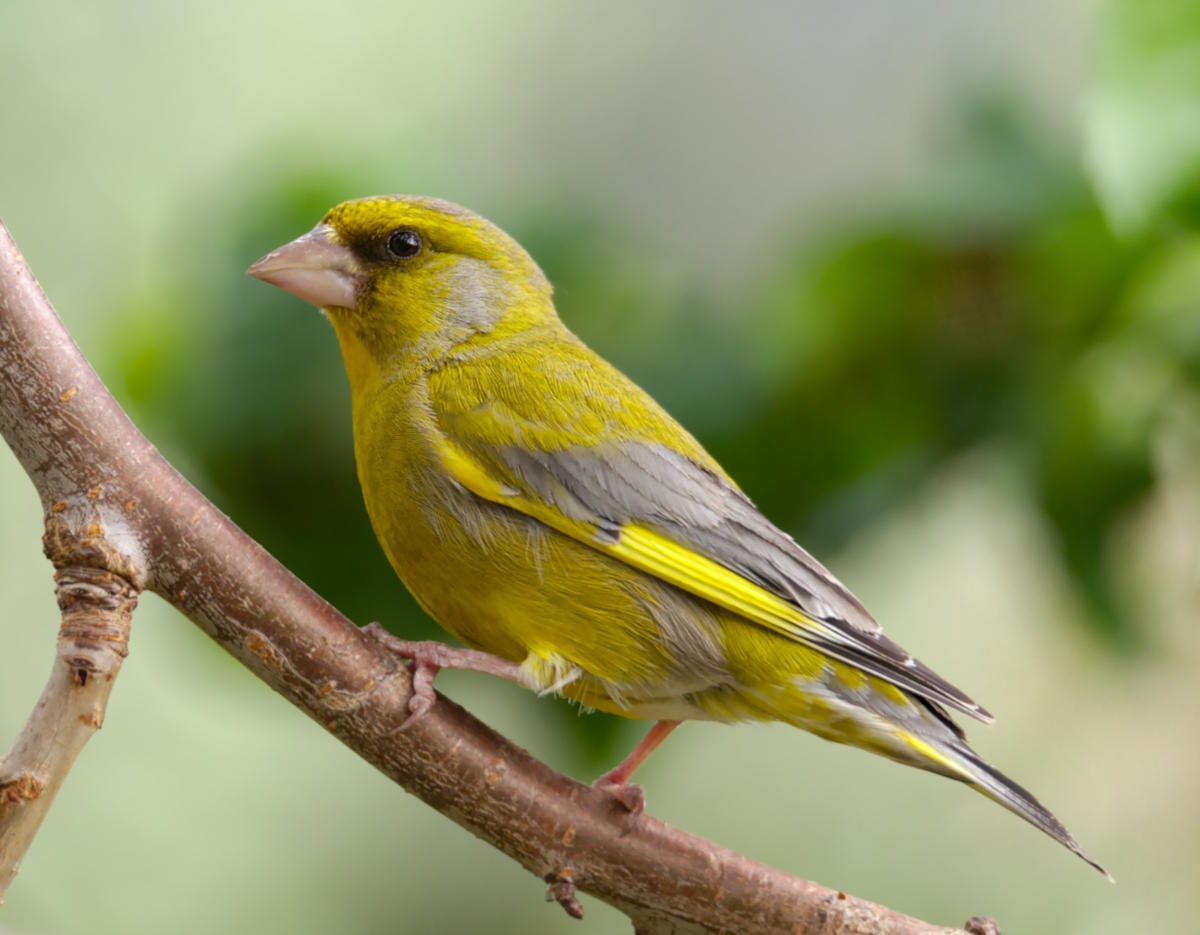
The European Greenfinch is a stocky finch with a large head and a thick, powerful bill designed for cracking seeds.

Adult males are mostly olive green, with bright yellow areas in the wings and along the sides of the tail. Females are duller and browner, but the yellow wing and tail markings are still useful identification features.

In flight, the yellow patches can be especially noticeable.

Greenfinches often have a slightly heavy, robust appearance compared with smaller finches such as Goldfinches or Siskins.

Where it lives

European Greenfinches are widespread across much of Europe and parts of western Asia and North Africa.

They are common in gardens, parks, farmland, hedgerows, orchards, woodland edges, and suburban areas.

They prefer places with a mixture of open feeding areas and nearby trees or bushes for nesting and shelter.

Greenfinches are also frequent visitors to bird feeders.

What it eats

European Greenfinches feed mainly on seeds.

Their strong bills allow them to crack larger seeds that some smaller finches struggle to open.

They eat seeds from grasses, weeds, trees, and garden plants, as well as grains and buds.

They often visit feeders for sunflower seeds and other seed mixes.

During the breeding season, they may also eat small insects and feed some invertebrates to their chicks.

Interesting facts

  • The European Greenfinch belongs to the finch family, Fringillidae.
  • Its scientific name, Chloris chloris, refers to the bird’s green coloration.
  • The bright yellow flashes in the wings and tail are among the species’ most useful field marks.
  • Greenfinches have especially strong bills adapted for crushing seeds.
  • Their song includes musical phrases mixed with a distinctive drawn-out buzzing note.
  • They often gather in small flocks outside the breeding season, especially around good feeding areas.
  • Male Greenfinches are much brighter than females, making the species a good example of sexual dimorphism in birds.
Eurasian Jay Printable Coloring Page

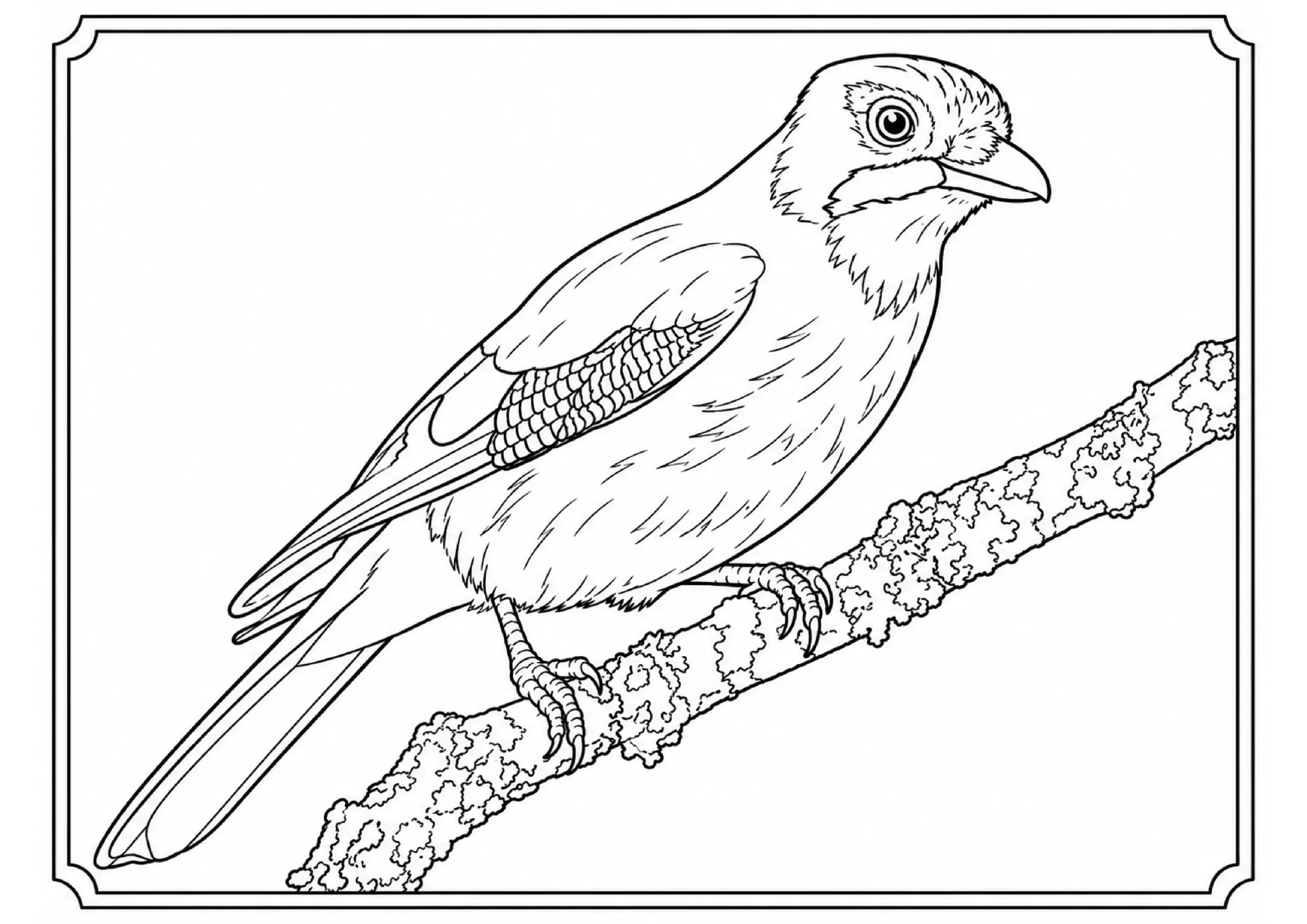
This printable Eurasian Jay coloring page is based on the bird’s sturdy body, rounded wings, strong bill, and long tail.

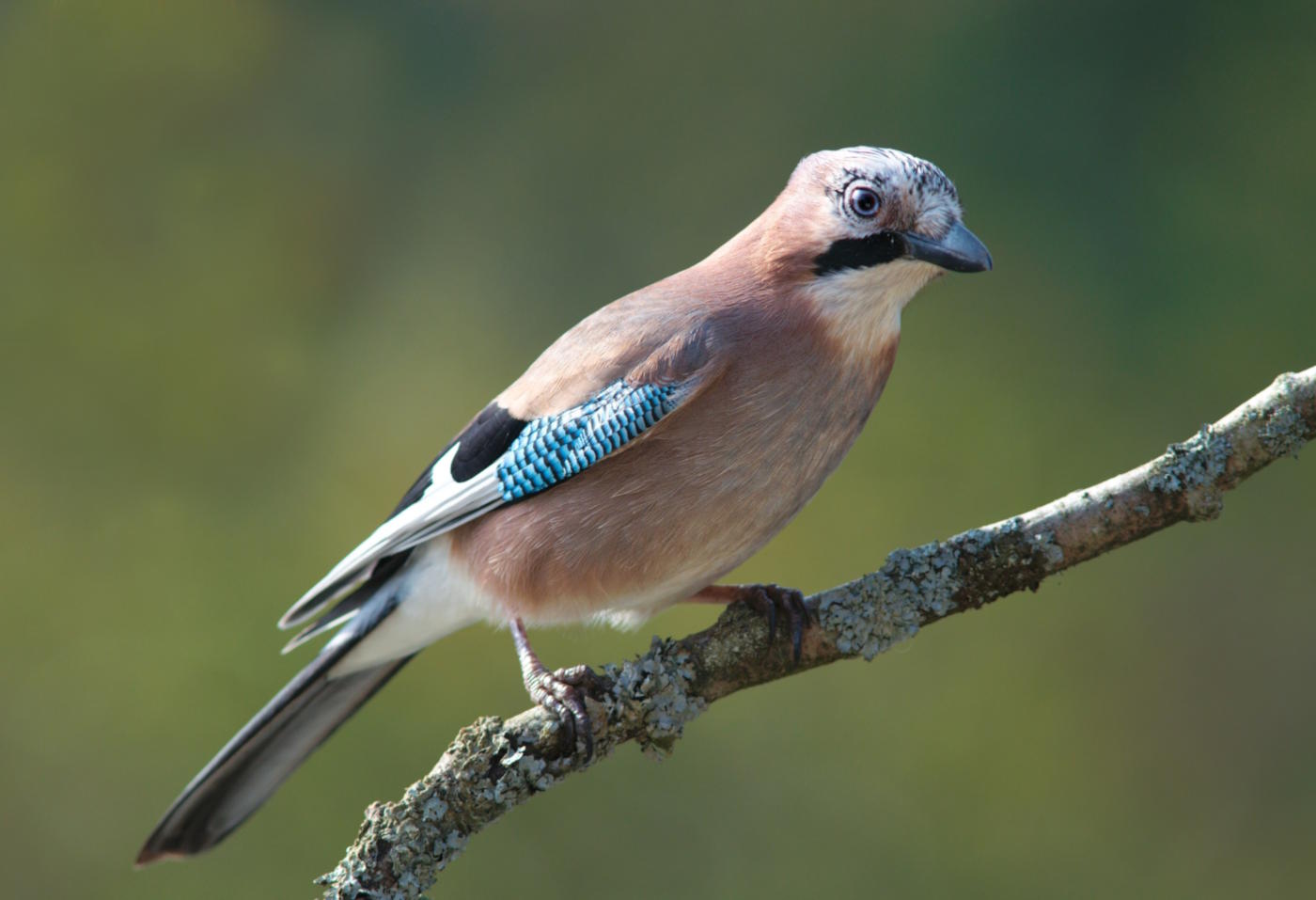
The Eurasian Jay is one of the most distinctive woodland birds in Europe. Its soft pinkish-brown body, black facial markings, bright blue barred wing patch, and white rump make it especially interesting to color.

Use the natural color guide for a realistic result, or choose your own colors and create a more imaginative version.

Color guide

  • Head and body: warm pinkish-brown or buff
  • Forehead: pale, often with dark streaks
  • Moustache stripe: black
  • Wings: black and white with a bright blue barred patch
  • Rump: white
  • Tail: black
  • Bill: dark gray or black
  • Eyes: pale blue-gray, light brown, or grayish
  • Legs and feet: pinkish brown to gray-brown

Young birds are generally duller than adults and may show less striking detail in the wing patch.

How to recognize a Eurasian Jay

© Photo: Wikimedia Commons by Luc Viatour CC BY-SA 3.0

The Eurasian Jay is a medium-sized member of the crow family with a strong bill, broad wings, and a fairly long tail.

Its most recognizable feature is the bright blue-and-black barred patch on the wing. The rest of the body is mostly pinkish-brown, while the face has a clear black moustache stripe. In flight, the white rump and dark tail are especially noticeable.

Eurasian Jays are often shy and secretive, but they become easier to notice when they fly between trees or give their loud, harsh calls. Their shape, colorful wing patch, and white rump make them easier to identify than many other woodland birds.

Where it lives

Eurasian Jays are found across much of Europe and large parts of Asia. They are strongly associated with deciduous and mixed woodland, especially areas with oak trees. They also occur in forest edges, parks, large gardens, orchards, and wooded suburban areas. Although they often remain hidden among branches and leaves, they may come into more open places to search for food.

What it eats

Eurasian Jays eat a wide variety of foods. Their diet includes acorns, seeds, nuts, berries, insects, caterpillars, eggs, and small animals. Acorns are especially important, particularly in autumn.

Jays often collect acorns and hide them in the ground or among leaves for later use. They may also visit gardens and feeders for peanuts and other foods.

Interesting facts

  • The Eurasian Jay belongs to the crow family, Corvidae.
  • It is famous for storing acorns, sometimes hiding many of them for use later in the year.
  • Forgotten acorns may grow into new oak trees, so jays can help woodland regeneration.
  • The bird’s bright blue wing patch is one of the easiest field marks to recognize.
  • Its blue feather color is created largely by feather structure rather than blue pigment alone.
  • Eurasian Jays are intelligent birds and can sometimes imitate the calls of other species.
  • Even though they are colorful, they can be surprisingly hard to spot because they often stay hidden in woodland cover.

Hawfinch Coloring Page

  • Scientific name: Coccothraustes coccothraustes
  • Group: Woodland Birds

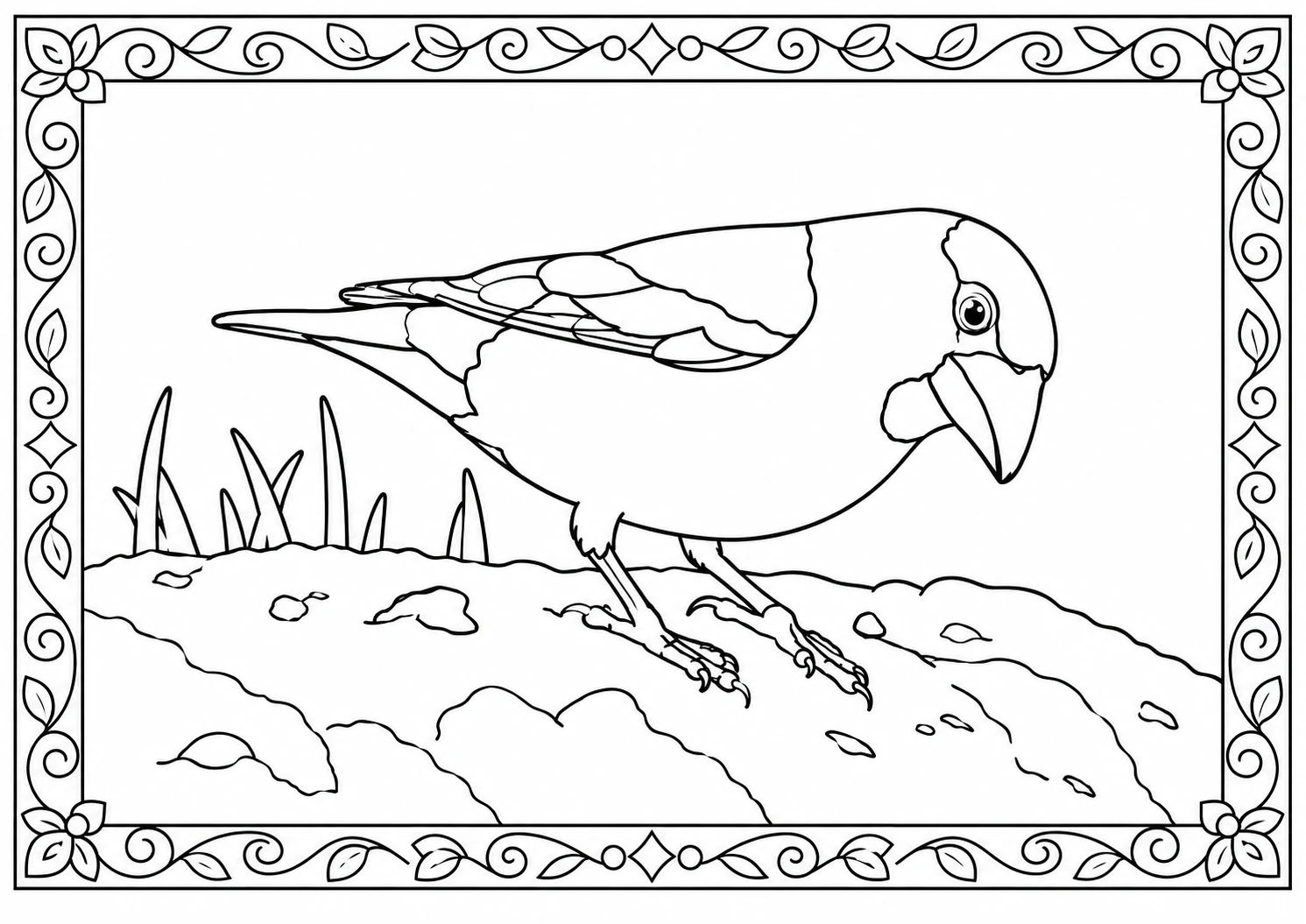
This printable Hawfinch coloring page is based on the bird’s large head, extremely powerful bill, compact body, and short tail.

The Hawfinch is one of Europe’s most distinctive finches. Its warm brown plumage, black facial markings, pale wing patches, and massive bill make it especially interesting to color and easy to recognize once you know the main field marks.

Use the natural color guide for a realistic result, or choose your own colors and create a more imaginative version.

Color guide

  • Head: warm orange-brown to chestnut
  • Face and area around the bill: black
  • Nape and upper back: gray-brown to warm brown
  • Wings: dark brown to black with white and bluish-gray patches
  • Breast and belly: pale pinkish brown to buff
  • Tail: dark brown to black with pale markings
  • Bill: pale horn-colored or bluish gray, becoming darker in breeding season
  • Eyes: dark brown
  • Legs and feet: pinkish brown

Males are generally more strongly colored than females. Females tend to be slightly duller and more gray-brown overall.

How to recognize a Hawfinch

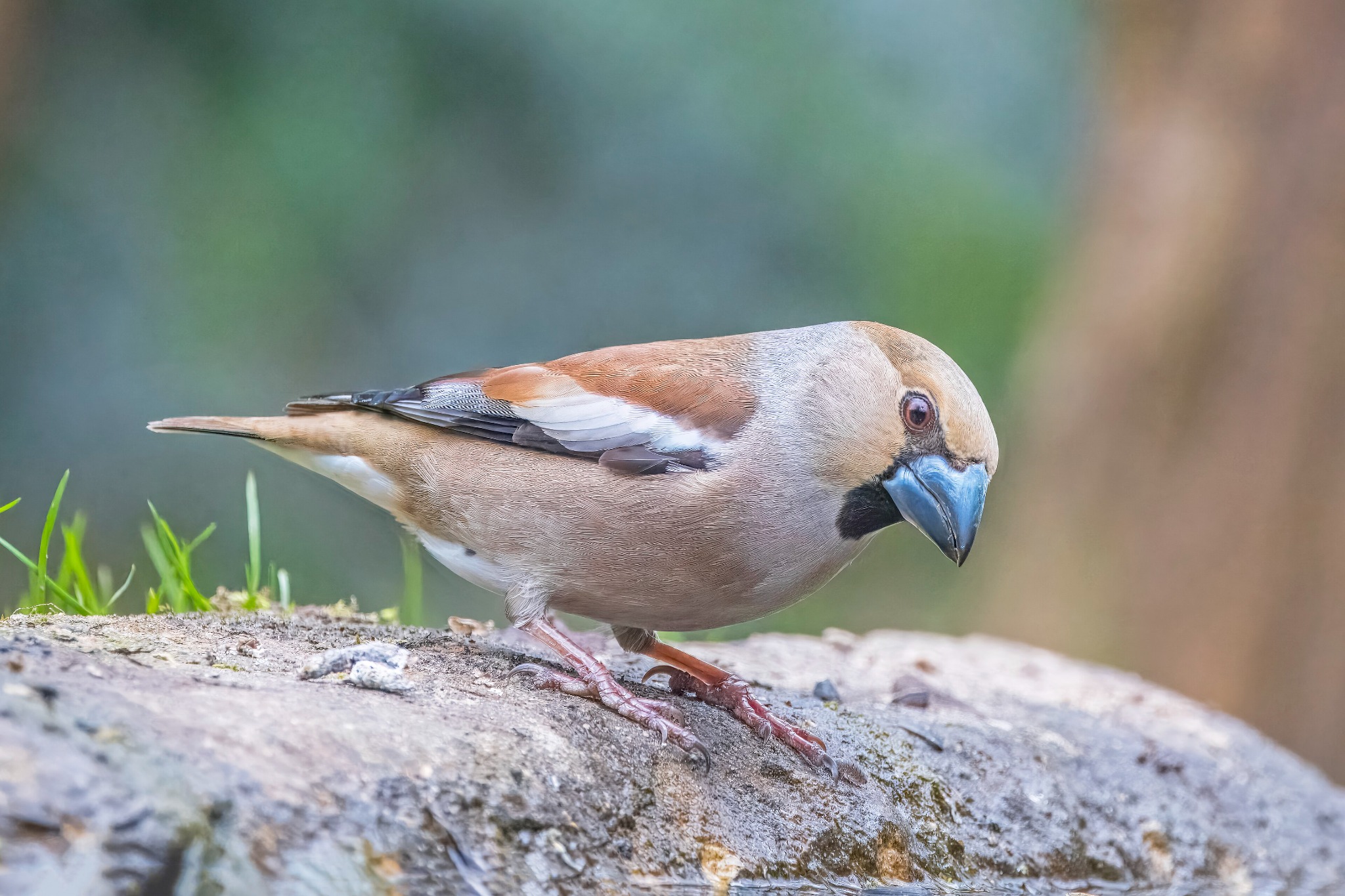
© Photo: Charles J. Sharp, CC BY-SA 4.0

The Hawfinch is a large, heavy-looking finch with an unusually thick, powerful bill.

Its large head and massive triangular bill are the most obvious identification features. The bird also has a warm brown head, black markings around the bill and throat, and contrasting dark wings with pale patches.

In flight, the broad white wing markings can be quite noticeable.

Hawfinches often spend time high in the canopy, so they may be difficult to see even in places where they are present. Their strong shape and unusually large bill make them much easier to identify when seen clearly.

Where it lives

Hawfinches are found across much of Europe and parts of western and central Asia.

They prefer mature deciduous and mixed woodland, especially areas with large trees that produce seeds and fruit.

They can also be found in parks, orchards, large gardens, woodland edges, and old tree-lined landscapes.

In winter they may move into more open areas in search of food and sometimes appear near feeders.

What it eats

Hawfinches feed mainly on seeds and fruit kernels.

Their exceptionally powerful bills allow them to crack hard cherry stones, plum stones, and other seeds that many smaller birds cannot open.

They also eat buds, berries, and seeds from trees such as hornbeam and beech.

During the breeding season, insects and other small invertebrates are also included in the diet, especially when feeding young birds.

Interesting facts

  • The Hawfinch belongs to the finch family, Fringillidae.
  • Its bill is among the strongest relative to body size of any European songbird.
  • It can crack very hard fruit stones to reach the seed inside.
  • Despite its chunky appearance, the Hawfinch can be surprisingly difficult to spot because it often stays high in trees.
  • Its scientific name, Coccothraustes coccothraustes, comes from words associated with crushing or breaking kernels.
  • Hawfinches may gather in small flocks outside the breeding season.
  • The combination of a huge bill, large head, warm brown plumage, and bold wing markings makes it one of the most distinctive European finches.

Common Chaffinch Coloring Page

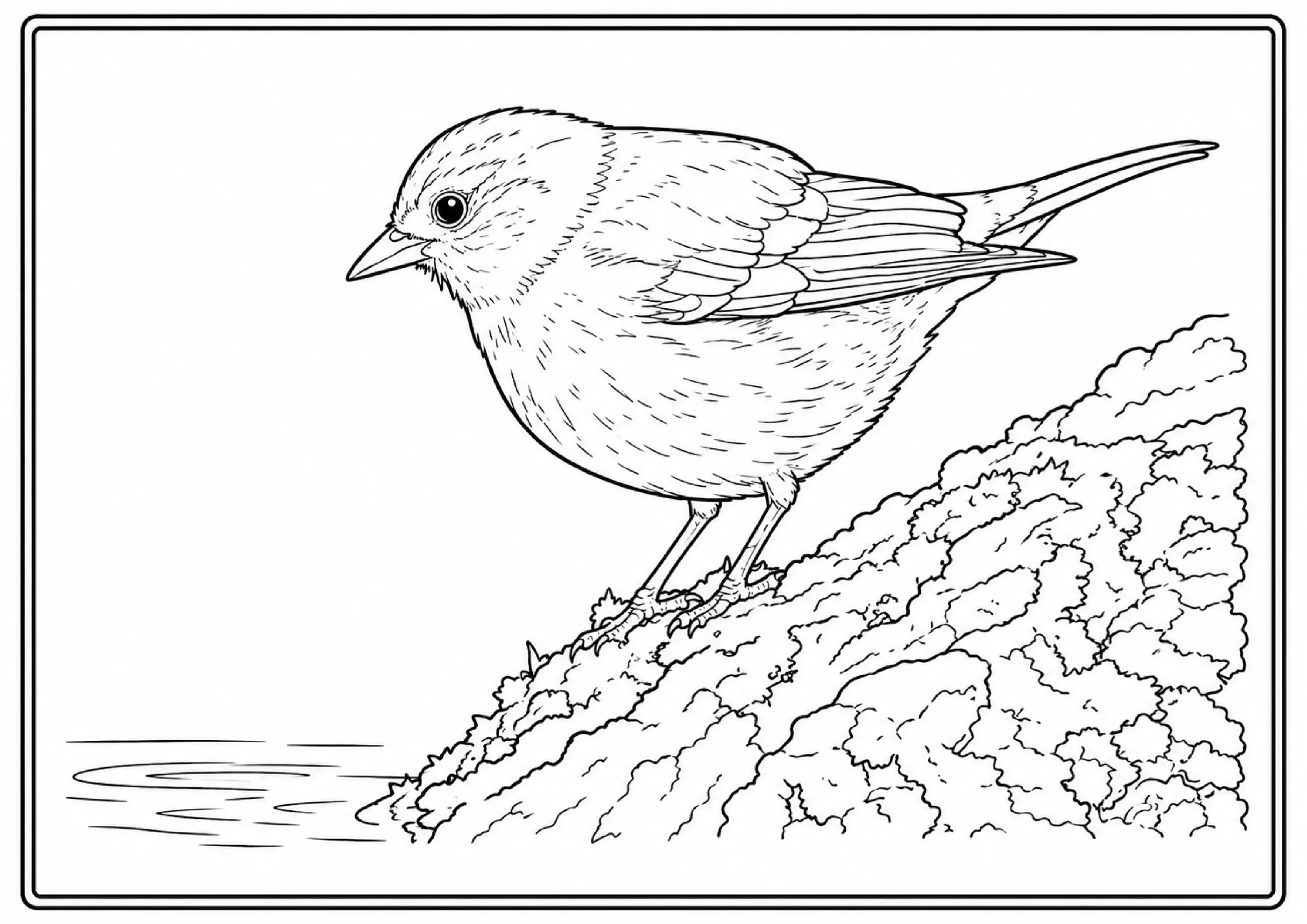
This printable Common Chaffinch coloring page is based on the bird’s compact body, short conical bill, rounded head, and distinctive wing markings. The Common Chaffinch is one of Europe’s most familiar finches. Males are especially colorful, with a blue-gray head, warm reddish breast, chestnut back, and bold white wing bars. Females are more subdued, with softer brown and olive tones.

Use the natural color guide for a realistic result, or choose your own colors and create a more imaginative version.

Color guide

Adult male:

  • Head and nape: blue-gray
  • Face: warm pinkish brown
  • Breast and belly: pinkish red to warm salmon
  • Back: chestnut brown
  • Rump: olive green
  • Wings: black and brown with two bold white wing bars
  • Tail: dark gray to black with white outer feathers
  • Bill: pale bluish gray in breeding season, duller outside it
  • Eyes: dark brown
  • Legs and feet: pinkish brown

Adult female:

  • Head and body: gray-brown to olive-brown
  • Breast and belly: pale brown or buff
  • Back: olive-brown
  • Wings: darker brown with clear white wing bars
  • Tail: dark brown with paler outer feathers

Young birds resemble females and are usually duller than adult males.

How to recognize a Common Chaffinch

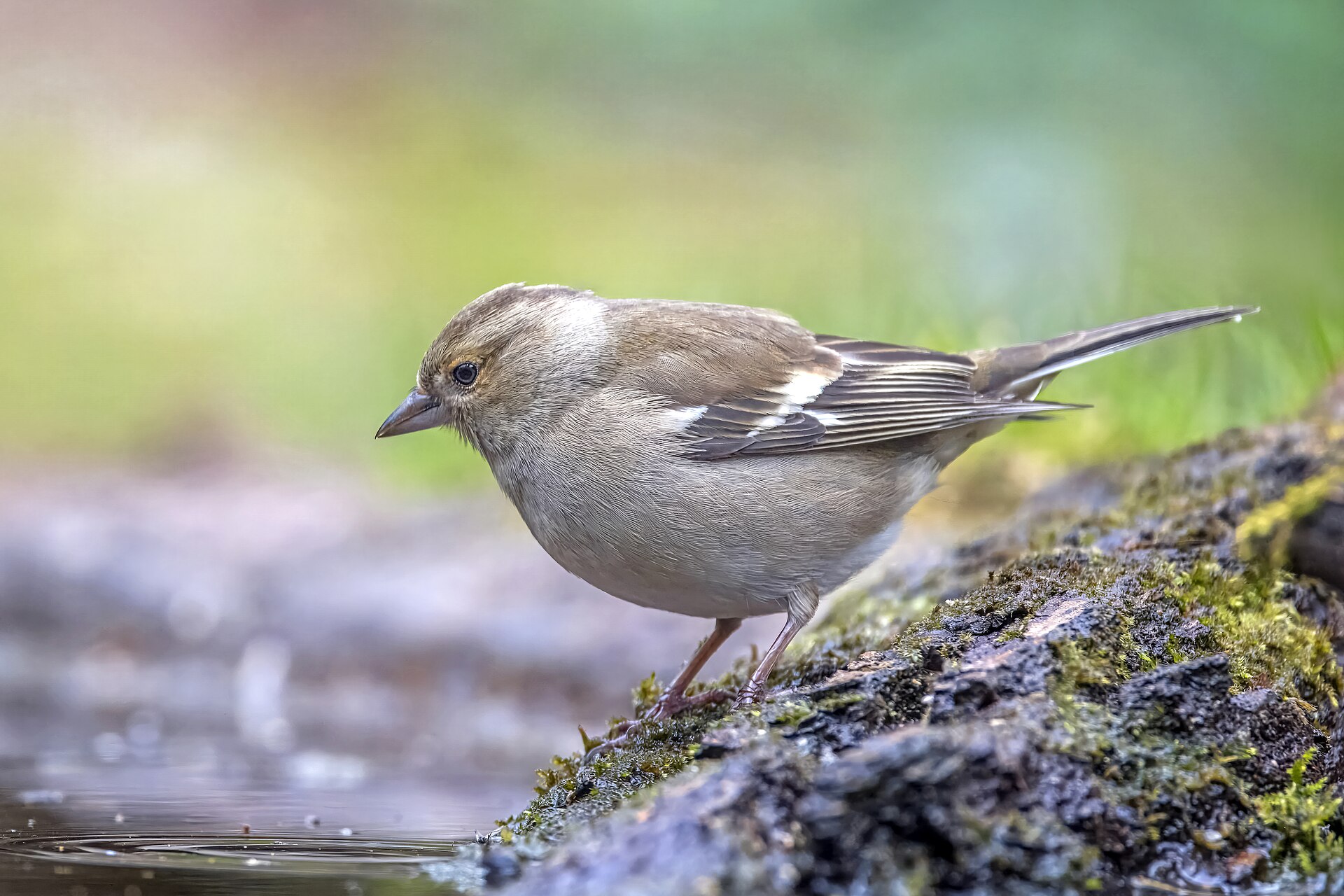
Female © Photo: BBC

The Common Chaffinch is a small finch with a compact body, short strong bill, and a fairly long tail.

Its most useful field marks are the two bright white wing bars and white edges on the tail.

Adult males are easy to recognize by their blue-gray head, reddish-pink breast, and chestnut back. Females are less colorful, but the white wing bars still make them relatively easy to identify.

Chaffinches often feed on the ground beneath trees or around paths, hopping and walking while searching for food.

Their song is a fast, descending series of notes that ends with a distinctive flourish.

Where it lives

Common Chaffinches are widespread across Europe and parts of western Asia and North Africa.

They live in woodland, parks, gardens, farmland, orchards, hedgerows, and other areas with trees and open ground.

They are especially common in places where mature trees provide nesting sites and nearby ground offers plenty of food.

Some populations are resident throughout the year, while others migrate or move south during winter.

What it eats

Common Chaffinches feed mainly on seeds and other plant material outside the breeding season.

Their diet includes grass seeds, weed seeds, grains, buds, and berries.

During spring and summer, they also eat insects, caterpillars, beetles, spiders, and other small invertebrates.

Chicks are fed largely on insects because they need protein for rapid growth.

Interesting facts

  • The Common Chaffinch belongs to the finch family, Fringillidae.
  • Its scientific name, Fringilla coelebs, is associated with the observation that males and females may form separate flocks in some parts of their range during winter.
  • The bold white wing bars are useful identification features in both males and females.
  • Male Chaffinches become especially colorful during the breeding season.
  • Their song is highly recognizable and is often one of the most common bird sounds in European woodlands and gardens.
  • Chaffinches frequently forage on the ground but usually nest in trees or shrubs.
  • They are among the most widespread and familiar small birds in Europe.

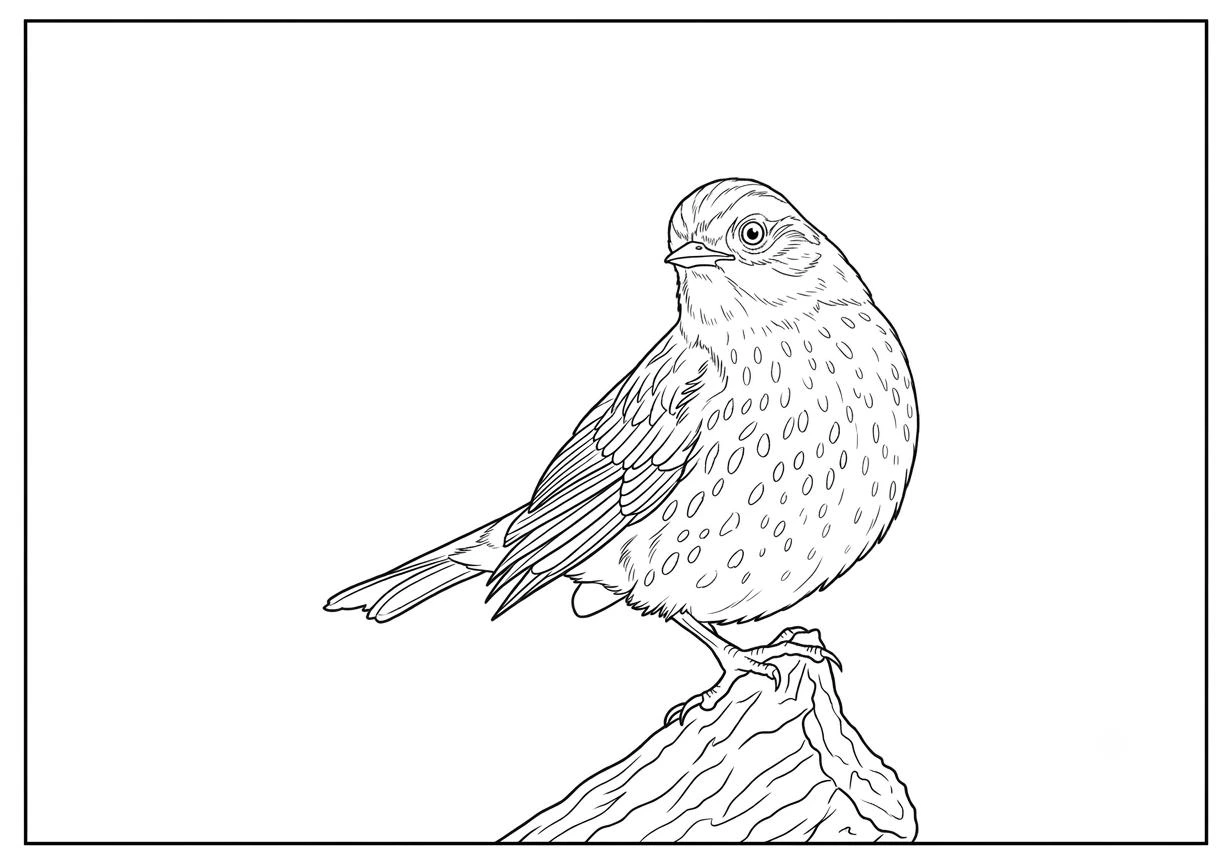
Dunnock Coloring Page

This printable Dunnock coloring page is based on the bird’s compact body, fine pointed bill, rounded wings, and subtle brown-and-gray plumage.

The Dunnock is not as brightly colored as many garden birds, but that makes it especially useful for learning how to notice small differences in pattern, posture, and shape. Its streaked brown back, gray head and breast, and thin bill are important clues for identification.

Use the natural color guide for a realistic result, or choose your own colors for a more imaginative version.

Color guide

  • Head: gray to blue-gray
  • Face: gray-brown
  • Back: warm brown with dark streaks
  • Wings: brown with darker centers and paler edges
  • Breast: gray
  • Flanks: brown with darker streaking
  • Belly: pale gray-brown
  • Tail: dark brown
  • Bill: thin and dark gray to black
  • Eyes: reddish brown to dark brown
  • Legs and feet: pinkish brown

Young birds are browner overall and usually show heavier streaking than adults.

How to recognize a Dunnock

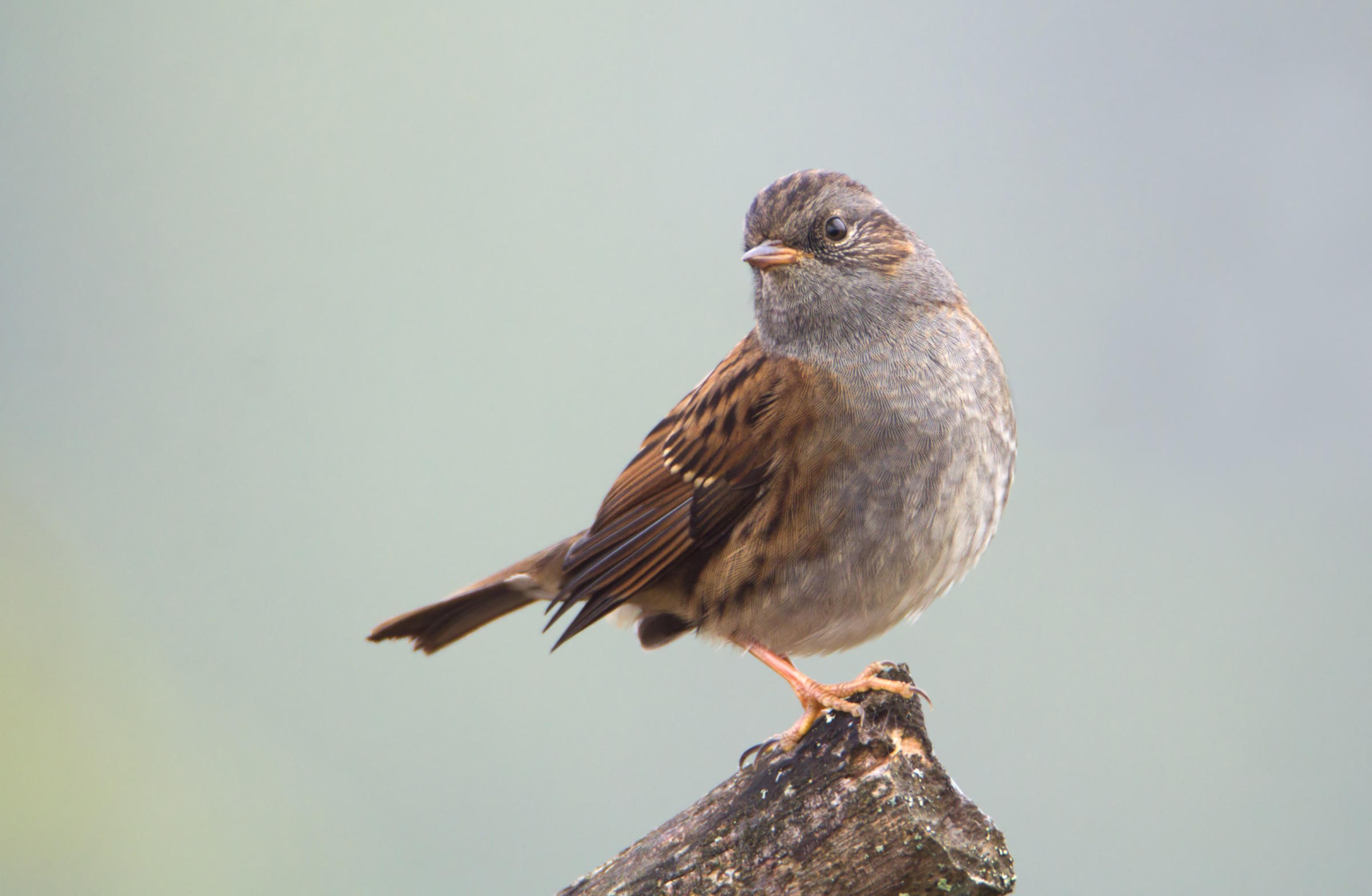
© Photo: Albert E James, aejames.com

The Dunnock is a small, quiet songbird with a slim pointed bill and a fairly plain overall appearance.

Its gray head and breast contrast with the heavily streaked brown back and wings. The thin bill is an important clue, especially when comparing it with sparrows, which usually have shorter, thicker bills.

Dunnocks often spend time close to the ground, moving quietly beneath shrubs, hedges, and garden vegetation.

They may look shy and unobtrusive, but their quick movements and soft, high-pitched calls can help reveal their presence.

Where it lives

Dunnocks are widespread across much of Europe and parts of western Asia.

They are commonly found in gardens, parks, hedgerows, woodland edges, scrub, farmland, and areas with dense low vegetation.

They prefer places with bushes and ground cover where they can feed and remain partly hidden.

Dunnocks are especially familiar in European gardens, where they often stay lower and closer to cover than more obvious birds such as robins or tits.

What it eats

Dunnocks feed mainly on small invertebrates.

Their diet includes insects, spiders, beetles, larvae, and other tiny animals found on or near the ground.

During autumn and winter, they also eat seeds and other plant material when insects are less available.

They usually forage quietly beneath bushes, among fallen leaves, or along the edges of hedges.

Interesting facts

  • The Dunnock belongs to the accentor family, Prunellidae.
  • It is sometimes called the Hedge Sparrow, although it is not actually a sparrow.
  • Its thin pointed bill reflects its insect-rich diet and helps distinguish it from true sparrows.
  • Dunnocks have unusually complex breeding systems. Depending on the local population, one female may mate with more than one male, or one male may have more than one female.
  • They often remain close to dense cover and can be easy to overlook despite being common in many gardens.
  • Their song is light, fast, and musical, often delivered from the top of a hedge or low tree.
  • Dunnocks are good examples of how subtle plumage can still contain useful field marks once you know what to look for.

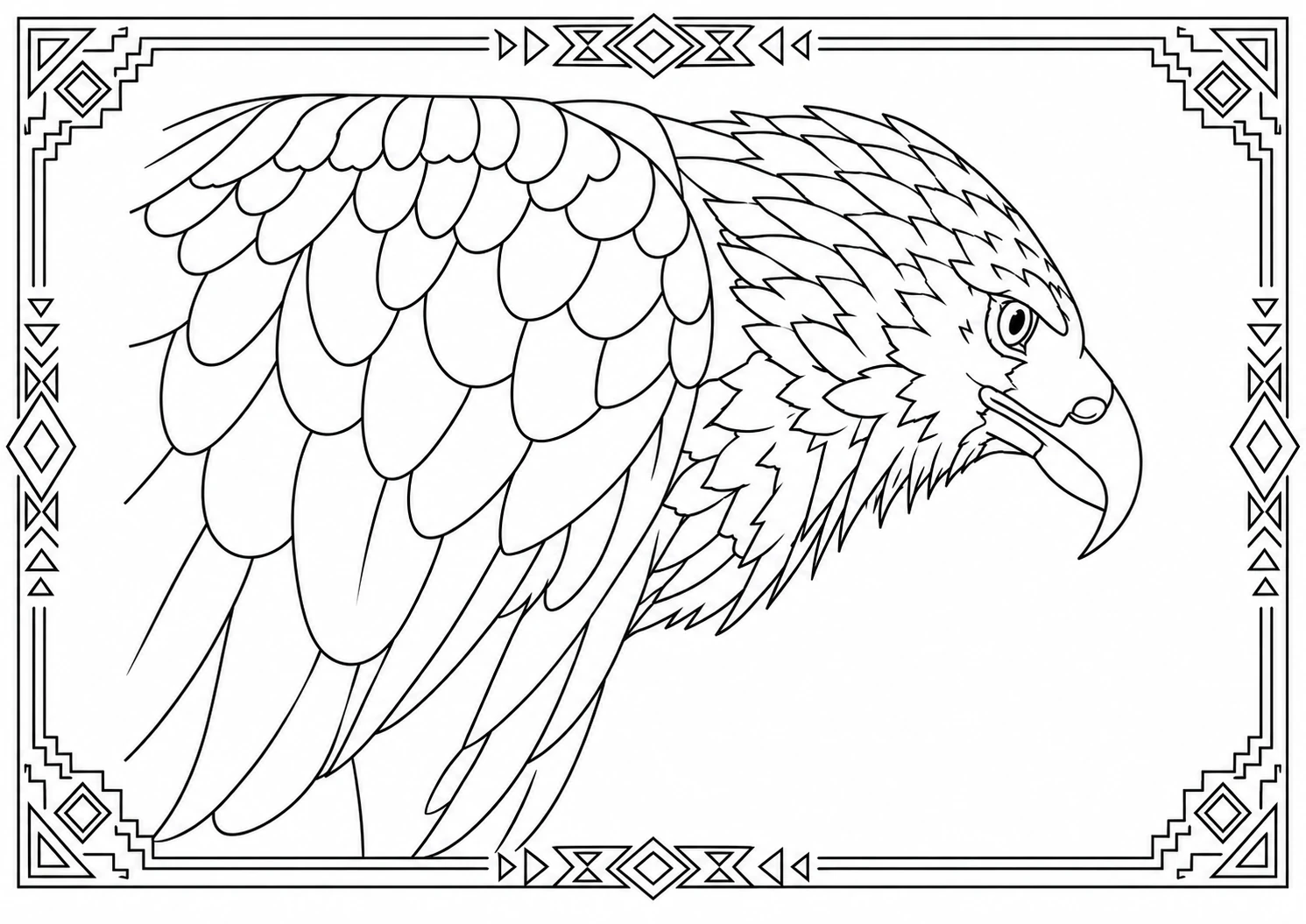
Golden Eagle Coloring Page

This printable Golden Eagle coloring page is based on the bird’s powerful body, broad wings, strong hooked bill, and impressive eagle shape.

The Golden Eagle is one of the most iconic birds of prey in the Northern Hemisphere. Its rich brown plumage, golden tones on the head and neck, and broad soaring wings make it an exciting bird to color and a memorable species to learn.

Use the natural color guide for a realistic result, or choose your own colors and create a more imaginative version.

Color guide

  • Head and neck: golden brown to tawny gold
  • Body: dark brown
  • Back and wings: dark brown with slightly paler feather edges
  • Flight feathers: dark brown to black-brown
  • Tail: brown, sometimes with grayish tones; young birds often show white patches at the base
  • Bill: dark gray or black with a yellow base
  • Eyes: dark brown
  • Cere: yellow
  • Legs and feet: yellow, covered in feathers down to the toes
  • Claws: black

Young Golden Eagles are often darker overall and may show more white in the tail and wings than adults.

How to recognize a Golden Eagle

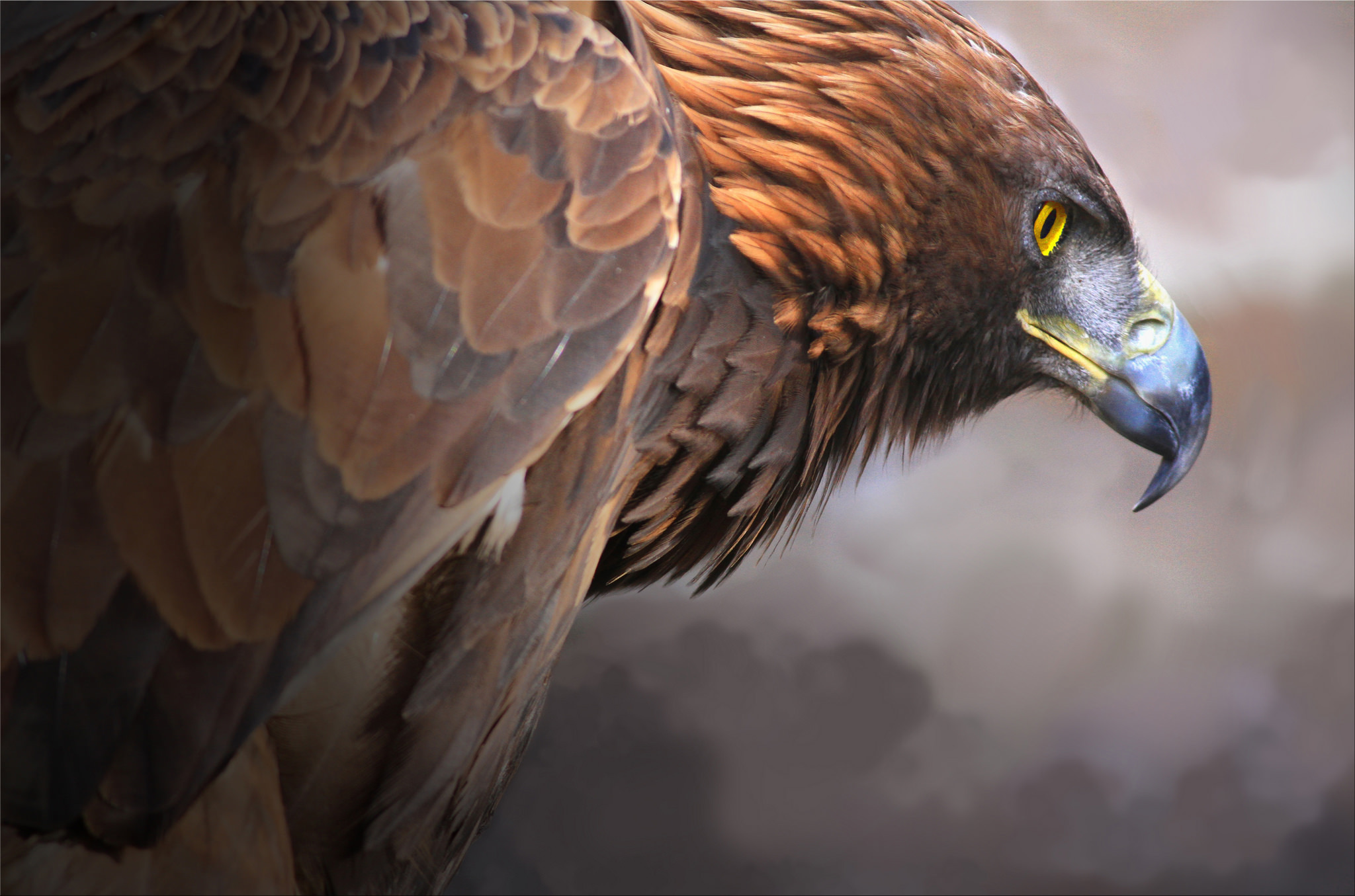
The Golden Eagle is a very large bird of prey with long broad wings, a strong body, and a relatively long tail. It looks powerful both when perched and when soaring high above open country.

Adult birds are mostly dark brown, but the head and back of the neck are usually washed with warm golden tones, which give the species its name. The wings are broad and slightly raised when soaring, and the tail is longer than that of many other large eagles.

Young Golden Eagles often show white patches in the wings and at the base of the tail, making them look different from adults. Even at a distance, the bird’s large size, broad wings, and confident soaring flight can make it stand out.

Where it lives

Golden Eagles are found across large parts of Europe, Asia, North America, and North Africa.

They prefer open landscapes where they can hunt and soar easily. Typical habitats include mountains, cliffs, moorland, steppe, open woodland, tundra, and wide stretches of rough countryside.

They often nest on cliffs or rocky ledges, although in some areas they may also nest in large trees. The species usually needs large territories, especially in places where prey is spread out.

Some populations remain in the same area all year, while others move seasonally or make longer migrations.

What it eats

Golden Eagles are powerful hunters and feed mainly on mammals and birds.

Their prey can include rabbits, hares, ground squirrels, marmots, and medium-sized birds such as grouse or waterfowl. They may also take reptiles and other animals when available.

Golden Eagles hunt by soaring over open ground, scanning for movement below, or by using the landscape to approach prey unseen. They may also feed on carrion, especially during winter or in harsh conditions.

Their strong talons are their main hunting weapon, while the hooked bill is used for tearing food.

Interesting facts

  • The Golden Eagle is one of the largest and most powerful birds of prey in the world.
  • Its name comes from the golden or tawny feathers on the back of the head and neck.
  • Unlike many birds, its legs are feathered all the way down to the toes.
  • Golden Eagles can soar for long periods with very little wing movement, using rising air currents to stay aloft.
  • Pairs often occupy large territories and may return to the same nesting area for many years.
  • Their nests, known as eyries, can become enormous when reused and added to over time.
  • The Golden Eagle is a symbol of strength, wild landscapes, and freedom in many cultures.

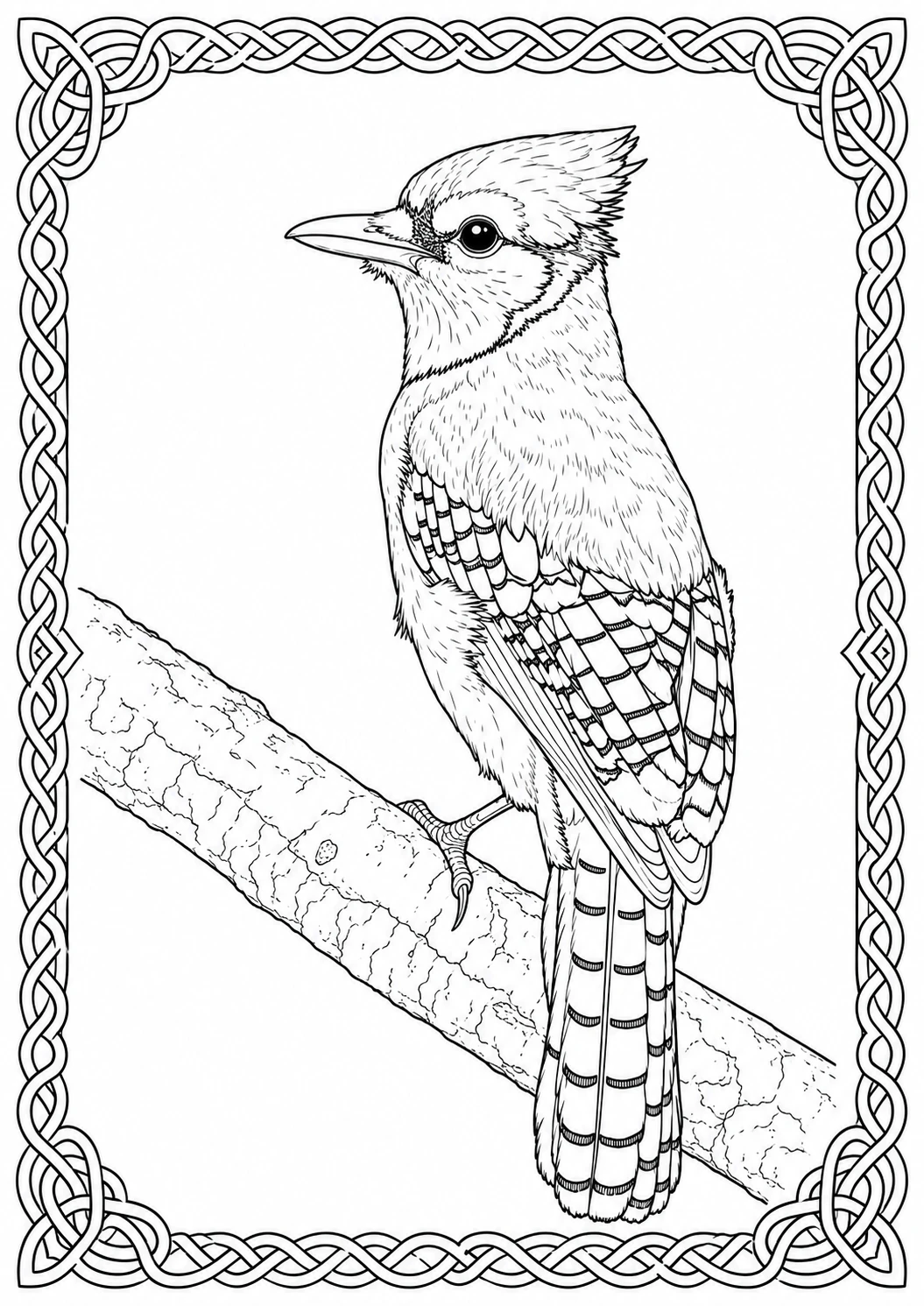
Blue Jay Coloring Page

This printable Blue Jay coloring page is based on the bird’s bold crest, strong bill, long tail, and striking blue, black, and white plumage.

The Blue Jay is one of the most recognizable birds in North America. Its bright colors, patterned wings and tail, and expressive crest make it especially fun to color.

Use the natural color guide for a realistic result, or choose your own colors and create a more imaginative version.

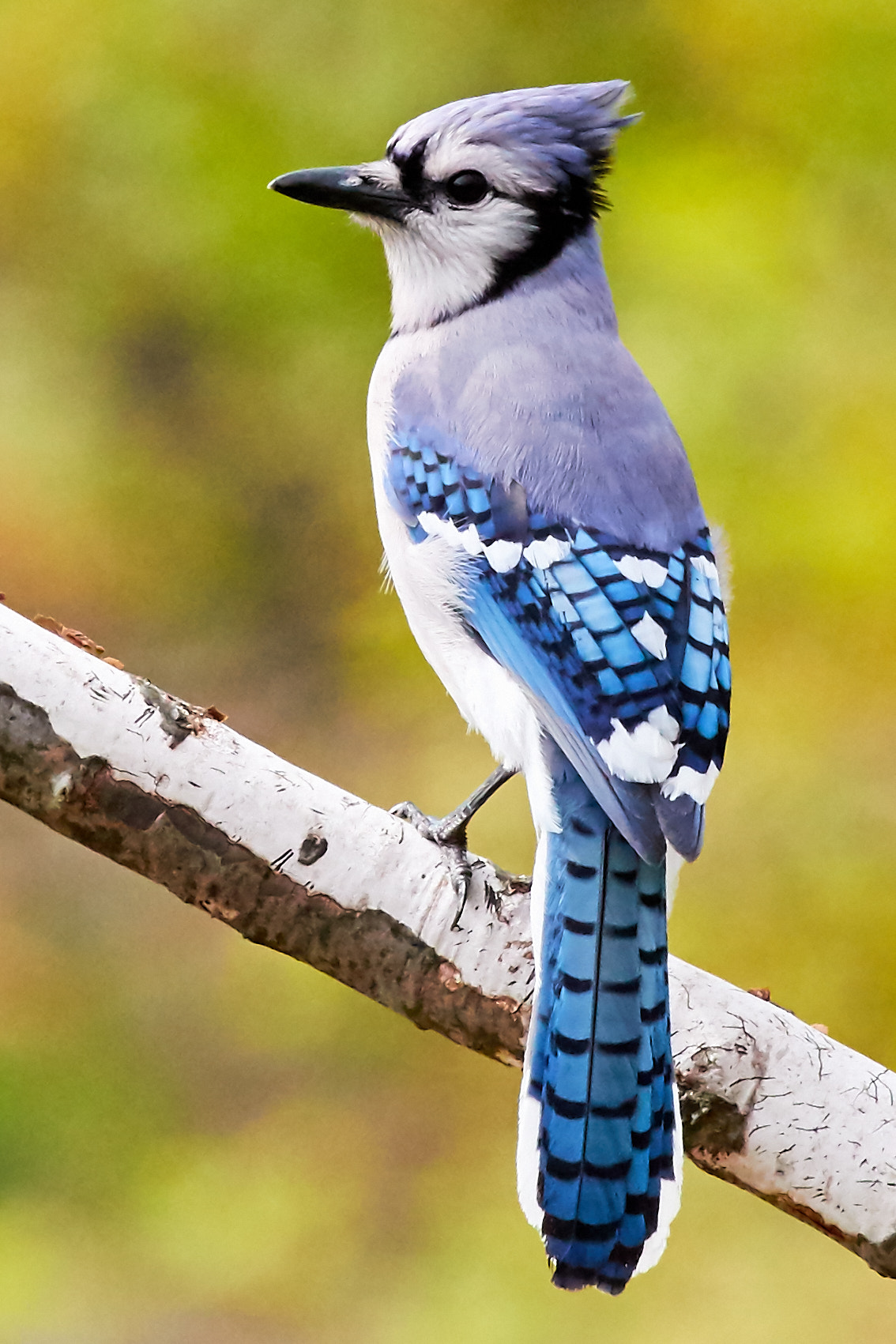
Blue Jay Coloring Page Color guide

  • Crest, back, wings, and tail: bright blue
  • Face: white with blue and black markings
  • Neck collar: black
  • Breast and belly: pale gray to light buff
  • Wing and tail pattern: blue, black, and white barring
  • Bill: black
  • Eyes: dark brown or black
  • Legs and feet: dark gray or black

Young Blue Jays are similar to adults but may look slightly duller and less sharply patterned.

How to recognize a Blue Jay

© Photo: Wikimedia by Jongsun Lee

The Blue Jay is a medium-sized songbird with a strong body, a fairly long tail, and a prominent crest on the head.

Its bright blue upperparts, white face, black necklace, and boldly patterned wings and tail make it easy to recognize. The wings and tail are marked with black bars and white spots, creating a particularly striking appearance.

The crest can be raised or lowered depending on the bird’s mood. When alert or excited, the crest often stands upright.

Blue Jays are also well known for their loud calls. They produce a wide range of sounds and can sometimes imitate the calls of hawks.

Where it lives

Blue Jays live across much of eastern and central North America.

They are commonly found in forests, woodland edges, parks, gardens, suburbs, and neighborhoods with trees. They especially favor habitats with oaks and other trees that produce nuts and seeds.

Because they adapt well to human environments, Blue Jays are familiar visitors to feeders, backyards, and city parks.

Some populations remain in the same region year-round, while others may move south or shift their range seasonally.

What it eats

Blue Jays are omnivorous. They eat acorns, seeds, nuts, berries, fruit, insects, caterpillars, beetles, and other small animals. They may also take eggs or nestlings on occasion.

Acorns are especially important in many areas. Blue Jays often carry and store them for later use, helping spread oak trees when forgotten acorns germinate.

They also visit feeders for peanuts, sunflower seeds, and other food offered by people.

Interesting facts

  • Blue Jays belong to the crow family, Corvidae.
  • They are intelligent birds and are known for their curiosity and problem-solving ability.
  • Their bright blue color does not come from blue pigment. It is created mainly by the microscopic structure of the feathers.
  • Blue Jays often store food for later, especially acorns.
  • By carrying and hiding acorns, they help oak trees spread into new areas.
  • They can imitate the calls of hawks, which may sometimes cause other birds to become cautious.
  • The crest changes position depending on the bird’s mood and level of alertness.

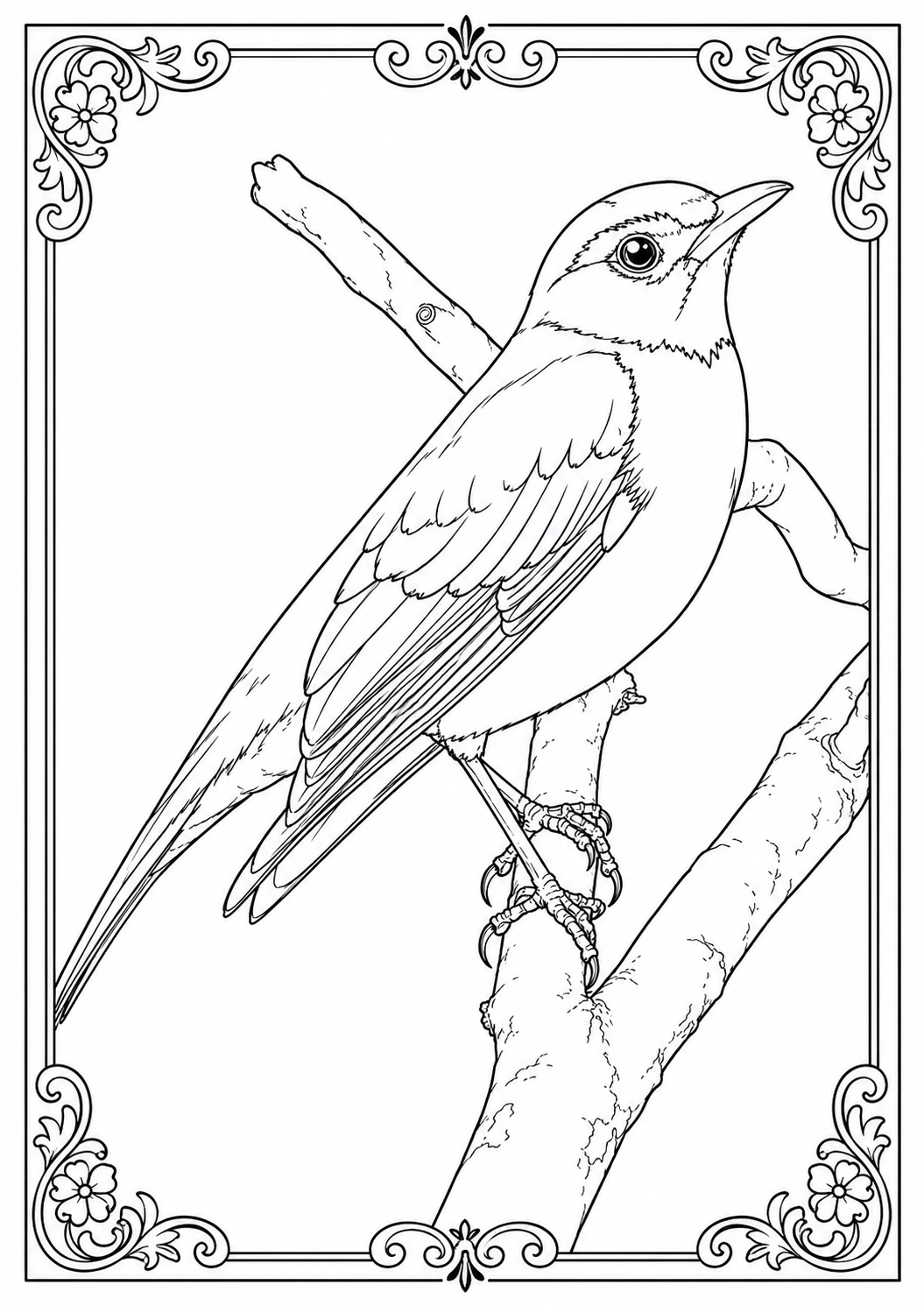
American Robin Coloring Page

This printable American Robin coloring page is based on the bird’s rounded body, upright posture, medium-length tail, and familiar thrush shape.

The American Robin is one of the best-known birds in North America. Its warm orange breast, dark head, gray-brown back, and yellow bill make it easy to recognize and enjoyable to color.

Use the natural color guide for a realistic result, or choose your own colors and create a more imaginative version.

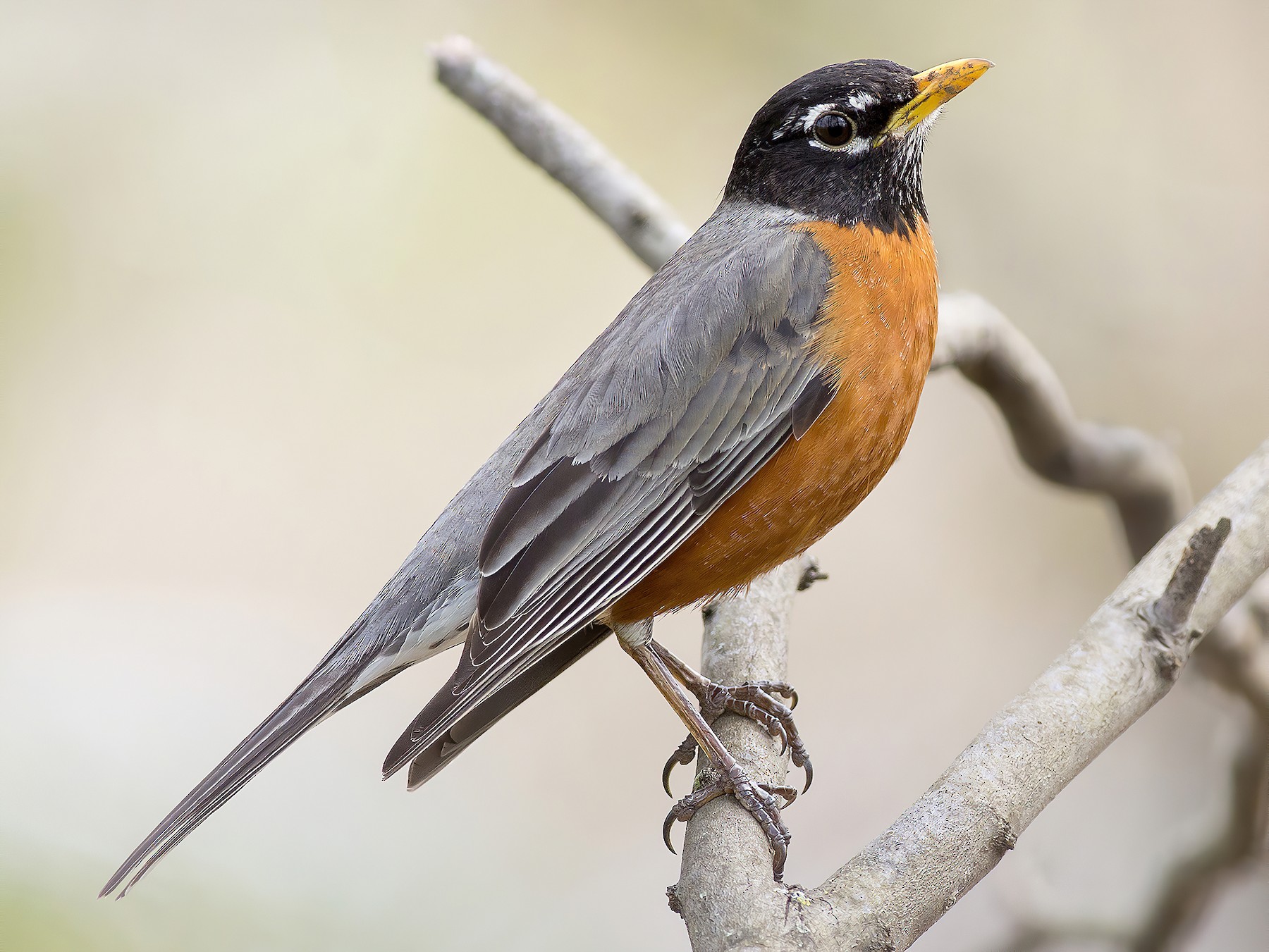
American Robin Coloring Page Color guide

  • Head: dark gray to blackish in adult males
  • Back and wings: gray-brown
  • Breast and belly: warm orange to reddish orange
  • Lower belly and undertail: white
  • Tail: dark gray to blackish
  • Bill: yellow
  • Eyes: dark brown
  • Eye ring: pale white or broken white markings around the eye
  • Legs and feet: dark gray to brown

Adult females are usually paler than males, with a lighter gray head and less intense orange underparts.

Young birds have spotted breasts and look much more mottled than adults.

How to recognize an American Robin

© Photo: eBird by Alex Eberts

The American Robin is a medium-sized thrush with a rounded body, relatively long legs, and an upright posture.

Its most obvious field mark is the orange or reddish-orange breast, which contrasts with the darker head and gray-brown upperparts.

The yellow bill is another useful feature.

American Robins are often seen walking or running across lawns, stopping suddenly and tilting their heads while searching for worms and other prey.

Their song is a series of clear, musical phrases and is especially common in spring and early summer.

Where it lives

American Robins are widespread across most of North America.

They can be found in gardens, parks, lawns, woodland edges, farmland, suburban neighborhoods, orchards, and open forests.

They adapt very well to human environments and are among the most familiar birds in towns and cities.

Some populations migrate south for winter, while others remain in the same area throughout the year, depending on climate and food availability.

What it eats

American Robins eat both animal and plant foods.

Their diet includes earthworms, beetles, caterpillars, grasshoppers, spiders, and other small invertebrates.

They also eat berries and fruits, which become especially important during autumn and winter.

Robins are famous for searching lawns for worms, but fruit can make up a large part of their diet at certain times of year.

Interesting facts

  • The American Robin belongs to the thrush family, Turdidae.
  • Despite its name, it is not closely related to the European Robin. Early European settlers gave it the name “robin” because its orange breast reminded them of the familiar European bird.
  • Young American Robins have spotted breasts, a typical feature of many thrushes.
  • The species is one of the most familiar birds in North American gardens and parks.
  • American Robins often form large flocks outside the breeding season.
  • Their diet changes with the seasons: insects and worms are especially important during warmer months, while berries and fruits become more important later in the year.
  • The American Robin is the state bird of Connecticut, Michigan, and Wisconsin.

Northern Cardinal Coloring Page

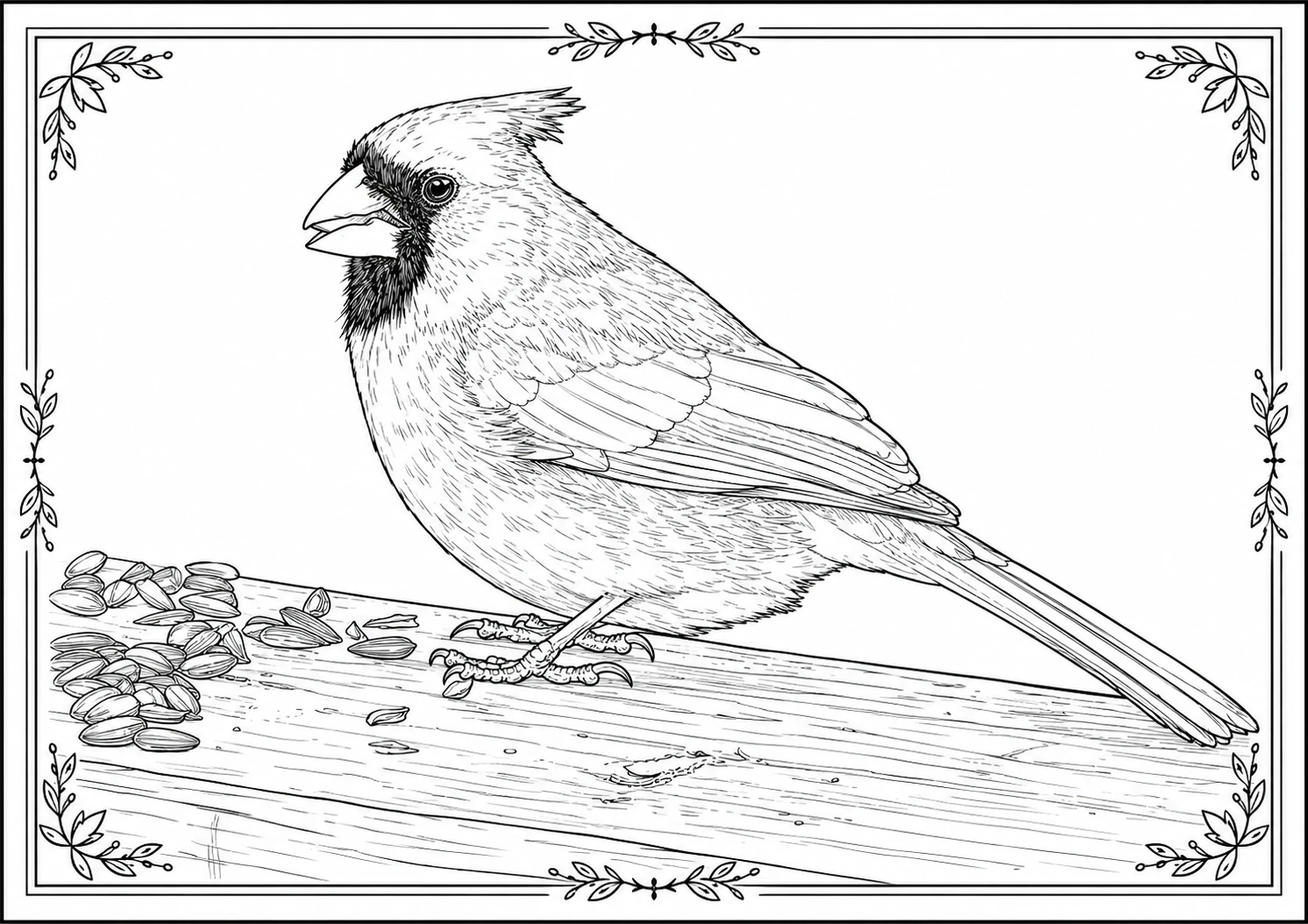
This printable Northern Cardinal coloring page is based on the bird’s strong crest, thick seed-cracking bill, long tail, and bold overall shape.

The Northern Cardinal is one of the most recognizable birds in North America. It is especially popular as a coloring subject because the adult male is bright red and easy to identify, while the female has softer buff and olive tones with touches of red.

Use the natural color guide for a realistic result, or choose your own colors and create a more imaginative version.

Northern Cardinal Coloring Page Color guide

Adult male:

  • Body: bright red
  • Face mask: black
  • Crest: bright red
  • Wings: slightly darker red with brownish tones
  • Tail: red
  • Bill: orange-red
  • Eyes: dark brown or black
  • Legs and feet: gray-brown

Adult female:

  • Body: warm buff, tan, or gray-brown
  • Crest: buff with reddish tones
  • Wings: brown with red highlights
  • Tail: brownish red or reddish
  • Face mask: dark gray to black around the bill
  • Bill: orange-red
  • Eyes: dark brown
  • Legs and feet: gray-brown

Young birds resemble females but usually have a darker, duller bill before it becomes brighter.

How to recognize a Northern Cardinal

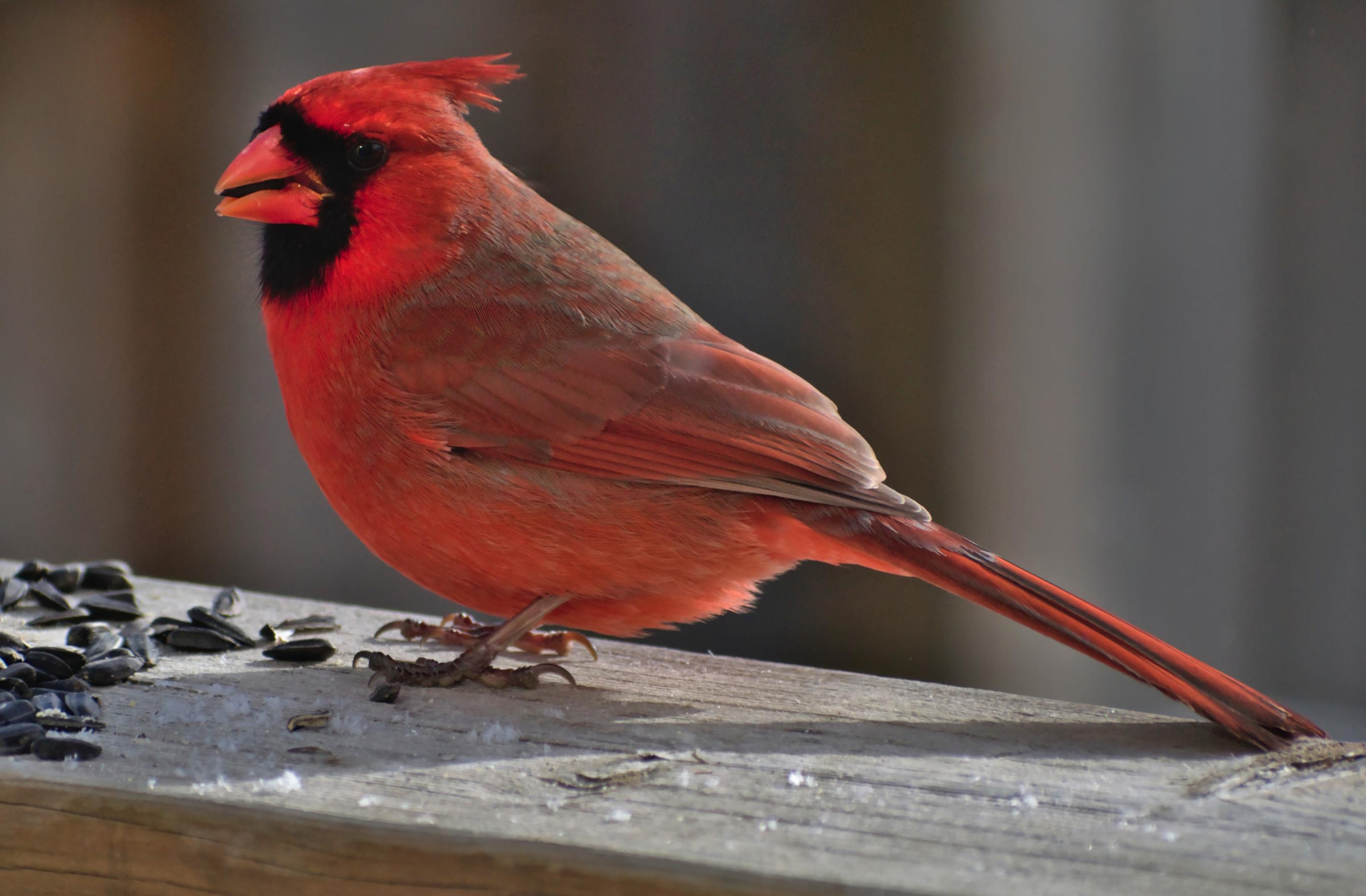
© Photo: Wikimedia by The Cosmonaut

The Northern Cardinal is a medium-sized songbird with a raised crest, a thick conical bill, and a long tail.

Adult males are very easy to recognize because they are bright red all over, with a black mask around the face and throat. Adult females are less brightly colored, but they still show the same crest, strong red-orange bill, and reddish tones in the wings, tail, and crest.

The combination of a pointed crest, heavy bill, and long tail helps identify the species even when the bird is partly hidden in shrubs or trees.

Its clear whistled songs and sharp metallic calls are also useful clues. Both males and females sing.

Where it lives

Northern Cardinals live across much of the eastern and central United States, parts of the southwestern United States, Mexico, and southern Canada.

They are commonly found in gardens, parks, woodland edges, suburban neighborhoods, hedgerows, scrub, and areas with dense bushes and scattered trees.

They are especially comfortable around people and are frequent visitors to bird feeders, where they often feed on seeds.

Most Northern Cardinals do not migrate and usually remain in the same general area throughout the year.

What it eats

Northern Cardinals eat mainly seeds, grains, and fruit.

Their strong bills are especially well suited for cracking open seeds. They also eat berries, buds, and other plant material.

During the breeding season, they include more insects in their diet, such as beetles, grasshoppers, caterpillars, and other small invertebrates.

They often forage on the ground or in low shrubs, and they regularly visit feeders for sunflower seeds and similar foods.

Interesting facts

  • The Northern Cardinal belongs to the cardinal family, Cardinalidae.
  • It is the official state bird of more U.S. states than any other species.
  • Unlike many songbirds, both males and females sing.
  • The bright red plumage of the male comes from pigments in its food called carotenoids.
  • Northern Cardinals usually form strong pairs, and mates often stay close together.
  • Males may feed females during courtship, a behavior known as courtship feeding.
  • Because they do not migrate and remain visible in winter, Northern Cardinals are especially familiar and loved backyard birds in many parts of North America.

Eurasian Jackdaw Coloring Page

  • Scientific name: Coloeus monedula
  • Group: Urban Birds

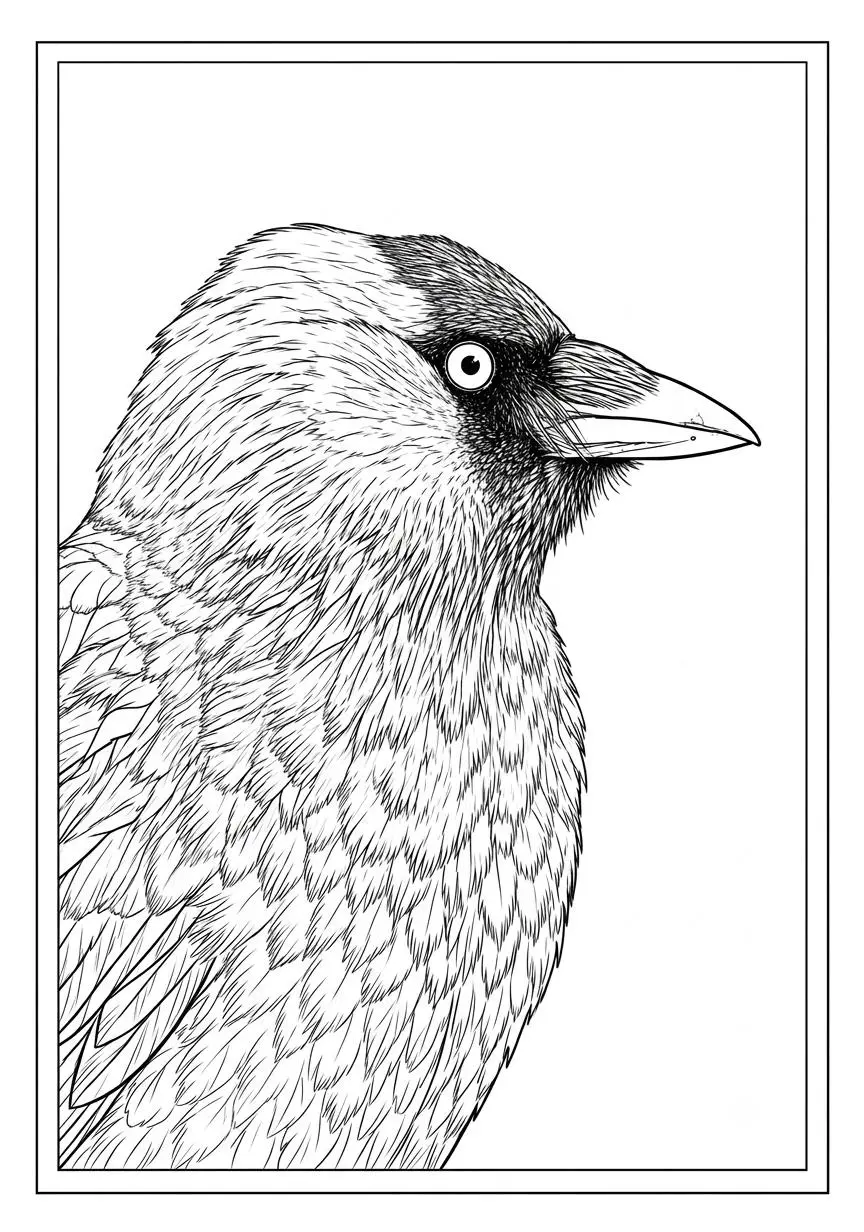
This printable Eurasian Jackdaw coloring page is based on the bird’s compact body, short bill, rounded head, and distinctive gray-and-black plumage.

The Eurasian Jackdaw is a small member of the crow family and is easy to recognize once you notice its pale eyes and contrasting gray neck. It is a particularly good bird for learning how subtle color differences can help with identification.

Use the natural color guide for a realistic result, or choose your own colors for a more imaginative version.

Good detail, vertical

Average detail, horizontal

Color guide

  • Head and crown: black
  • Face: dark gray to black
  • Back and wings: glossy black with subtle blue or purple sheen
  • Neck and sides of head: pale gray to silvery gray
  • Breast and belly: dark gray to black
  • Tail: black
  • Bill: black
  • Eyes: very pale gray, blue-gray, or almost white
  • Legs and feet: black

Young birds are generally duller and browner than adults, and their eyes are darker.

How to recognize a Eurasian Jackdaw

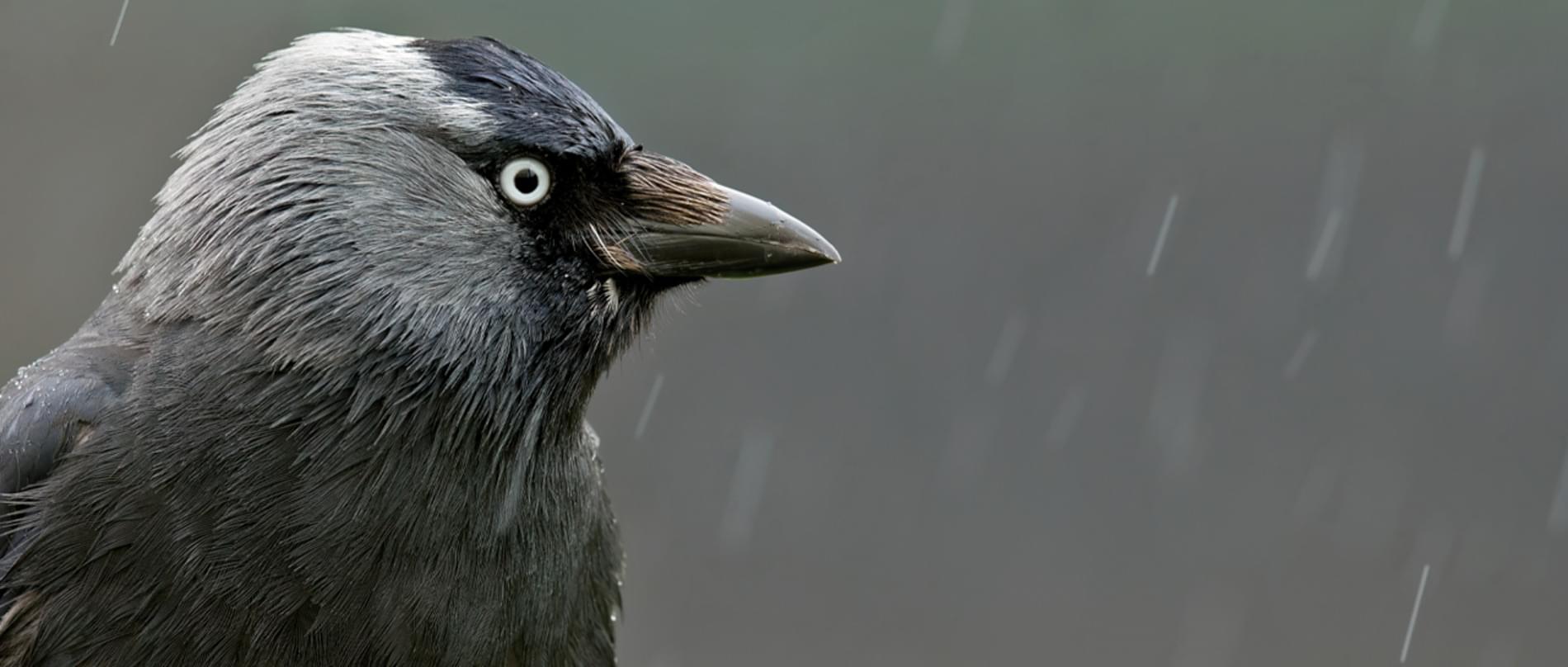
© Photo: David Irving, Macaulay Library

The Eurasian Jackdaw is smaller and more compact than many other crows.

Its most useful field marks are the pale gray neck and the very light-colored eyes, which stand out strongly against the darker head.

The bill is shorter than that of a Rook or Carrion Crow, and the bird often has a neat, rounded appearance.

Jackdaws are highly social and are frequently seen in pairs or flocks. Their calls are short, sharp, and metallic, often sounding like a repeated “jack” or “kya.”

Where it lives

Eurasian Jackdaws are widespread across much of Europe and parts of western Asia.

They are very adaptable and can be found in towns, villages, farmland, parks, cliffs, woodland edges, and around old buildings.

They often nest in cavities, including holes in trees, chimneys, church towers, cliffs, ruins, and buildings.

Because they adapt well to human environments, they are a familiar sight in many European cities and towns.

What it eats

Eurasian Jackdaws are omnivorous.

They eat insects, worms, seeds, grain, fruit, berries, small animals, eggs, carrion, and food scraps.

They often forage on the ground in fields, parks, lawns, and streets.

Jackdaws are opportunistic feeders and quickly learn to take advantage of new food sources.

Interesting facts

  • Eurasian Jackdaws belong to the crow family, Corvidae.
  • They are highly intelligent and social birds.
  • Pairs often form strong long-term bonds and can frequently be seen staying close together even outside the breeding season.
  • Their pale eyes are unusual among European corvids and are one of the easiest ways to recognize the species.
  • Jackdaws often nest in buildings and have a long history of living close to people.
  • They may gather in large communal roosts, sometimes together with Rooks and other corvids.
  • Their scientific name, monedula, is an old Latin name associated with jackdaws.