
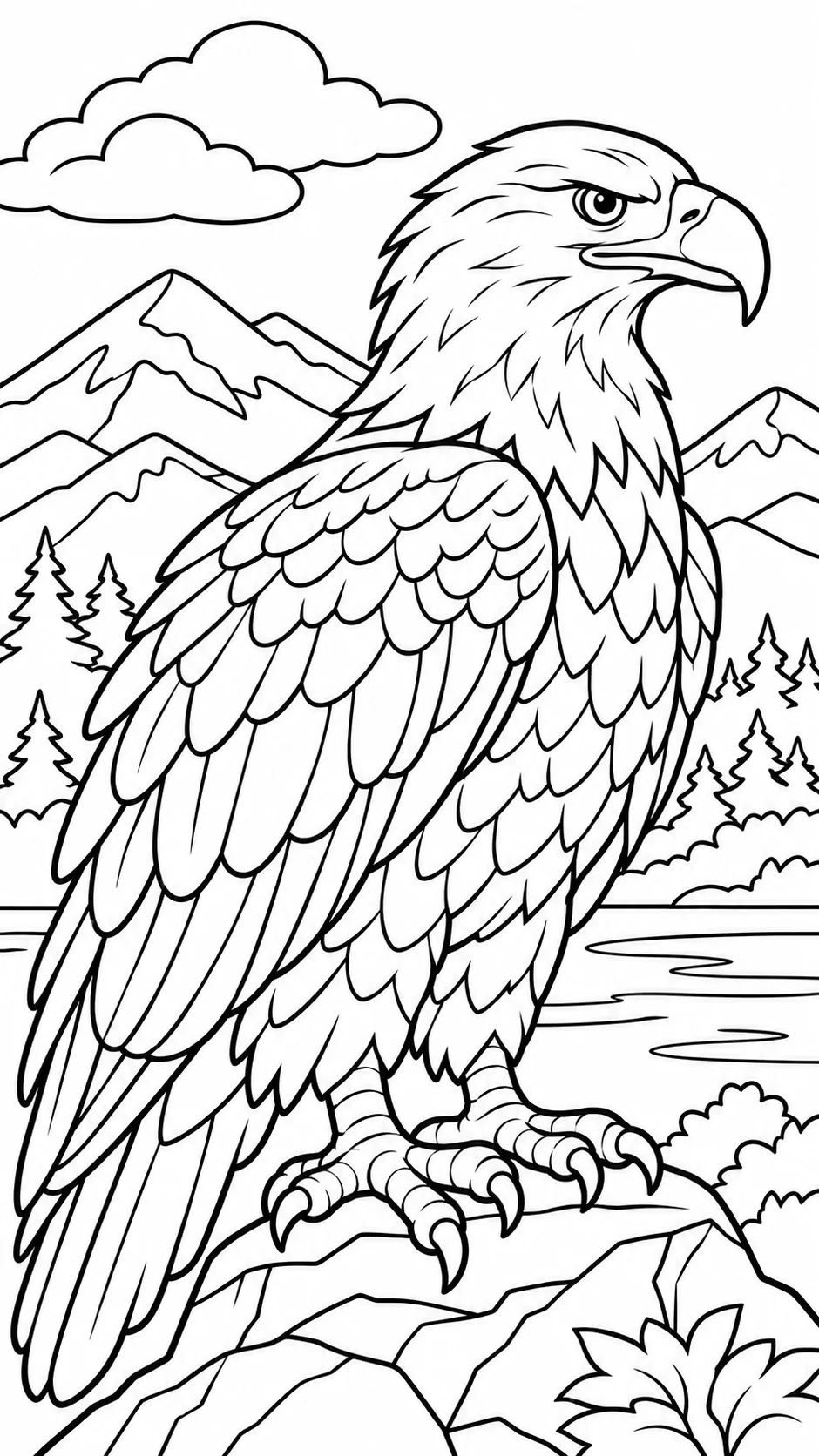
- Scientific name: Haliaeetus leucocephalus
- Group: Birds of Prey
This printable Bald Eagle coloring page is based on the bird’s powerful body, broad wings, large hooked bill, and distinctive white head and tail.
The Bald Eagle is one of the most recognizable birds of prey in North America. Its dark brown body, bright white head and tail, and strong yellow bill make it especially striking to color and easy to identify.
Use the natural color guide for a realistic result, or choose your own colors and create a more imaginative version.
Color guide
Adult:
- Head: white
- Neck: white
- Body: dark brown
- Back and wings: dark brown
- Tail: white
- Bill: bright yellow
- Eyes: pale yellow
- Cere: yellow
- Legs and feet: yellow
- Claws: black
Young Bald Eagles look very different from adults. They are mostly dark brown with irregular white mottling and do not develop the clean white head and tail until they are several years old.
How to recognize a Bald Eagle
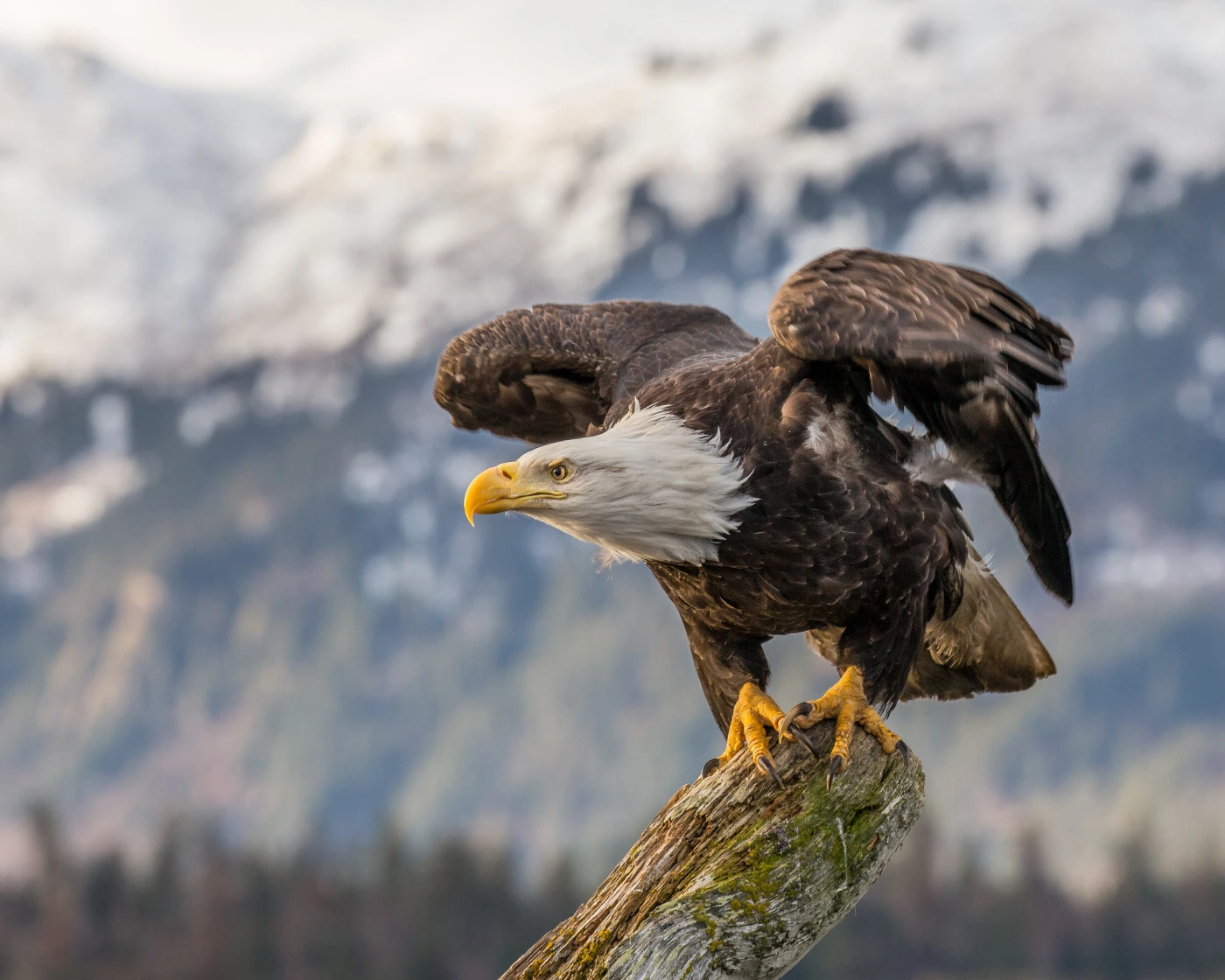

The Bald Eagle is a very large bird of prey with broad wings, a heavy body, and a strong hooked bill.
Adult birds are easy to recognize by the contrast between the dark brown body and the bright white head and tail. The large yellow bill is another important field mark.
In flight, Bald Eagles have long, broad wings that are often held almost flat. Their large size and powerful silhouette make them stand out from many other birds.
Young birds can be more difficult to identify because they lack the white head and tail of adults and may be confused with other large eagles.
Where it lives
Bald Eagles are found across much of North America.
They are strongly associated with large bodies of water such as lakes, rivers, reservoirs, estuaries, and coastal areas.
They usually prefer places with tall trees or cliffs for nesting and open water nearby for feeding.
Bald Eagles can also be seen around wetlands, forests, and shorelines where fish and other food are easy to find.
What it eats
Bald Eagles feed mainly on fish.
They catch fish from the surface of lakes, rivers, and coastal waters, often using their powerful feet and sharp talons.
They also eat waterbirds, small mammals, carrion, and other available food.
Bald Eagles are opportunistic and may sometimes steal food from other birds, including ospreys.
Interesting facts
- The Bald Eagle is the national bird of the United States.
- Its scientific name, Haliaeetus leucocephalus, means “sea eagle with a white head.”
- The word “bald” in its English name does not mean that the bird has no feathers. It comes from an older use of the word meaning white-headed.
- Young Bald Eagles do not look like adults and may take several years to develop the familiar white head and tail.
- Bald Eagles build very large nests, often adding new material to the same nest over many years.
- Their nests can become some of the largest built by any bird.
- Bald Eagles have excellent eyesight and can spot prey from a great distance.
- Although they are powerful hunters, they also feed on carrion and are highly adaptable in the way they find food.